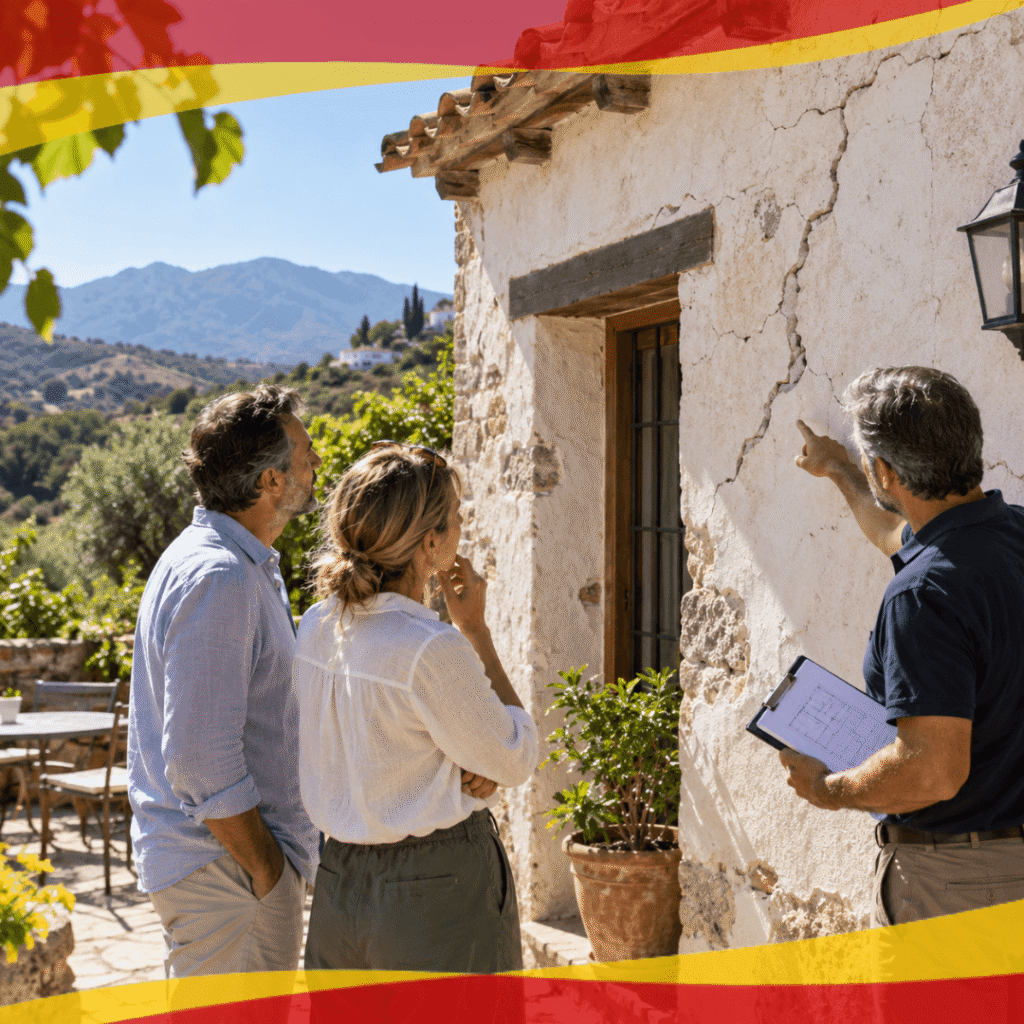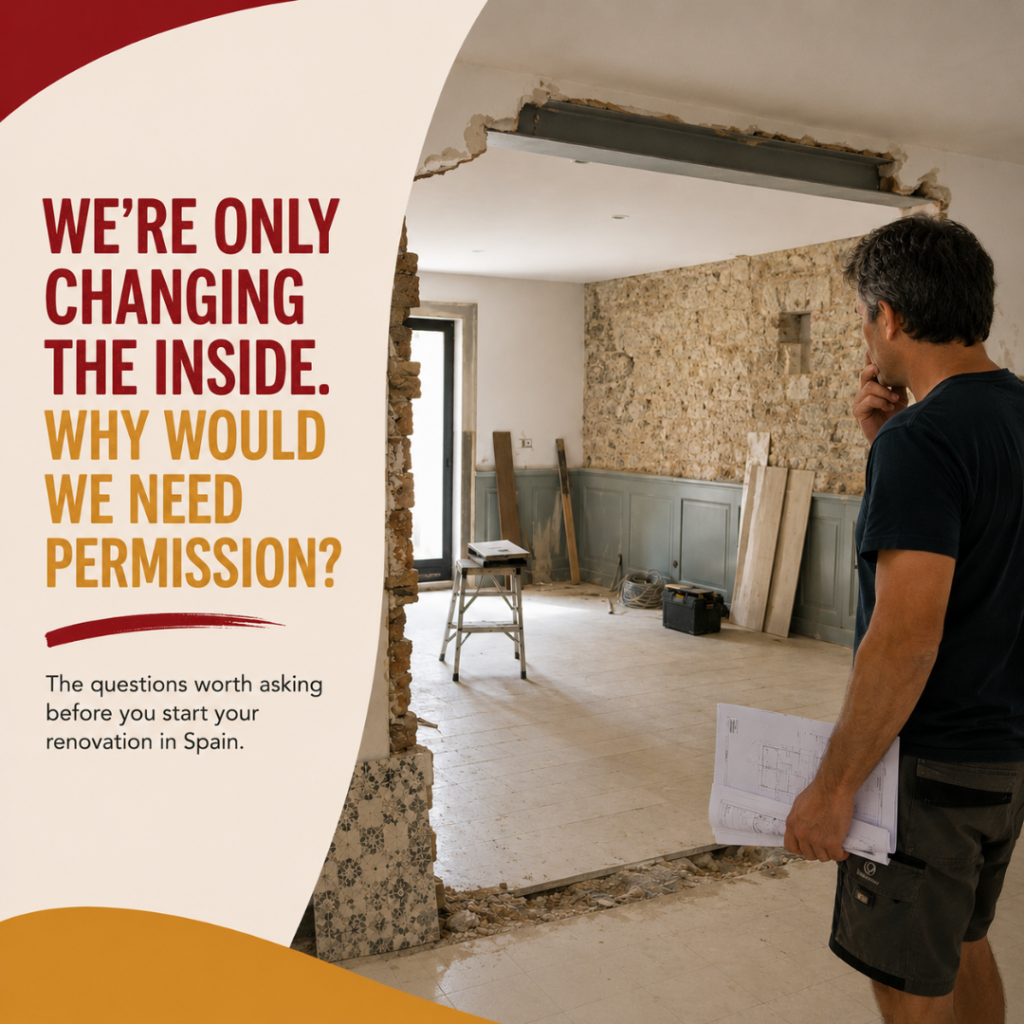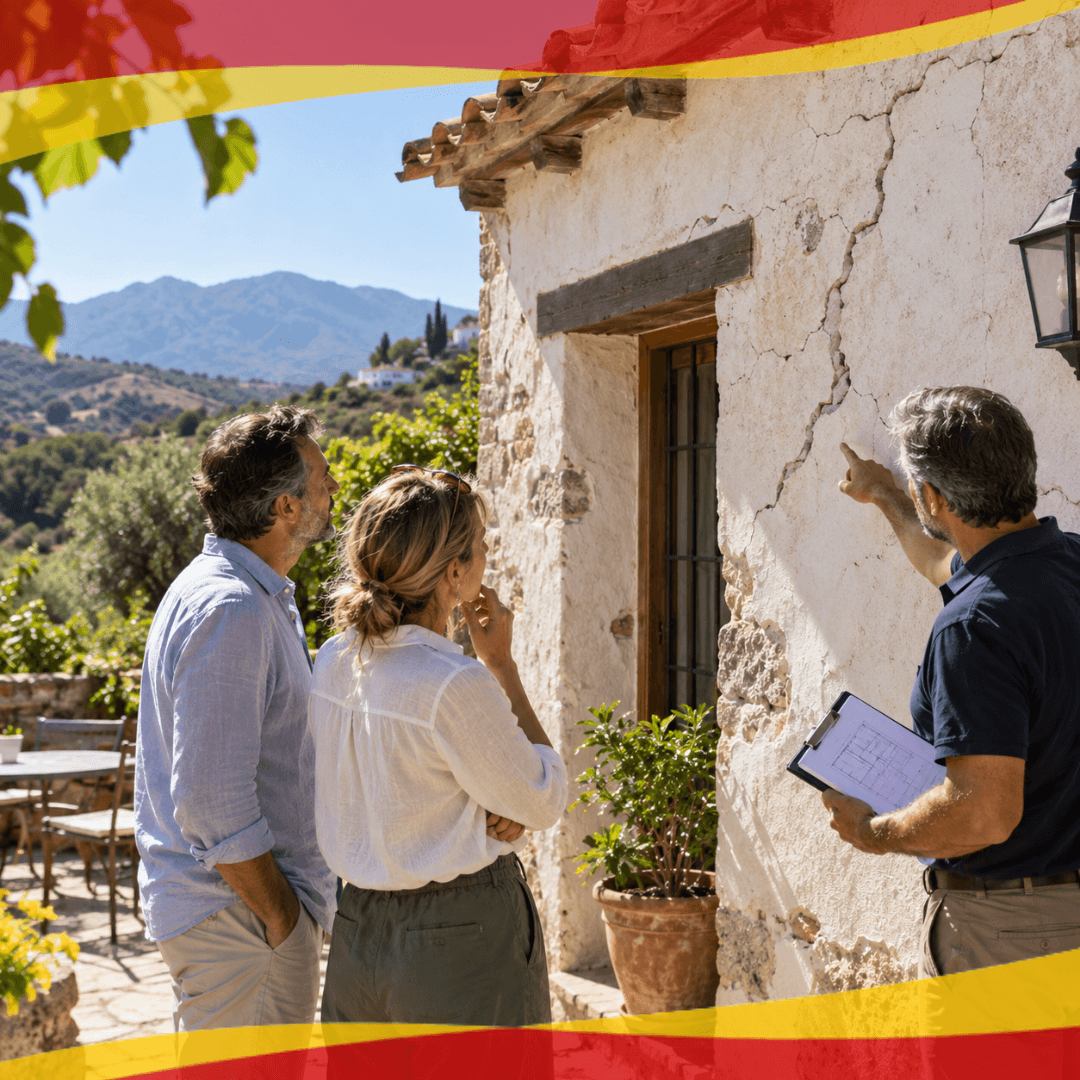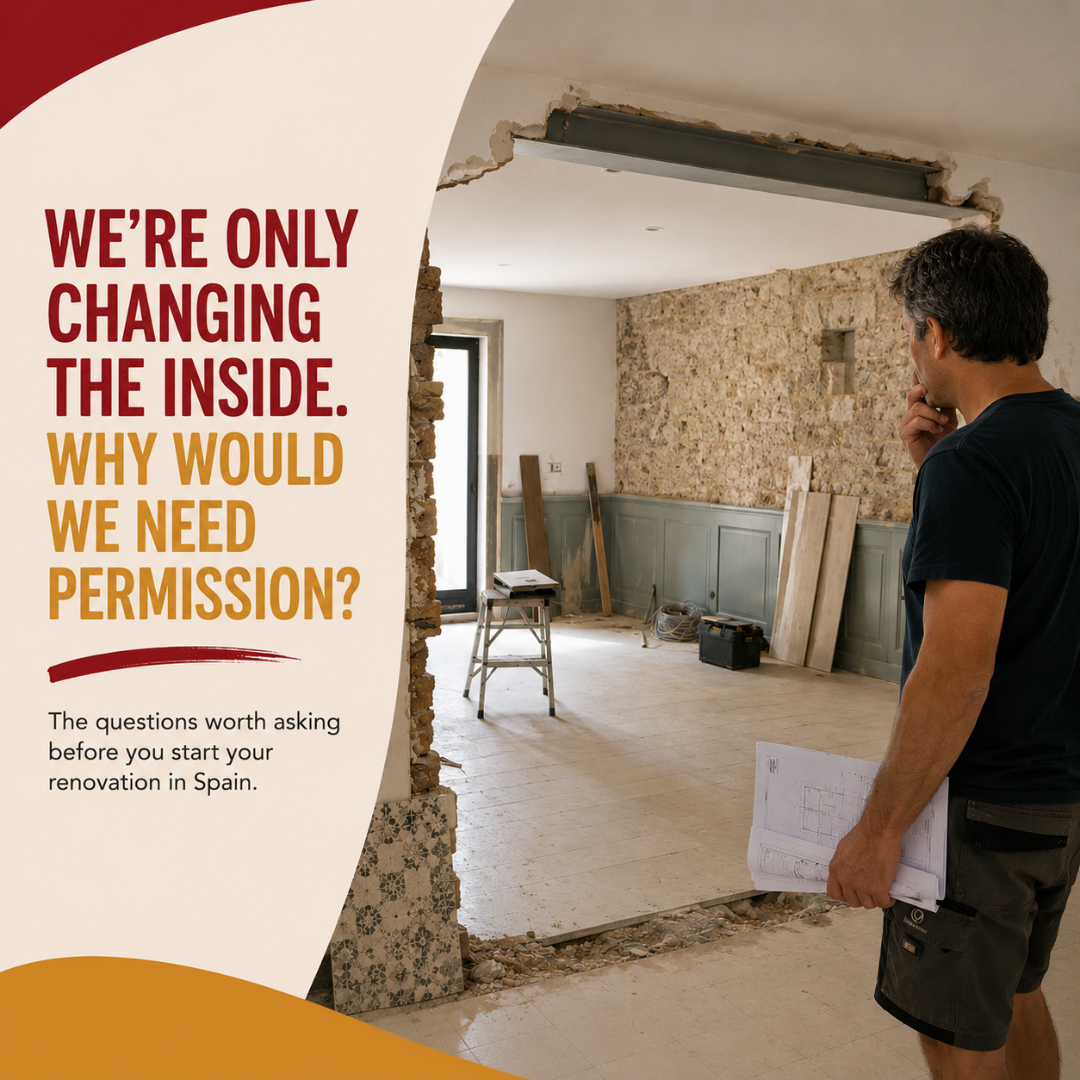
There’s a point in a rural property conversation where somebody usually says something that stops everything for a moment.
Sometimes it’s the architect. Sometimes the lawyer. Sometimes it comes from us.
“Has anyone checked whether the property has an AFO?”
And quite often the answer is simply:
“What’s an AFO?”
That reaction is completely normal.
Most people don’t go looking for a rural property in Spain with a working knowledge of Andalusian planning terminology. They’re thinking about the house, the land, what needs renovating and whether the old building at the bottom of the garden could one day become somewhere for family to stay.
AFO tends to appear later, usually when somebody starts asking what the property’s planning position actually is.
That’s when the conversation changes.
An AFO is the recognition of a building being in a situation asimilada a fuera de ordenación. In very simple terms, it relates to certain completed buildings that were constructed without the required planning permission, or outside the terms of that permission, where the time available for the authorities to take action to restore planning legality has passed.
That sounds much more dramatic than it needs to.
What matters is understanding what that recognition actually does, and just as importantly, what it doesn’t do.
Under the current Andalusian rules, the local Ayuntamiento is the authority that deals with the recognition of AFO status. The process looks at the particular building and its circumstances, and there are conditions that have to be met before recognition can be granted.
One of the biggest misunderstandings we hear is the idea that an AFO somehow “legalises” a building.
It doesn’t.
The law is quite clear on that point. Recognition of AFO status does not turn an irregular building into one that was originally built with all the correct permissions. What it does is establish the regime that applies to that building now.
That distinction matters.
It’s also why simply hearing, “Don’t worry, it has an AFO,” isn’t really the end of the conversation.
For some owners, having that recognition can be very important. Depending on the circumstances, it can help clarify the building’s position, allow access to certain basic services where the relevant conditions are met, and permit particular kinds of works or compatible changes of use. But the scope is not unlimited, and it does not mean that every future plan automatically becomes possible.
That is usually the point where people look back at the plans they had for the property.
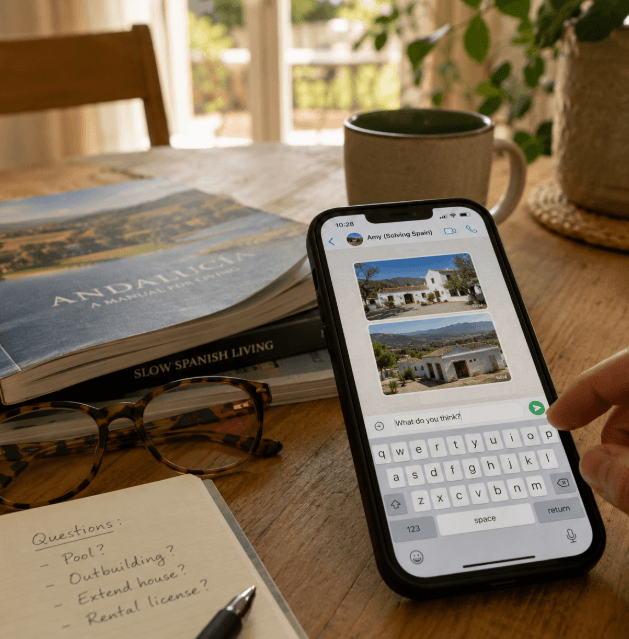
The pool.
The extension.
The old barn.
The workshop.
The guest accommodation.
And the question becomes much more specific.
Not, “Does it have an AFO?”
But:
“What does this AFO mean for what we want to do?”
That is the more useful question.
We’ve found that this is where people can become unnecessarily worried, because they start collecting fragments of information from different places.
One person says AFO is good.
Another says it’s bad.
Someone else says it means you can’t do anything to the property.
Another person says it means everything is now sorted.
None of those broad statements is particularly helpful.
The position depends on the building, the land, the planning history, the recognition itself and what you actually want to do next.
That’s why we’re always slightly cautious when someone asks us, “Is an AFO property safe to buy?”
It isn’t really a yes-or-no question.
The better question is whether you understand what you’re buying.
That includes knowing why the property is in AFO status, what exactly the recognition covers, whether there are other buildings or alterations on the land that need looking at separately, and whether your plans for the future fit with the property’s actual position.
Sometimes everything lines up nicely.
Sometimes it doesn’t.
The important thing is finding that out before you’ve based your decision on an assumption.
This is where Solving Spain tends to sit in the middle of the conversation.
We don’t replace the Ayuntamiento, an architect or a lawyer.
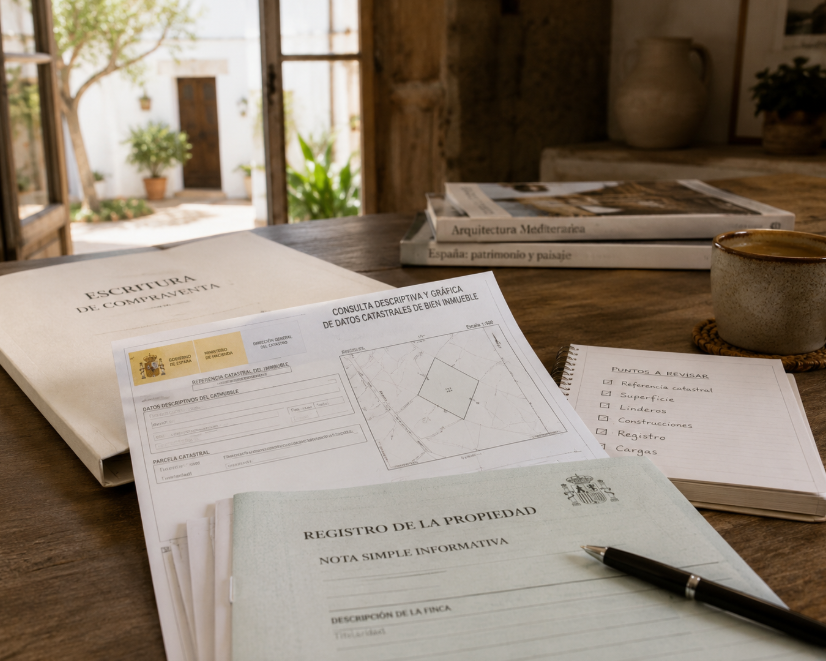
Quite often, our job is helping a client understand what information already exists, what needs checking and which professional should answer which question. That might mean reviewing the paperwork that has been provided, identifying something that needs clarifying, or coordinating with the right technical or legal professional before the client moves forward.
It’s not about making the process feel more complicated.
It’s usually about making it feel less so.
And perhaps the most useful thing to know about AFO is this:
You don’t need to become an expert in it yourself.
You just need to know when it matters enough to ask the right question.
If you’re considering a rural property and AFO has suddenly appeared in the conversation, don’t feel as though you’ve missed something obvious. Most people have never heard the term until a particular property gives them a reason to.
The sensible next step is to understand what it means for that property, rather than what somebody on the internet says it means in general.
And that leads naturally to the next question we hear:
“We have an AFO. So can we do what we want with the house?”
That’s the part we’ll look at next.
If you’re already at this stage and you’re not quite sure what the AFO paperwork is telling you, you’re very welcome to talk it through with us. Sometimes a short conversation is enough to work out what still needs checking before you make any decisions.