There’s a slightly strange point in a property purchase when you realise just how many people are involved.
You started with an estate agent and a house you liked. Then somebody recommended a lawyer. Perhaps there’s a mortgage adviser involved, a surveyor has been mentioned and, if it’s an older or rural property, an architect may have entered the conversation too.
Before long your inbox is full of names, documents and email chains. Everybody seems helpful. Questions are being answered and things are happening.
It feels reassuring.
And most of the time, everybody involved may be doing exactly what they are supposed to be doing.
The bit buyers sometimes miss is that they aren’t all doing the same thing.
We’ve had this conversation with buyers more than once. They’ll ask us whether something has been checked and, when we ask who was dealing with that particular part of the purchase, there’s a pause.
“I assumed the lawyer would have checked that.”
Or perhaps:
“The agent said everything was fine.”
Nobody has necessarily done anything wrong. The buyer simply didn’t realise there was another question to ask.
Being helpful and representing you aren’t quite the same thing
Estate agents can be enormously helpful during a purchase. A good one will answer questions, chase information and introduce you to people who can help move things forward.
But it’s still worth understanding everybody’s role.
The surveyor looking at the condition of the building is answering a different set of questions from the lawyer dealing with the legal purchase. An architect brought in to look at an extension or planning issue has another job again.
That sounds obvious written down.
During an actual purchase, it can become surprisingly blurred.
You’re not sitting at home drawing a diagram of everybody’s professional responsibilities. You’re thinking about whether the offer has been accepted, when you can complete, what furniture you’re keeping and whether that room downstairs would make a good guest bedroom.
And once the offer has been accepted, something else tends to happen.
People relax a little.
We see this quite often. Before the offer, buyers can be wonderfully curious. They ask about the roof, the land, the pool, the boundaries, the paperwork and the funny little building at the bottom of the garden.
Then they get the house.
Or at least it starts to feel as though they have.
The photographs are sent to the family. Somebody starts looking at flights. There’s a conversation about where the sofa will go.
It’s a lovely stage of buying a property.
It also happens to be the point when some of the more important checking is only just beginning.
That’s why we sometimes find ourselves bringing the conversation gently back to what hasn’t yet been answered.
Not because we think something must be wrong. Quite the opposite. If everything is fine, we want the buyer to know that rather than simply assume it.
Sometimes one answer creates another question
This becomes particularly noticeable with older and rural properties.
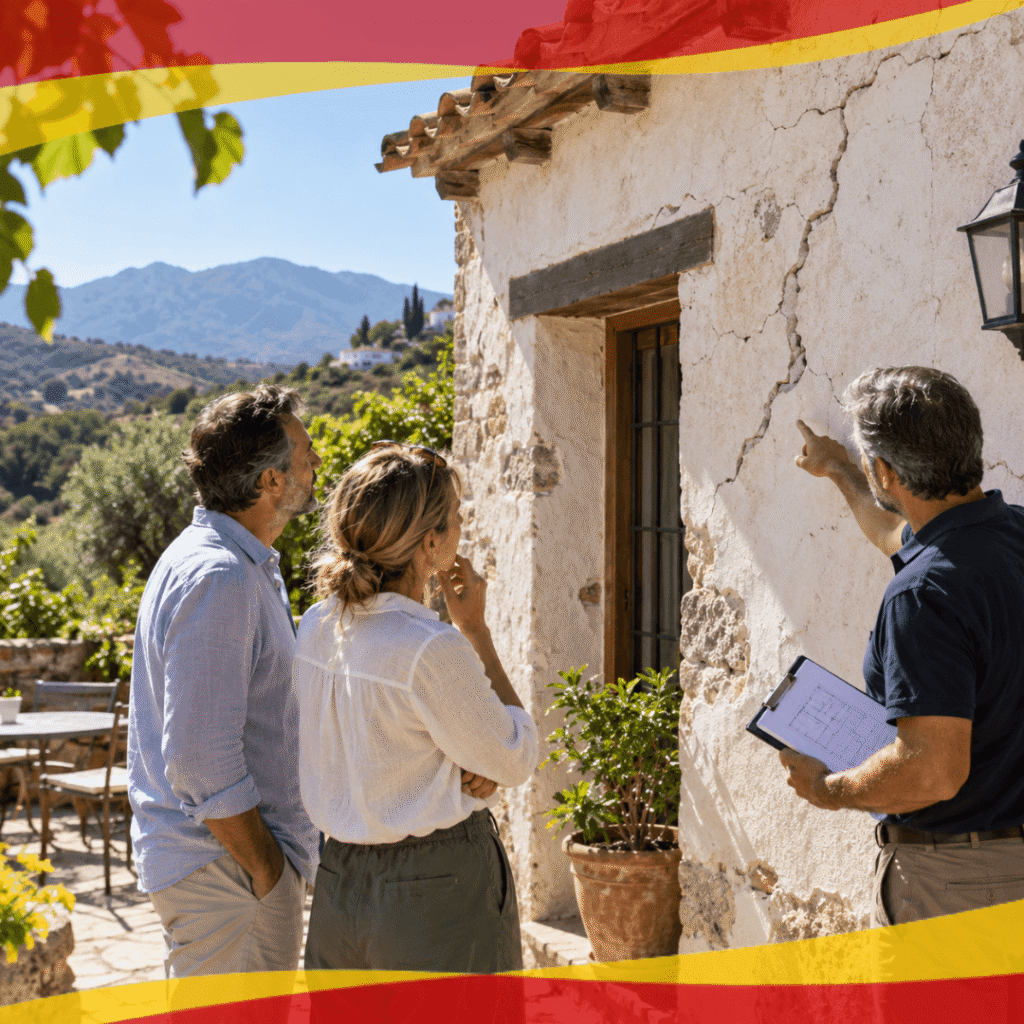
A surveyor might notice that one part of the house appears to have been built or altered at a different time. Their concern may be entirely physical: how it was constructed, whether there is movement, whether water is getting in.
But that observation can prompt a completely different question.
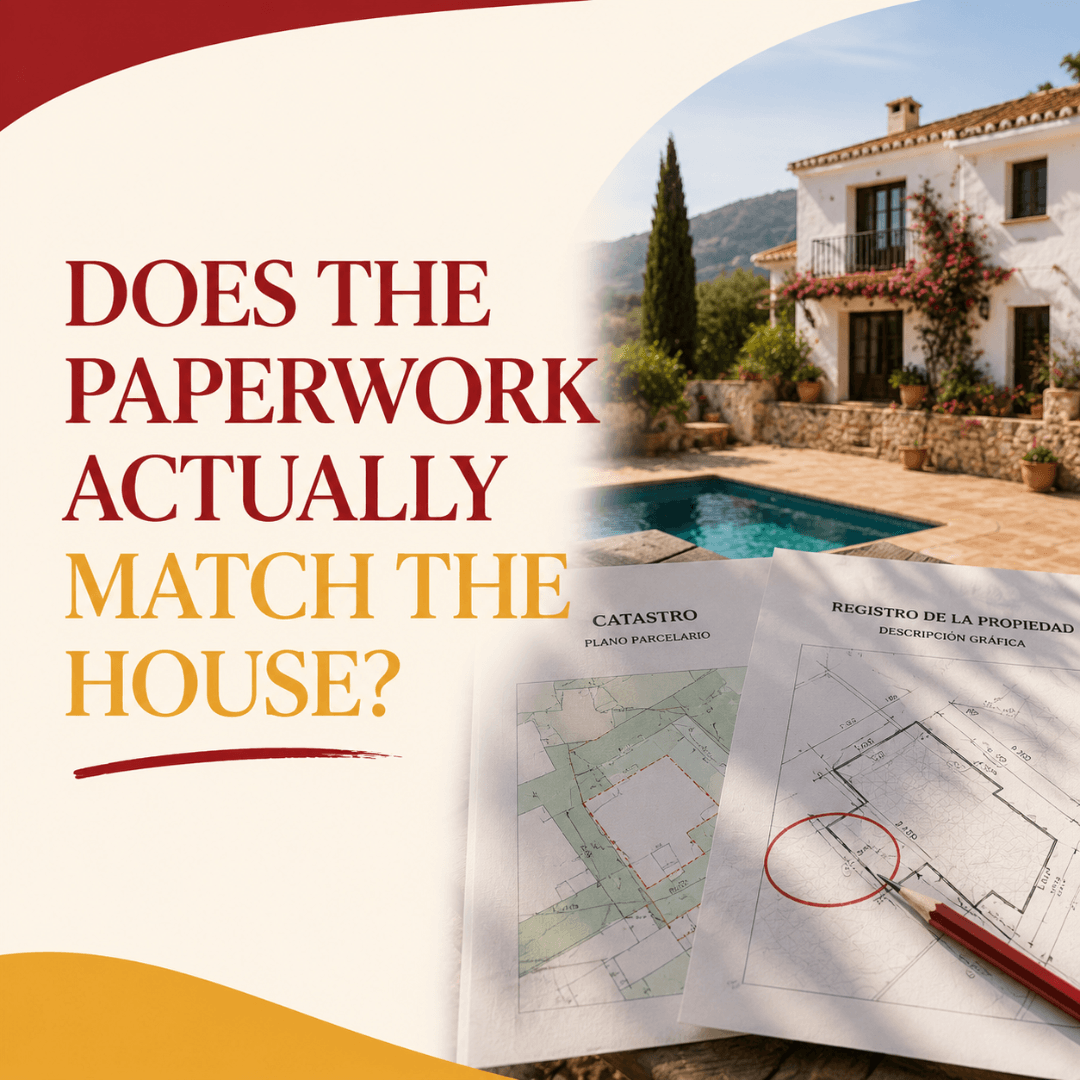
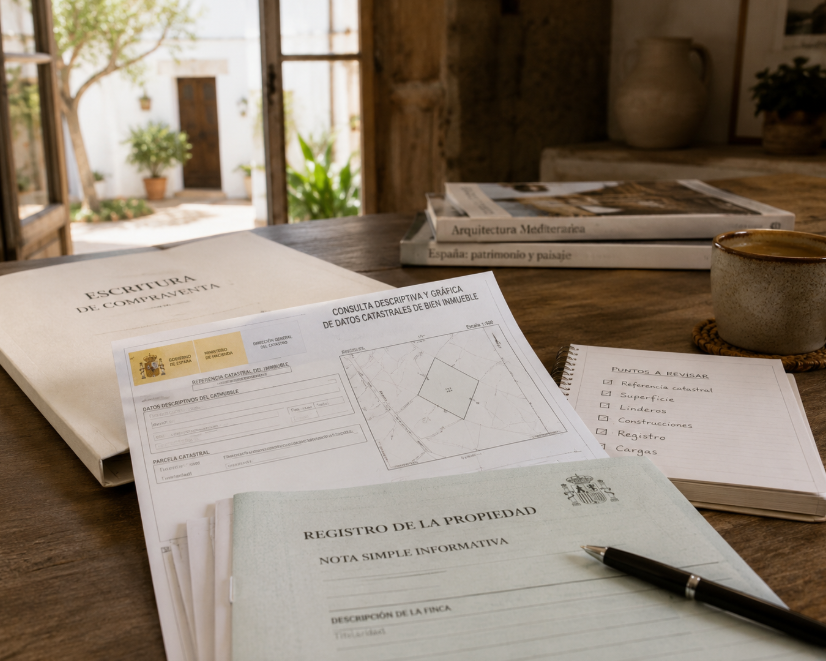
What is that part of the house on the paperwork?
Perhaps everything matches beautifully and that’s the end of it. Perhaps somebody needs to look a little further. It might be a question for the lawyer, an architect or another professional depending on what has been found.
This is where buyers can become confused, because they quite reasonably think:
“But I’ve already had everything checked.”
What they often mean is that lots of checks have been done.
The useful thing is making sure the checks join up.
That’s a large part of what we do at Solving Spain. We don’t replace the lawyer, surveyor or architect, and we wouldn’t want to. They have their own expertise.
We help the buyer understand which questions belong where, what still needs answering and whether something discovered by one person needs to be picked up by somebody else. That coordinating role sits naturally within Solving Spain’s buying support.
And sometimes the answer is wonderfully uneventful.
Yes, that has been checked.
Yes, it’s covered.
No, you don’t need to worry about that.
Those answers matter too.
Because good buying support isn’t about finding problems. It’s about removing assumptions.
Before “the house” becomes “our house”
If you’re currently buying in Spain and there seem to be six different people involved, you probably don’t need a seventh person doing exactly the same thing.
What you do need is a clear idea of who is responsible for what.
Ask what your lawyer is checking. Understand what the survey does and doesn’t cover. If somebody recommends another professional, ask what they are being brought in to establish. And if something comes up in one part of the purchase, make sure you understand whether it creates a question somewhere else.
None of those questions makes you a difficult buyer.
They make you an informed one.
Because the point isn’t to keep looking for reasons not to buy the property you’ve fallen for.
It’s to reach the day when you finally get the keys knowing that the questions which mattered were actually asked — rather than assuming somebody else probably asked them.
If you’re buying a property in Spain and you’re starting to wonder who is dealing with what, that’s exactly the sort of thing we help untangle. Sometimes a conversation early in the purchase is enough to make the whole picture considerably clearer.
WhatsApp: +34 695 398 679
Email: info@solvingspain.com
Website: www.solvingspain.com