There’s a particular moment when viewing rural property in Andalucía when three letters can make everybody feel considerably more relaxed.
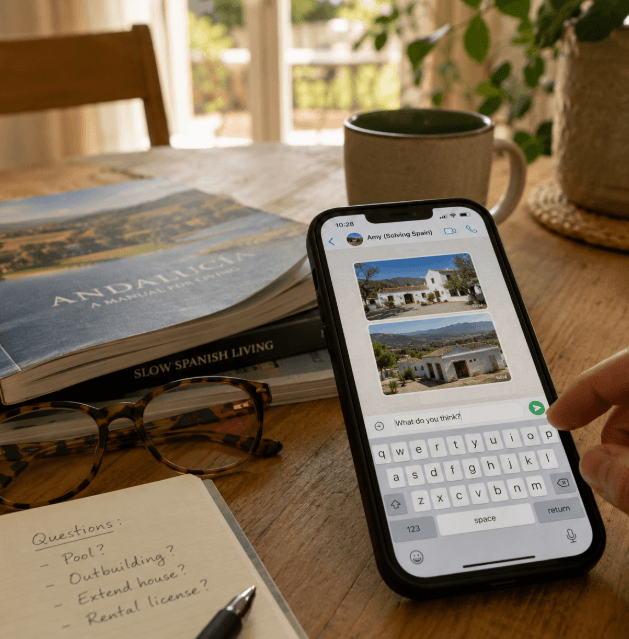
You’ve found the house. There’s some land, perhaps a pool, an old building at the bottom of the garden and a terrace with the sort of view that has already been photographed from six different angles. You can imagine yourself living there surprisingly easily.
Eventually the conversation turns to paperwork and somebody says, “It has an AFO.”
For a buyer who has spent the previous few weeks hearing stories about rural property and planning problems in Spain, that can sound wonderfully reassuring. There is an official document. Somebody has been to the Town Hall. Something has clearly been dealt with.
Quite often the conversation moves on.
We tend to stay with it for a little longer, because there is another question that matters: what exactly does the AFO cover?
That isn’t because having an AFO should immediately make you suspicious of the property. An AFO can be an important part of understanding the position of certain buildings in Andalucía. The problem comes when “it has an AFO” gets translated in the buyer’s mind into “everything here is legal, everything has been checked and there is nothing more we need to know.”
Those aren’t quite the same thing.
What those three letters actually mean
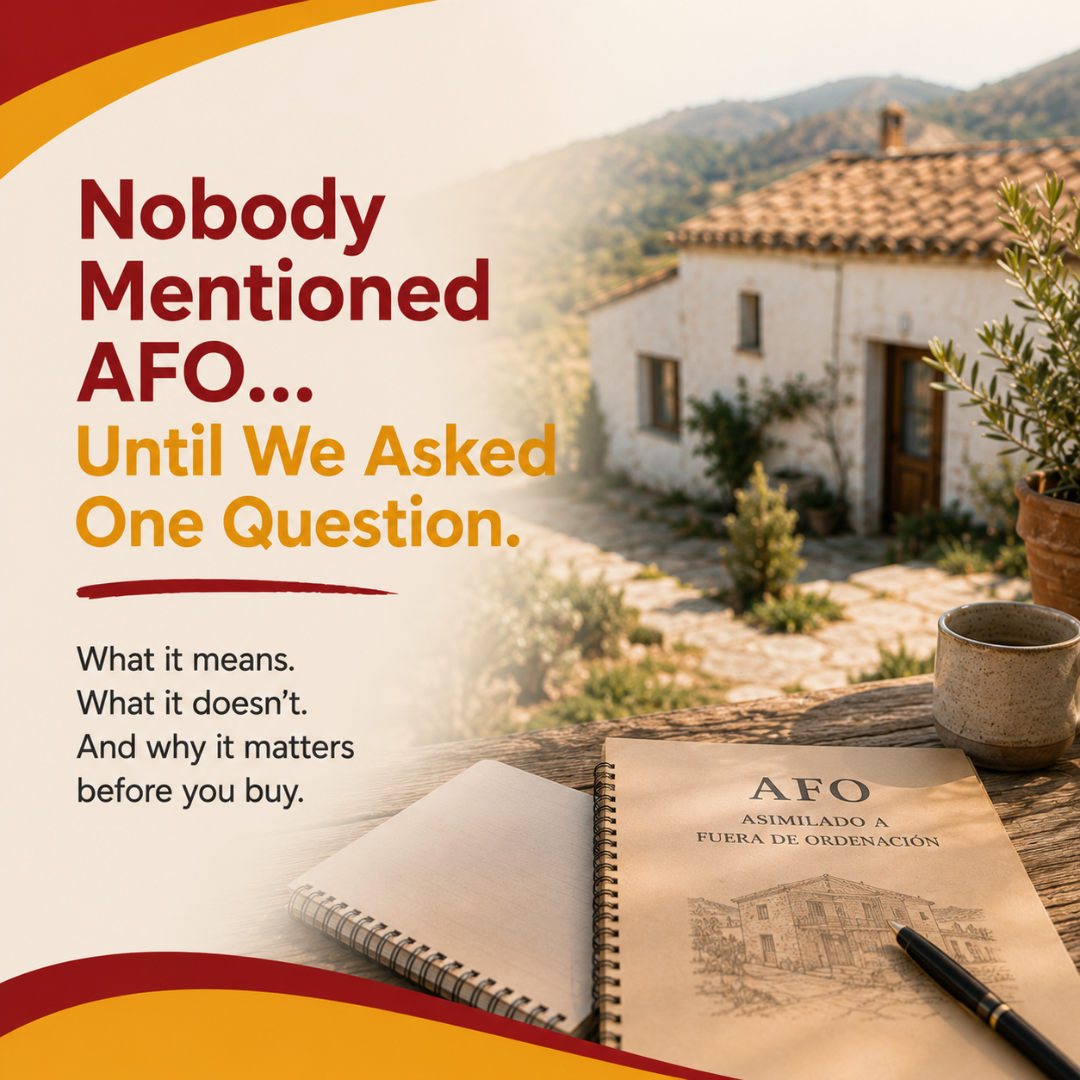
AFO stands for Asimilado a Fuera de Ordenación. In broad terms, the status can apply to certain completed irregular buildings where the ordinary planning-enforcement measures to restore planning legality can no longer be taken. Recognition is dealt with through the relevant Town Hall.
One point is particularly important because the Junta de Andalucía states it very clearly: recognition as AFO does not legalise the building.
That sentence can sound much more alarming than it needs to.
An AFO recognition has a real purpose and a defined legal regime. The municipal resolution identifies the building concerned and establishes the conditions that apply to it. What it shouldn’t become is a shorthand answer to every possible question about a rural property.
This is why, when somebody shows us an AFO, we’re interested in the document itself rather than simply the fact that one exists.
Imagine, for example, that you’re looking at a finca with a main house, a swimming pool, a garage and a smaller building that everyone refers to as the guest house. The guest house is actually one of the reasons you like the property. Your children can stay there when they visit, friends can have their own space and you have already started thinking about what you might do with it.
The seller tells you the property has an AFO and produces the paperwork.
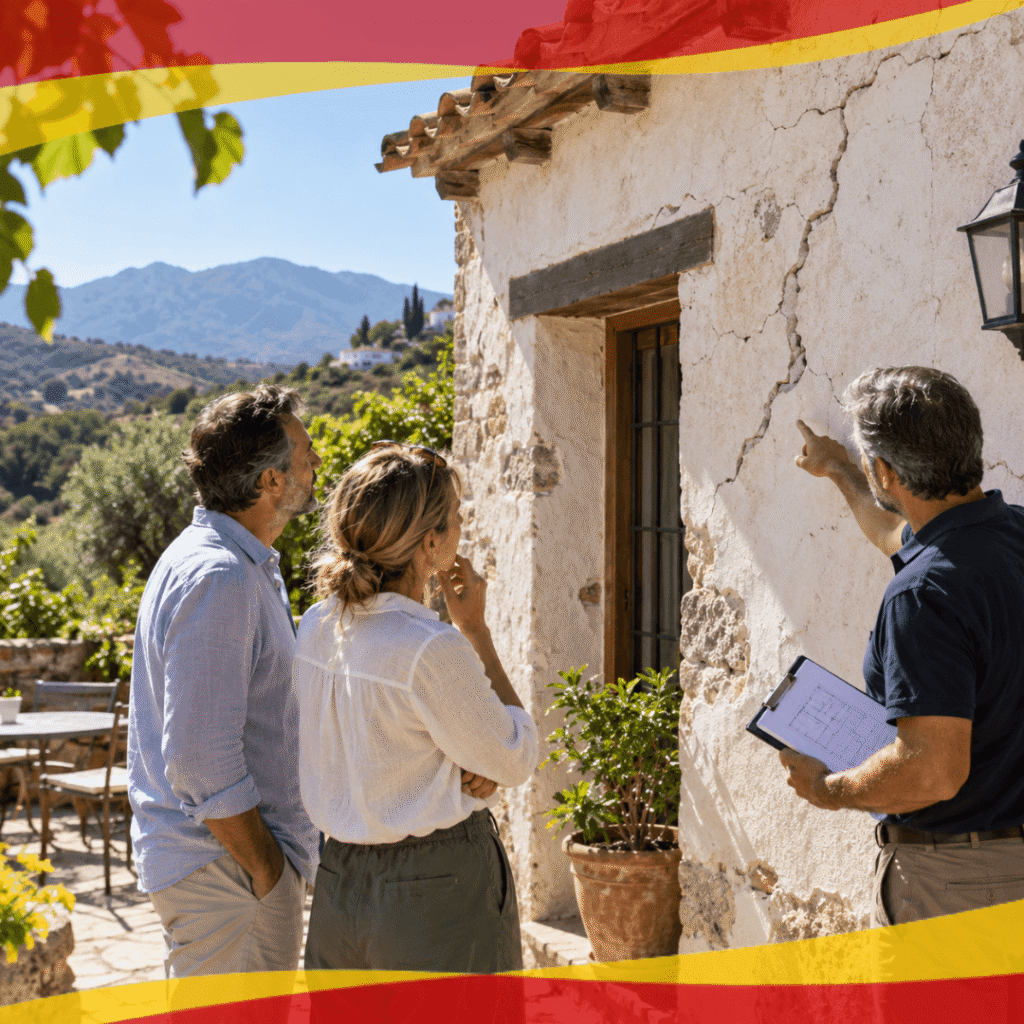
At that point, the useful thing is to compare the story being told by the paperwork with the property standing in front of you. What exactly was included when the AFO was dealt with? Which buildings or elements are identified? Does what exists today correspond with what was considered then? Has anything been added or altered since?
And if you’re buying because you have plans for the property, there is another layer to consider. Buyers can understandably assume that because an AFO exists, it also gives them freedom to make whatever changes they have in mind later. That is another assumption worth checking before those plans become part of the reason for buying.
This is where rural-property paperwork becomes less about collecting certificates and more about understanding what they actually say.
“But everything was fine when we bought it”
There’s another side to this that we encounter with sellers, and it can be genuinely upsetting.
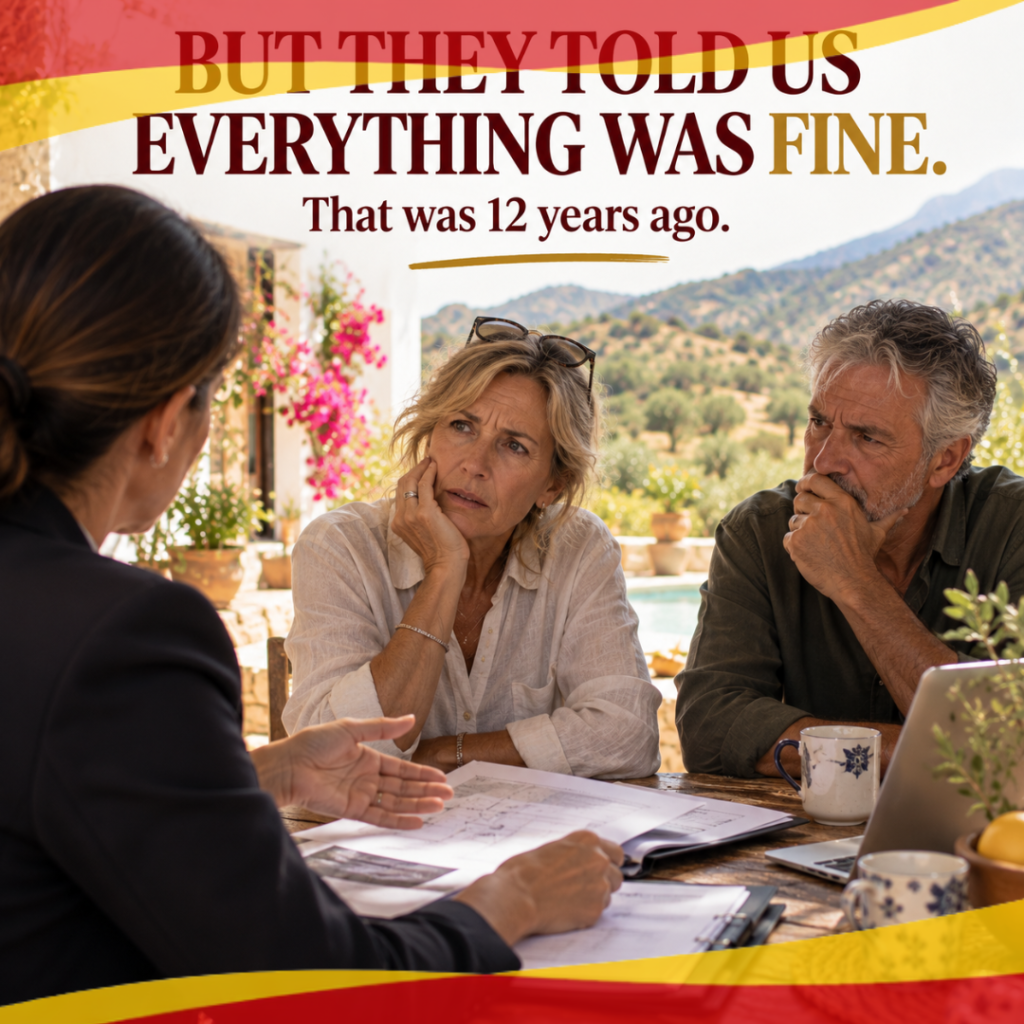
Someone bought their finca years ago. They used a lawyer. They went to the notary, completed the purchase, received the keys and have lived there happily ever since. They may have been specifically reassured at the time that everything was fine.
Years later, they decide to sell.
A buyer falls in love with the property just as they once did. The buyer’s lawyer starts carrying out checks, perhaps an architect becomes involved, and suddenly there is a question about one of the buildings or the planning position.
The seller’s reaction is completely understandable.
“How can there be a problem? We had a lawyer when we bought it.”
We have seen people genuinely caught out by this. They weren’t trying to hide anything and they hadn’t knowingly ignored a problem. As far as they were concerned, the purchase had been dealt with properly years earlier and they had no reason to think otherwise.
That doesn’t automatically mean the original lawyer made a mistake either. What was checked, what they were instructed to do, what documentation existed at the time and what has happened to the property since all matter.
But it does illustrate something important: successfully buying a property years ago doesn’t guarantee that no further planning or documentation question can arise when you eventually sell it.
And the timing can be particularly painful.
When you’re buying, an unexpected question is inconvenient. When you’re selling and already have a buyer waiting, the same question can become much more stressful. Suddenly people are trying to establish what needs doing while a transaction is already moving, and the buyer may have their own timetable, mortgage arrangements or simply a limit to how long they’re prepared to wait.
That’s one of the reasons we’ll return to the seller’s side of AFOs later in this series. If you own a rural property and haven’t looked closely at its planning and property documentation since the day you bought it, before putting it on the market is a much better moment to discover what is actually there.
The question worth asking
None of this means rural property buyers need to become experts in Andalusian planning law.
In fact, trying to interpret everything yourself can make the whole subject feel considerably more complicated than it needs to be.
What matters is making sure the right people look at the right things. Depending on the property and the question, that may involve a lawyer, an architect or technical professional, the Town Hall and other specialists. Our role at Solving Spain is often to help establish what needs checking and make sure those different pieces are brought together rather than leaving the buyer or seller to work out who should be doing what.
Sometimes that work identifies something that needs dealing with.
Sometimes it produces the much nicer answer that everything relevant has already been dealt with and there is nothing further to do.
Both answers are useful.
The point of checking isn’t to make rural property in Andalucía frightening. There are wonderful fincas here, including plenty with complicated histories that can be properly understood and bought with confidence.
It is simply much better to understand the property before you make assumptions about what a document means.
So if you’re viewing a finca and somebody says, “Don’t worry, it has an AFO,” you don’t need to panic and you don’t need to walk away.
You just need to ask one more question:
“Great. What exactly does it cover?”
If you’re buying a rural property in Andalucía, or you’re thinking about selling one and aren’t completely sure what your existing paperwork means, Solving Spain can help you establish what needs checking and coordinate the appropriate professionals before the question becomes urgent.
WhatsApp: +34 695 398 679
Email: info@solvingspain.com
Website: www.solvingspain.com