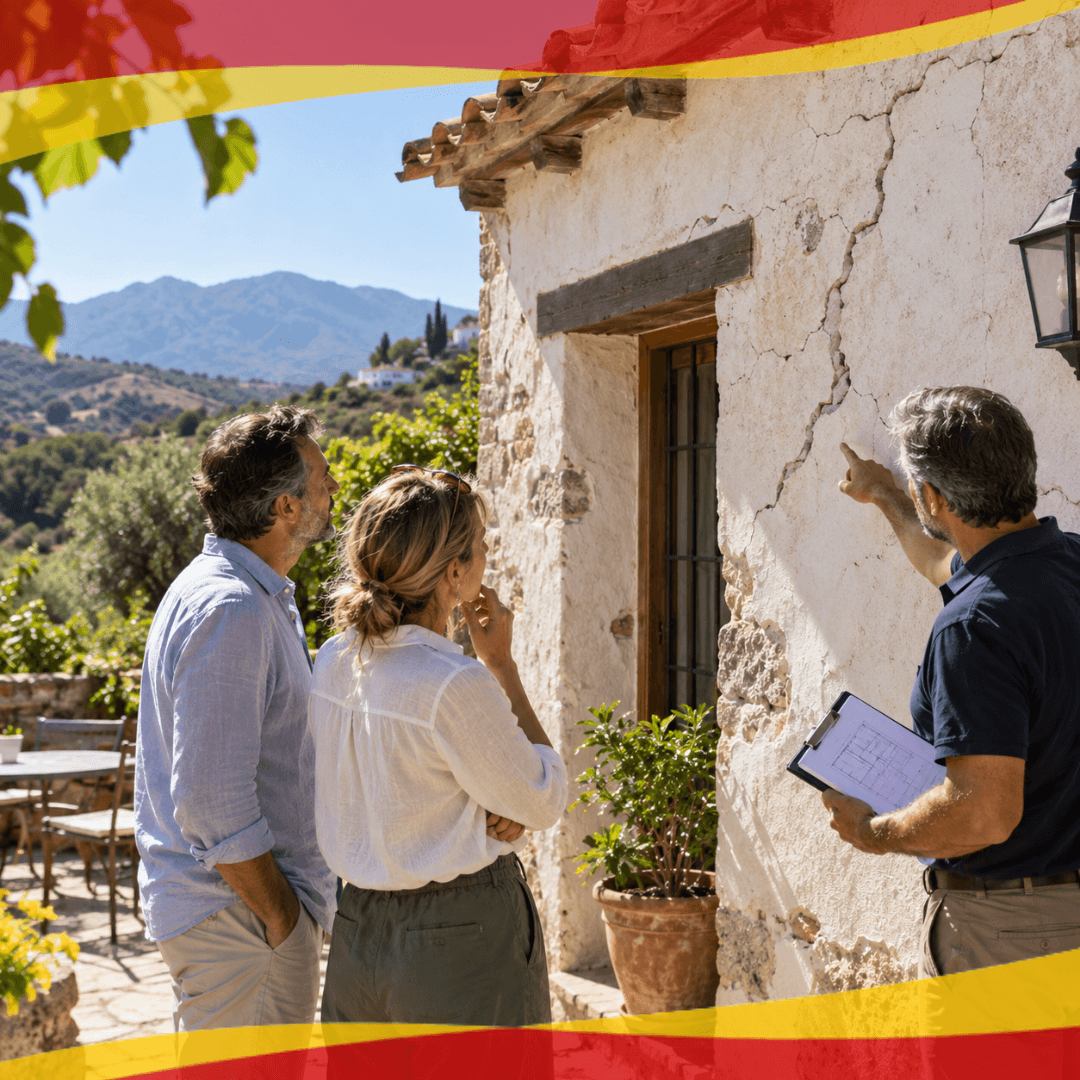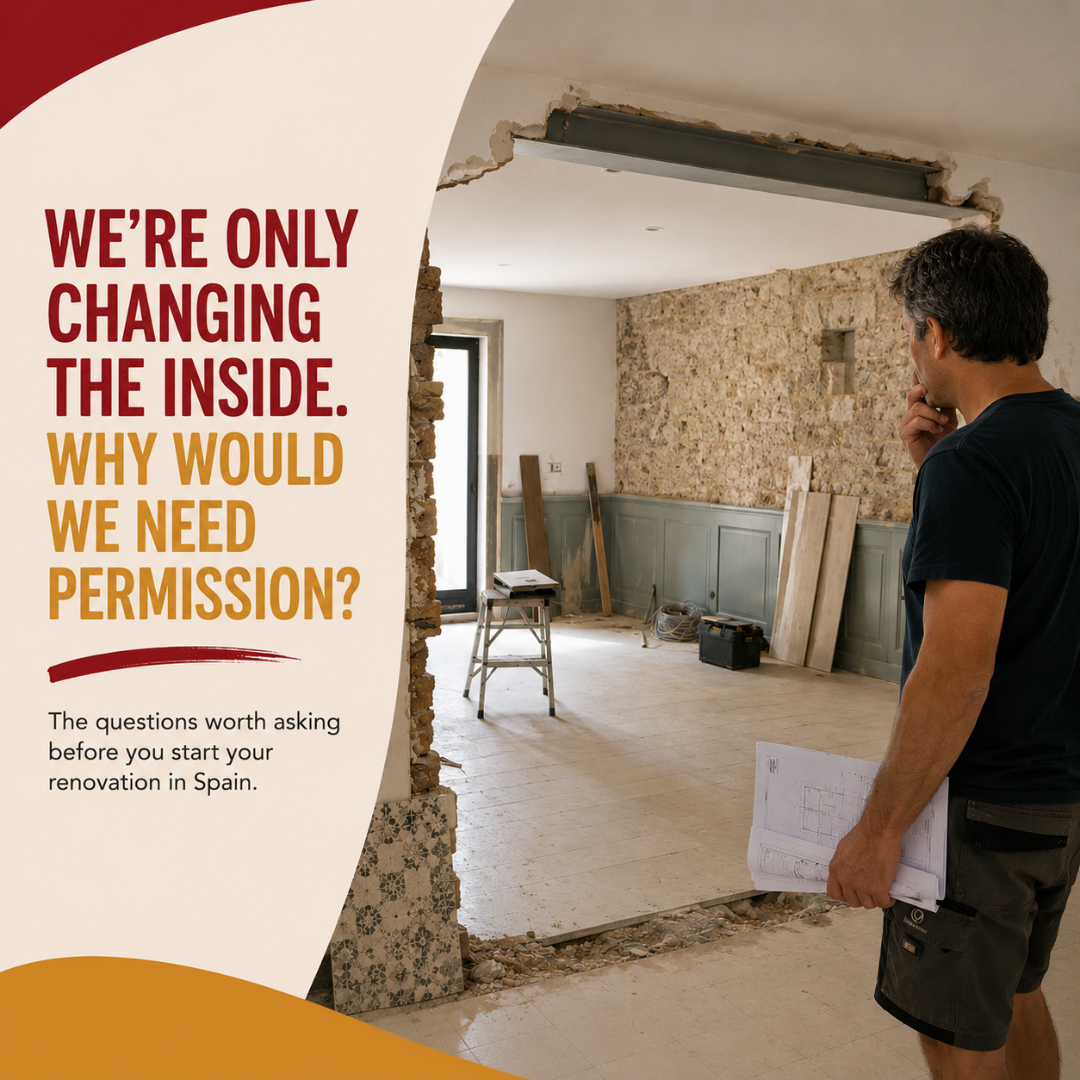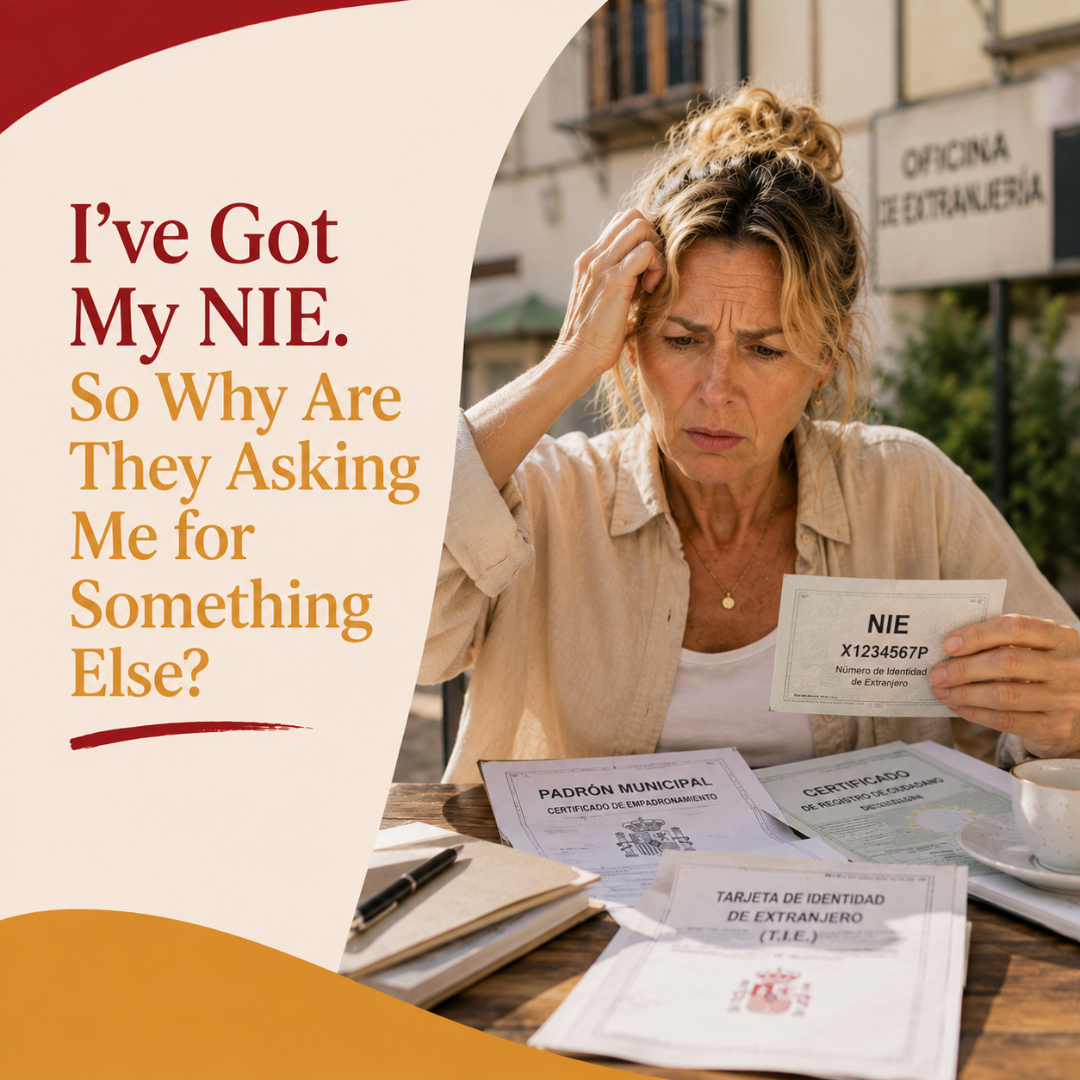
There’s a particular conversation we have with property owners that nearly always starts with the same sentence.
“But we’ve owned the house for years.”
And I completely understand why they say it.
They bought the property ten, fifteen, perhaps twenty years ago. They’ve paid the bills, looked after it and got on with life. Maybe they’ve renovated the kitchen, enclosed a terrace or added a pool along the way. Nobody has knocked on the door to say there’s a problem, and there’s never been any particular reason to think there might be one.
Then something changes.
Perhaps they decide to sell. Maybe they want to do some building work, or the property is being passed on to family. Sometimes it’s simply that an architect, lawyer or buyer asks for a document nobody has looked at for years.
Someone compares the paperwork with the property as it stands today and says:
“These don’t seem to match.”
That can be quite a moment.
Not necessarily because something terrible has been discovered. More often because the owner genuinely had no idea there was anything to discover.
The house has simply carried on being the house
I think this is the part people sometimes find difficult to understand.
If something in the paperwork is different, why hasn’t anybody noticed before?
Usually because nobody has had a reason to look.
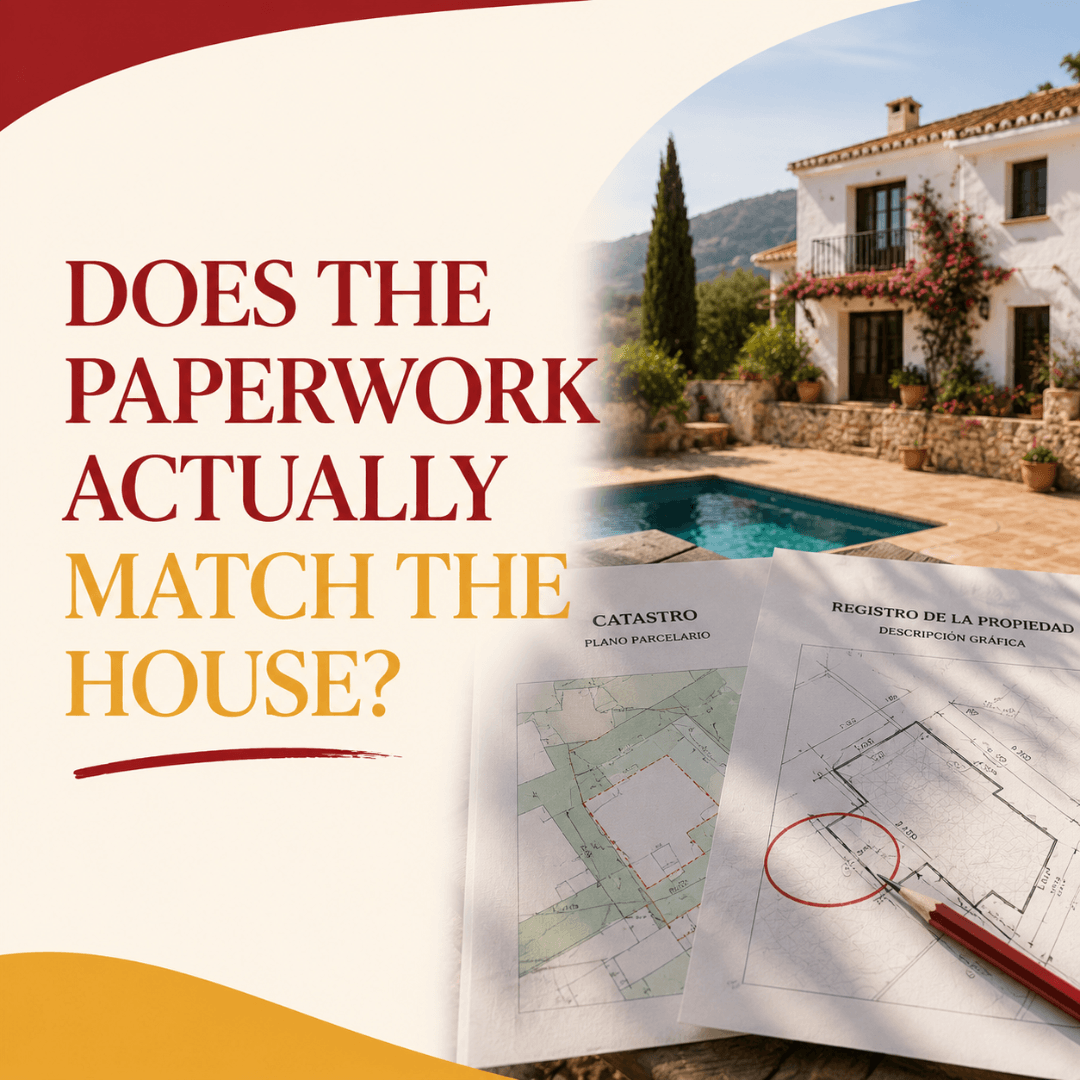
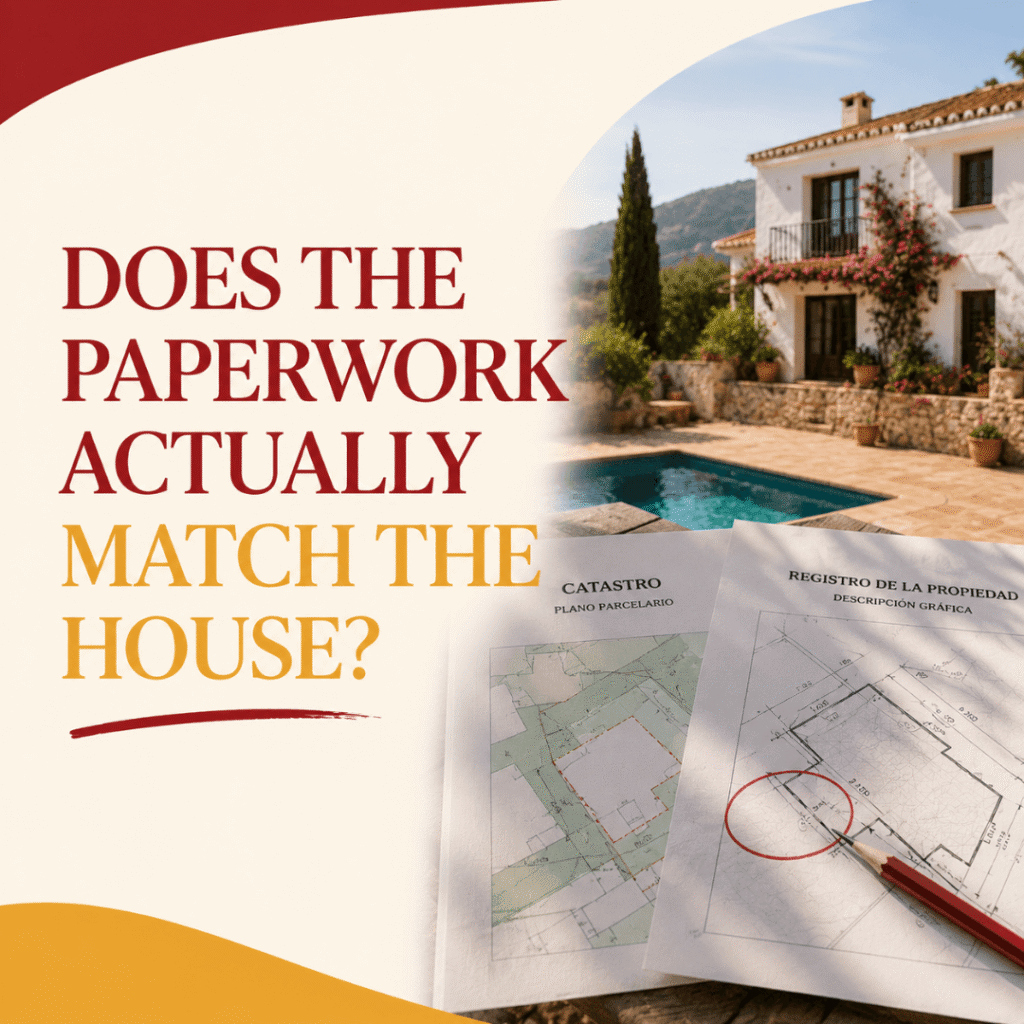
You can live perfectly happily in a house without regularly comparing its physical boundaries, buildings and measurements with the information held in the Catastro and the Registro de la Propiedad.
Most people don’t spend Sunday mornings doing that. Nor should they.
The difficulty is that properties change over time. A pool gets added. A terrace is enclosed. An extension may have been there for years. Boundaries can be understood differently, and descriptions written a long time ago don’t necessarily tell the story quite as clearly as you’d expect today.
Meanwhile, the house has quietly carried on being the house.
It’s only when somebody needs the records for something else that those differences suddenly become relevant.
Catastro and Registro aren’t two copies of the same thing
This catches quite a few people out, particularly if they bought in Spain after owning property somewhere with a different system.
The Catastro and the Registro de la Propiedad have different functions. Catastro contains cadastral descriptions and mapping used within Spain’s property administration, while the Property Registry records legal rights relating to the property.
There is a formal system for coordinating the graphical description of a registered property with Catastro, using cadastral mapping as its basis. But the fact that both records exist doesn’t mean you should automatically assume they are already graphically coordinated.
Then, of course, there’s another version of the property.
The one you’re standing in.
And every now and again those versions don’t quite tell the same story.
This doesn’t automatically mean you’ve got a serious problem
I want to be careful about this because property paperwork is one of those subjects where it’s very easy to frighten people unnecessarily.
A discrepancy is a reason to understand something. It isn’t automatically evidence of a disaster.
There are established procedures for dealing with differences in property descriptions and graphical information. Depending on what the issue actually is, that can involve cadastral information, georeferenced plans and, in some cases, procedures involving neighbouring owners. The correct route depends on the property and the nature of the discrepancy.
So when somebody sends us two documents and says, “I think we’ve got a problem,” we’re usually much more interested in establishing what they actually have before deciding that.
What does the Registro say?
What does Catastro show?
What’s physically there?
And, importantly, why are we looking at it now?
That last question matters more than people realise.
Someone preparing to sell may need to approach the situation differently from somebody thinking about building work. An inherited property can bring another set of questions again.
The paperwork hasn’t suddenly changed because you’re selling the house.
Your reason for needing it has.
I’d much rather find this on an ordinary Tuesday
There’s one thing in the original material that I wouldn’t change because it sums up this work rather well.
We’d much rather somebody discovered a discrepancy on an ordinary Tuesday than three weeks before they’re supposed to complete a sale.
Without a deadline hanging over you, there is time to understand what you’re looking at, speak to the right people and establish whether anything actually needs doing.
With a buyer waiting, an architect unable to proceed or a family trying to deal with an inheritance, the exact same question can feel very different.
And this is something I think existing property owners sometimes miss about Solving Spain.
A lot of our conversations aren’t with people who are buying a house.
They’re with people who already have one.
Someone sends us an old escritura because they’ve never really understood part of the description. Another owner has noticed the square metres don’t seem to agree. Someone is preparing to sell and wants to know whether the pool or extension is properly reflected. Another has Catastro, Registro and perhaps AFO paperwork in front of them and isn’t quite sure how any of it fits together.
Sometimes we look at it and the explanation is reassuringly straightforward.
Other times there is something that needs sorting out, in which case we can help establish what needs doing and which professional needs to be involved.
Either way, knowing is usually easier than wondering.
If you’ve owned your Spanish property for years and have never actually compared what the records say with what’s standing there today, there’s no reason to assume something must be wrong.
But equally, years of trouble-free ownership aren’t necessarily proof that every record tells exactly the same story.
If there’s something you’ve never quite understood, send us what you have and tell us what you’re hoping to do next. We can help you work out whether there’s anything worth looking at before somebody else needs the answer urgently.