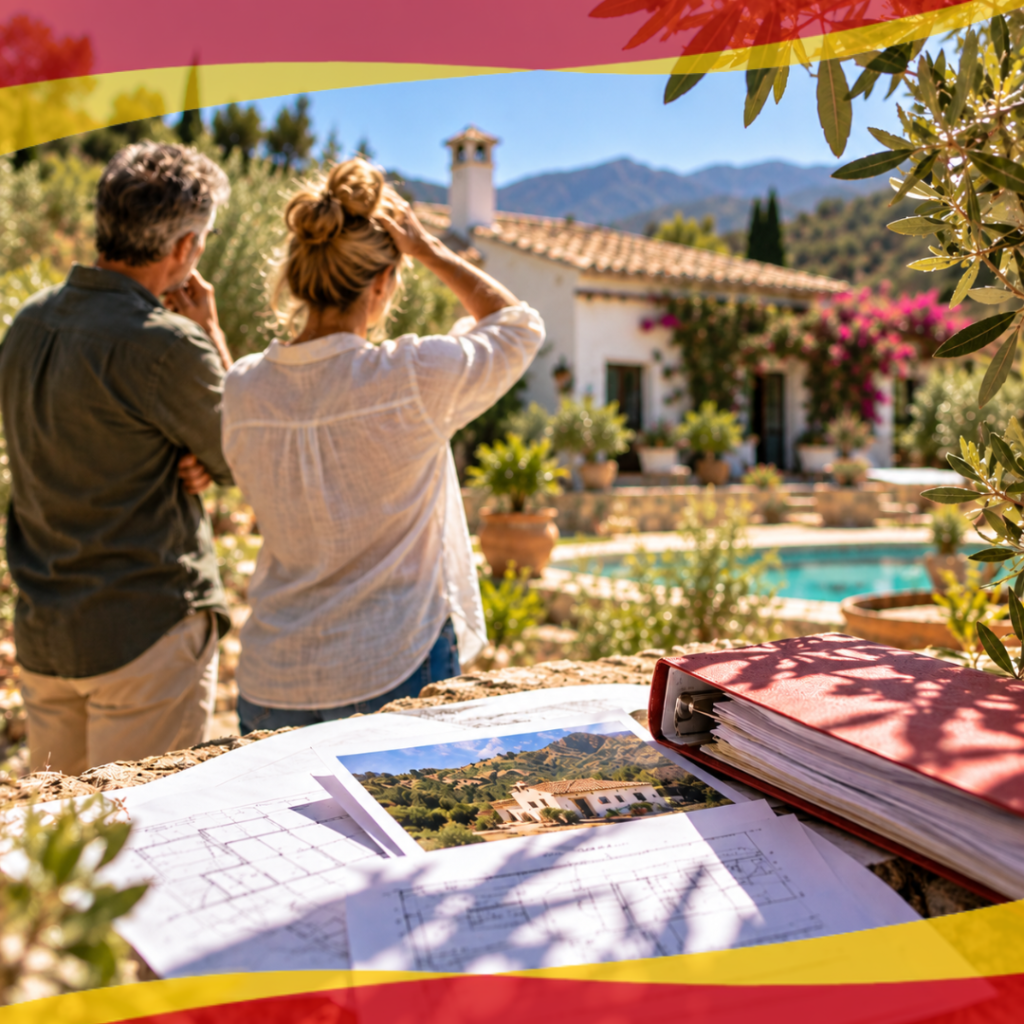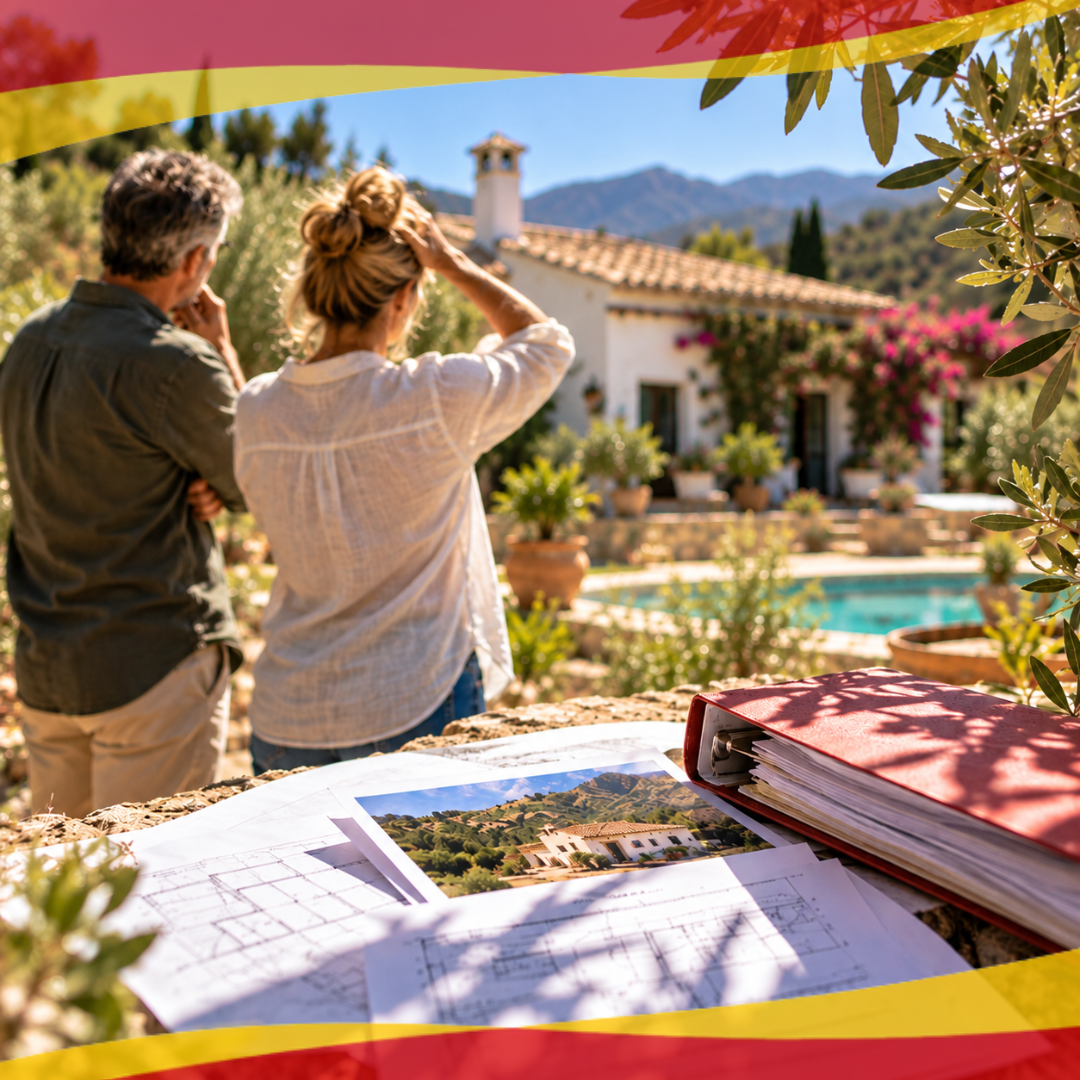
They had already decided where the table was going.
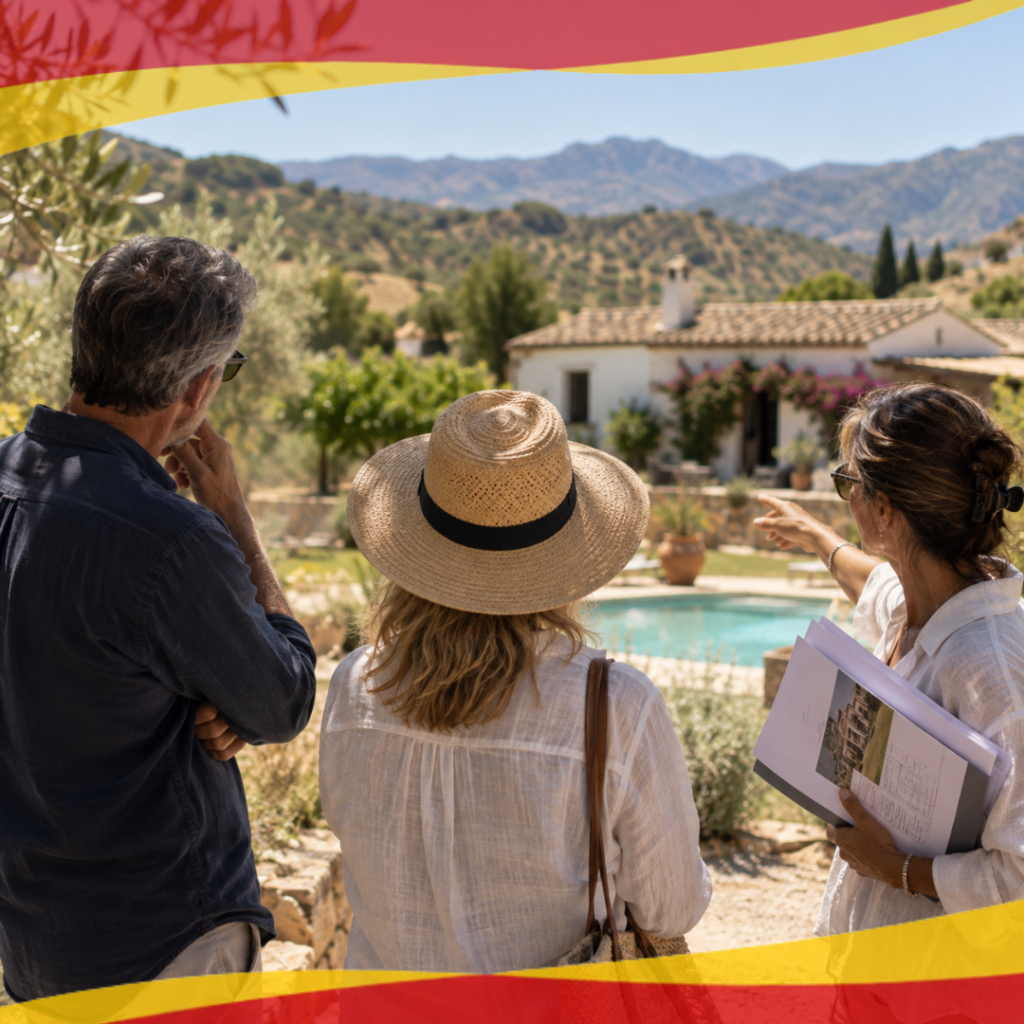
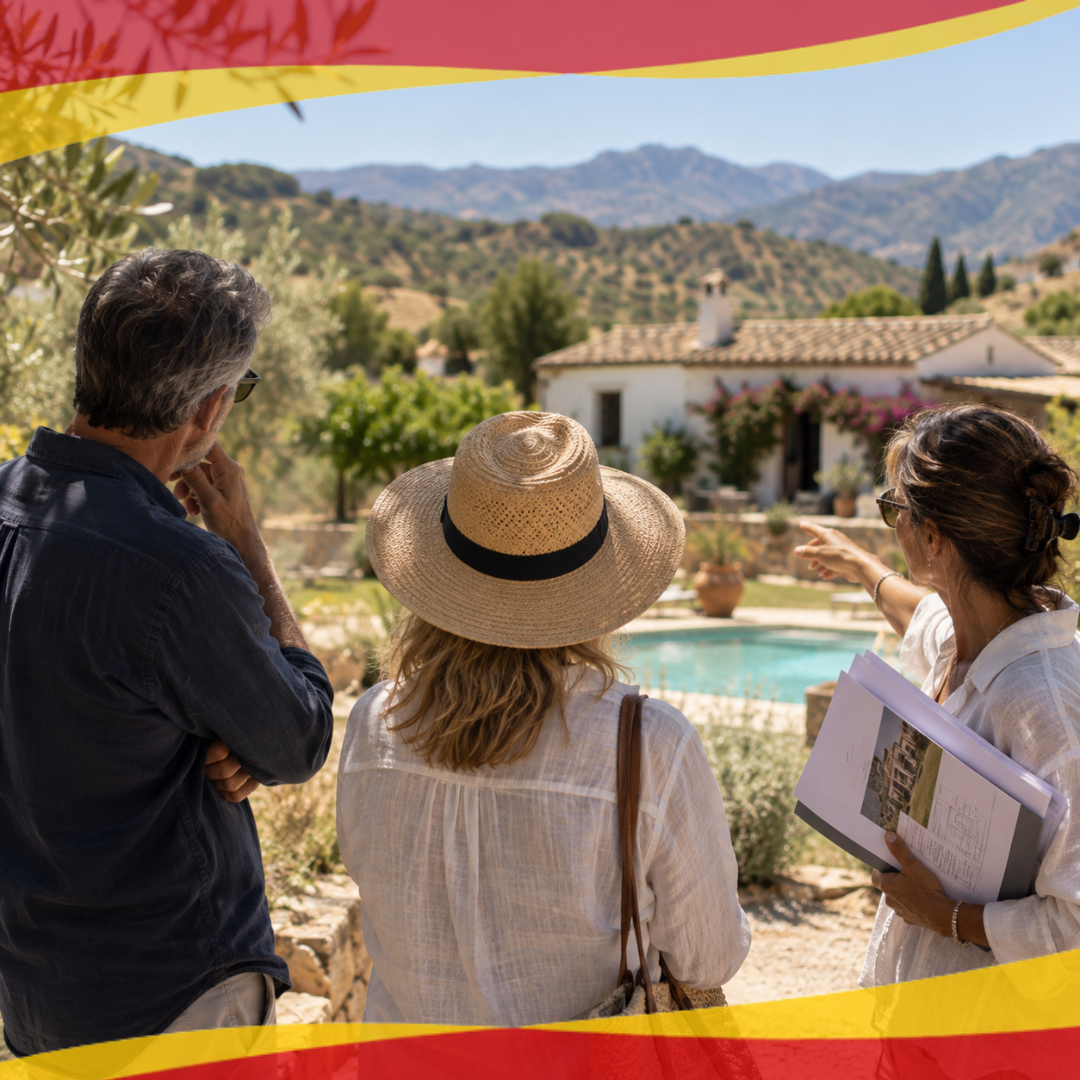
Just outside the kitchen, underneath the covered terrace, where breakfast would come with a view across the garden towards the mountains. The house had taken months to find and, by the second viewing, they were no longer really looking at somebody else’s property. They were beginning to imagine their own life there.
There was plenty to encourage them. An old beamed ceiling in the sitting room, a pool tucked behind the house, enough land to feel private without taking on an agricultural project, and that terrace which seemed to settle the question every time they stood on it.
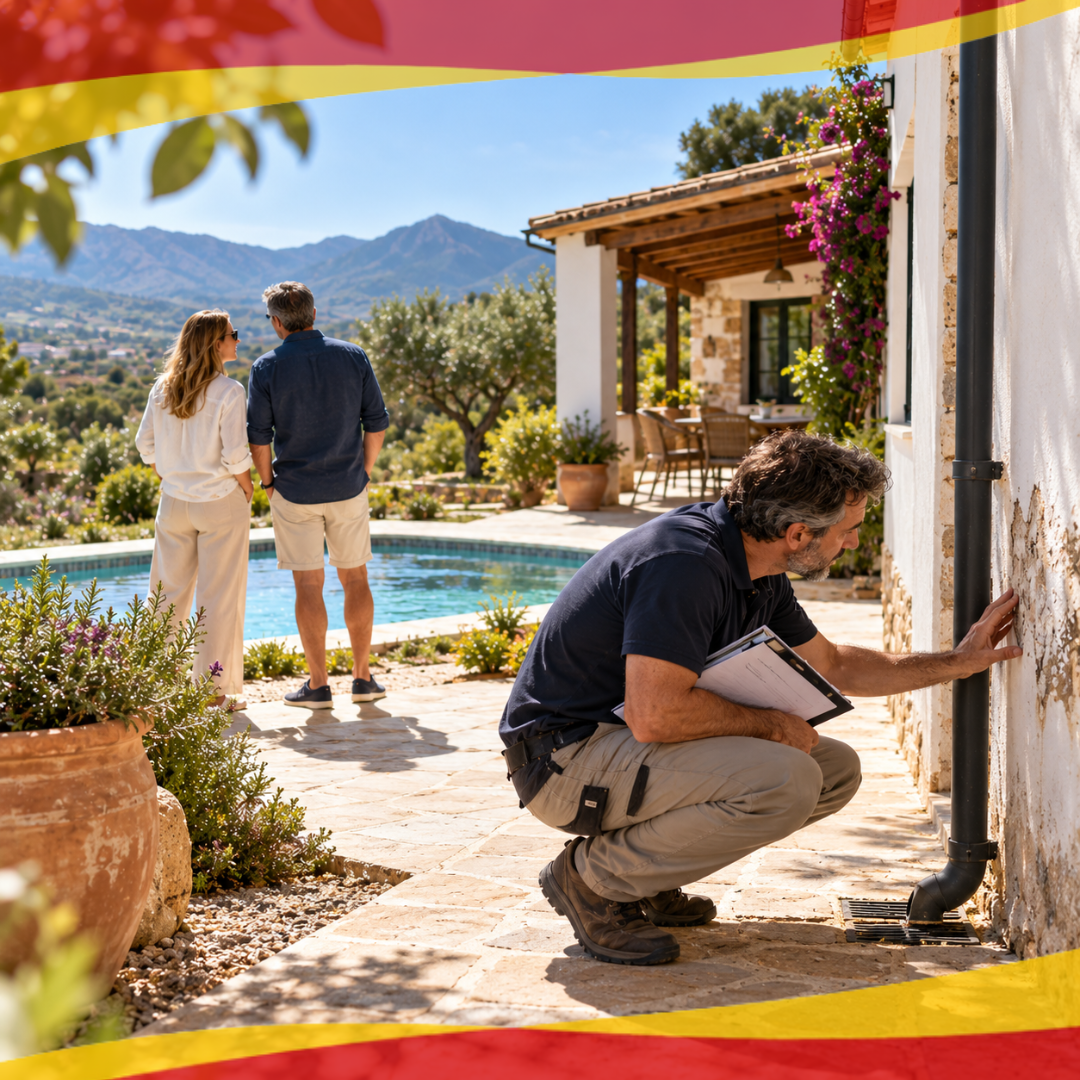
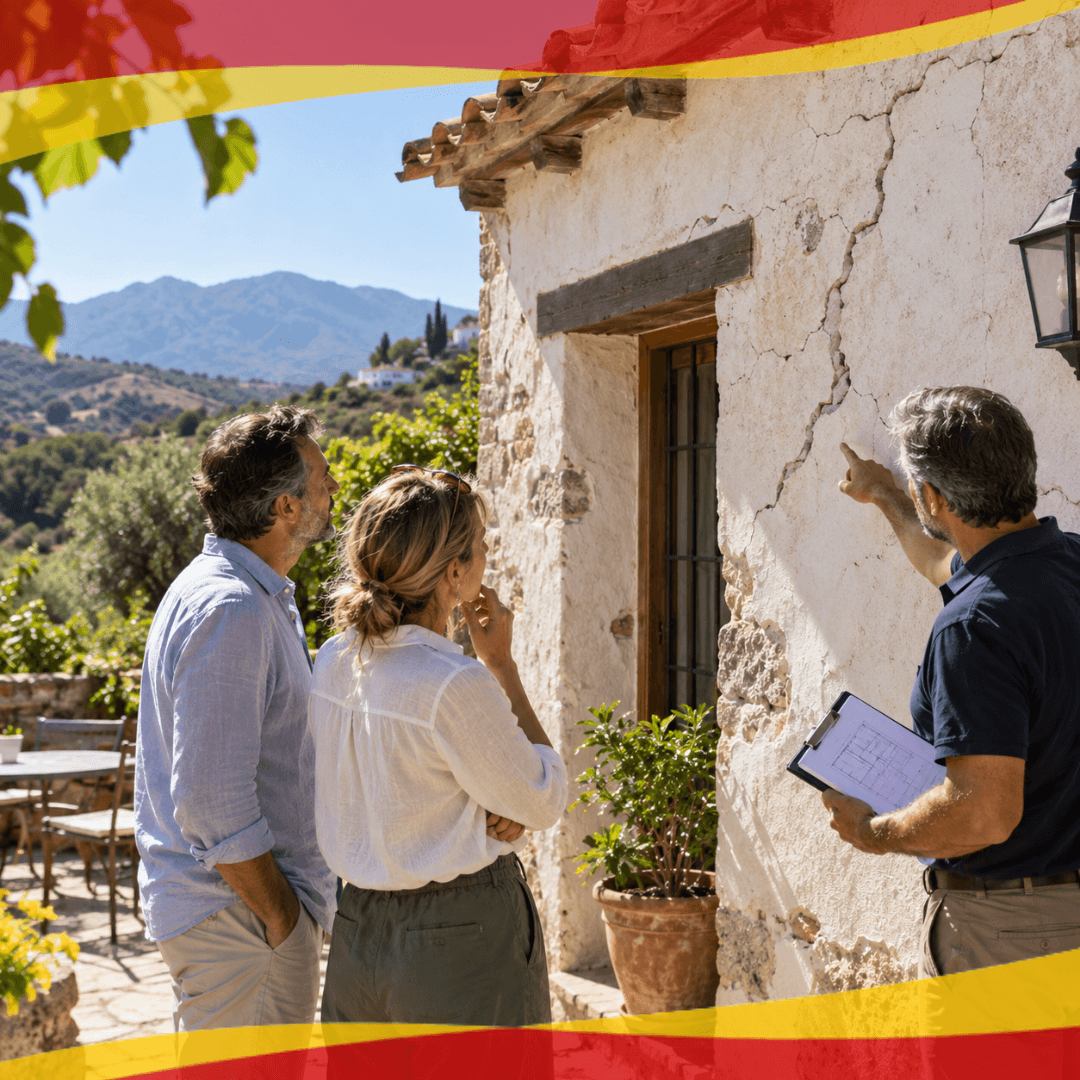
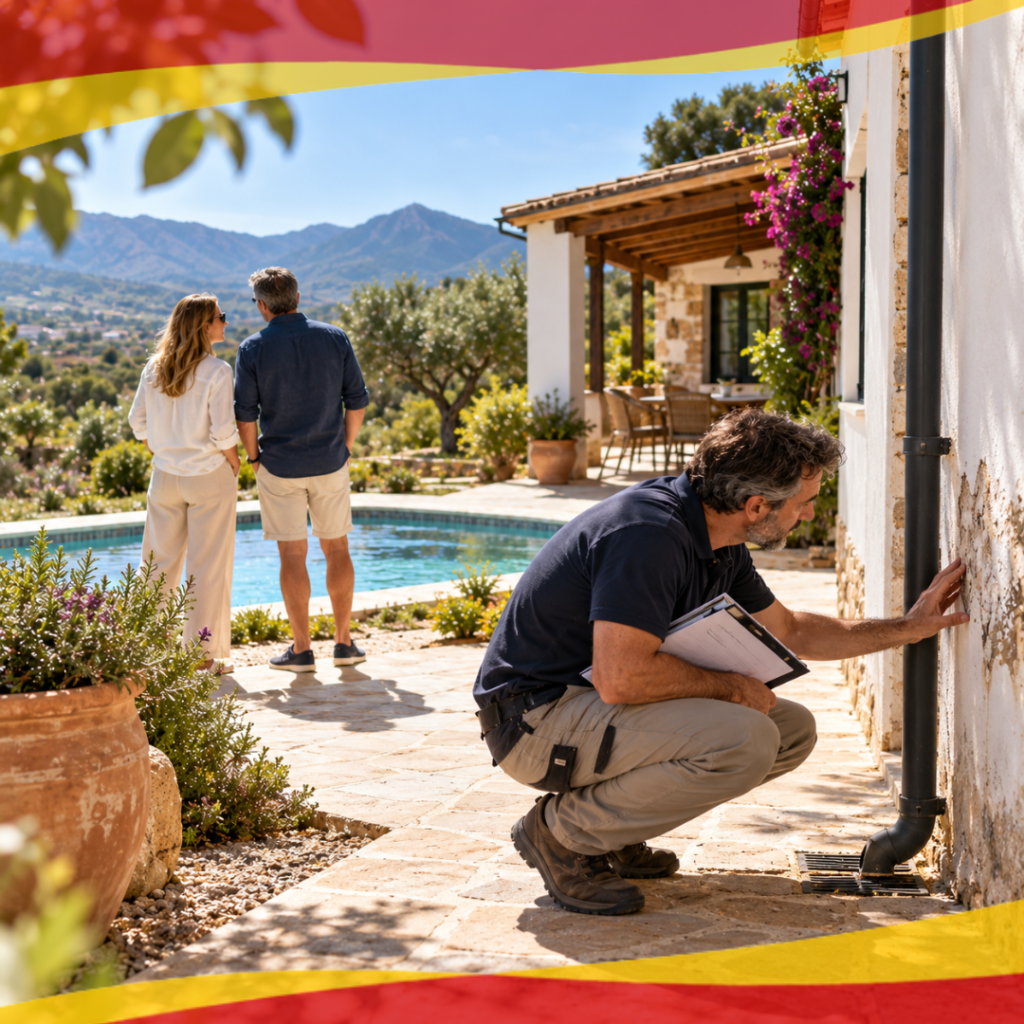
When the surveyor arrived, he spent remarkably little time looking at the view.
He was interested in some staining at the bottom of a wall. Then a crack that had been filled and painted. Around the side of the house, he stopped where the outside ground level came surprisingly high against the wall and looked at where rainwater would go in a proper downpour.
Then it was the roofline, the retaining wall and the area around the pool.
Nothing he had seen meant the buyers suddenly had to walk away. In fact, nothing at that stage was particularly dramatic. He was simply looking at a different version of the same house.
That is one of the things buyers don’t always expect from a property purchase survey. They have spent their viewings deciding whether they want the house. The surveyor arrives with a completely different job: to help them understand the house they have decided they want.
A long survey report doesn’t necessarily mean a bad house
There can be an uncomfortable moment when a buyer first opens a survey report on an older Spanish property.
The house they loved on Saturday has somehow become several pages of moisture readings, cracks, roof observations, drainage, ageing installations and things that ought to be monitored or repaired. Read quickly, it can sound as though the surveyor visited an entirely different property.
Usually, some perspective is needed.
Older houses have histories. Rural houses especially have often been repaired, altered and extended over many years, sometimes by several different owners. Materials change, building methods change and parts of the property age differently. A good survey is supposed to notice those things.
Some findings deserve further investigation. Others tell you about work you may need to budget for in the next few years. There may be something worth discussing with the seller, or something a specialist needs to inspect more closely. And there will often be observations that are simply useful to know when you become the person responsible for maintaining the house.
A surveyor mentioning something does not automatically turn it into a reason not to buy.
That distinction matters because we occasionally see buyers become more worried by the number of points in a report than by what those points actually mean. Ten ordinary maintenance observations can look more frightening on paper than one short paragraph about something that genuinely needs further investigation.
The useful conversation therefore isn’t, “How many problems did the survey find?” It is, “Which of these things actually matter to this purchase?”
And sometimes that conversation leads somewhere buyers weren’t expecting at all.
The surveyor may be looking at an extension at the back of the house, for example, and ask when it was built. Or notice that a terrace appears to have been enclosed. A pool, garage or converted outbuilding may prompt another question.
At that point, we have moved beyond the condition of the building.
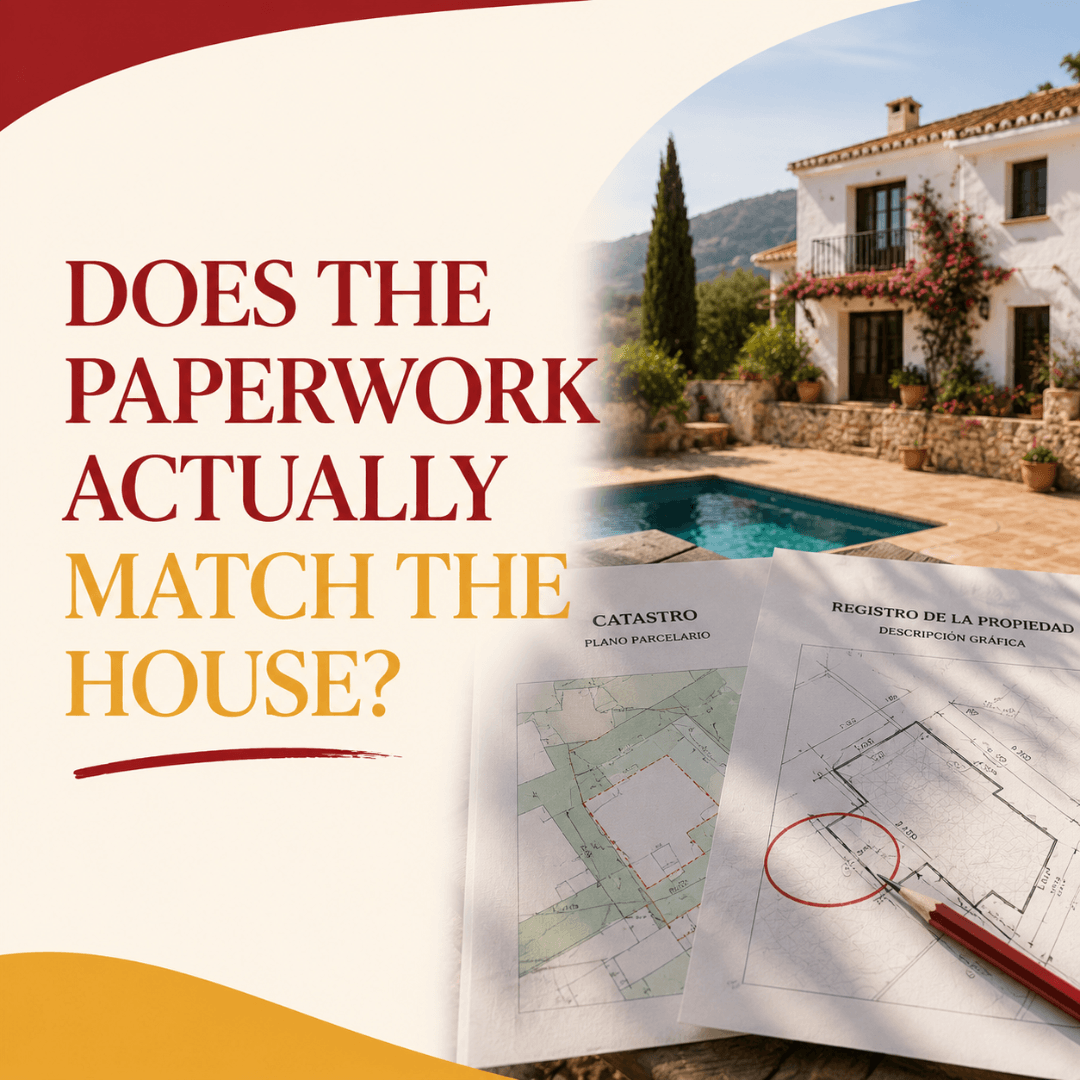
We are beginning to ask whether the property standing in front of us and the property described in the paperwork tell the same story.
The things you can’t see during a viewing
This is where a property purchase can become slightly more complicated than buyers expect.
A bedroom can look perfectly sound and still raise a documentary question. A beautifully finished extension doesn’t tell you when it was built or what permissions were required. Looking at a swimming pool tells you very little about the paperwork behind it.
The same is true of certificates.
Buyers sometimes ask us whether a property has “all the certificates”, as though there should be a standard folder that accompanies every house in Spain. It would certainly make things easier if there were.
In reality, what we expect to find depends on the property itself: its age, location and history, the work that has been carried out, the type of building and the documentation already available. A modern apartment and an old rural finca are unlikely to present exactly the same questions.
That is why we are wary of treating a generic internet checklist as proof that a property has been properly checked. A list may tell you the names of documents worth asking about, but it cannot tell you whether those are the right documents for the house in front of you, or whether something about that particular property deserves a closer look.
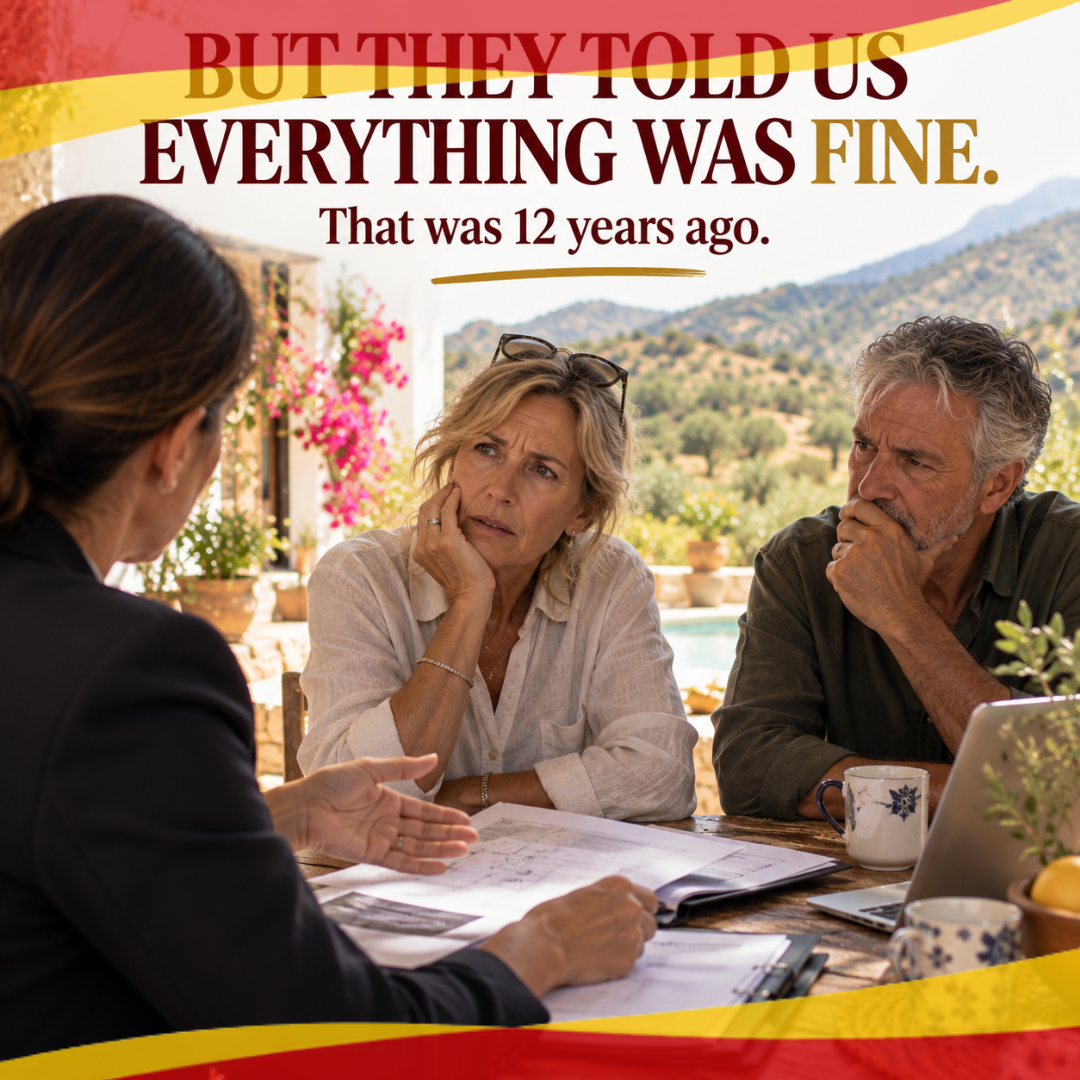
We have seen how easily a gap can appear here even when everyone involved is doing their own job properly. A surveyor may have been instructed to report on the physical condition of the building. A lawyer is dealing with the legal side of the purchase. The agent is managing the sale. An architect may only become involved if a particular technical or planning question appears.
The buyer can quite reasonably assume that somewhere between all those people, “the property” has been checked.
But somebody still needs to notice if a question sits between their different roles.
That is often where our work on a purchase becomes less about producing another checklist and more about joining things together. If the survey raises a question about an alteration, does that need to be followed through in the paperwork? If something physical doesn’t appear to match the documentation, who is the right person to investigate it? If a certificate is missing, is it actually required in this situation, and what does that mean for the purchase?
Not every question leads to a problem. Quite often, the answer is straightforward once the right person is asked.
The important part is that somebody asks.
You can know all of this and still buy the house
There is a strange idea around property surveys that a successful one is a report with very little in it.
We don’t really see it that way.
A useful survey gives a buyer enough information to make a better decision. Sometimes that information changes the decision, but often it simply changes the buyer’s understanding of what they are taking on.
You might discover that the roof will probably need attention in a few years and decide you’re comfortable budgeting for it. There may be damp in one part of an old house that needs managing rather than panicking about. A technical question might need an architect to look more closely before you proceed. Something else may be significant enough to become part of a conversation with the seller.
Occasionally, of course, the findings are serious enough for a buyer to reconsider completely.
But that isn’t the only measure of whether a survey has done its job.
Many of the properties people come to us to buy in Andalucía are appealing precisely because they aren’t brand new boxes. They are village houses that have changed over generations, fincas that have grown with the families living in them, or villas where different owners have added, altered and improved things over the years.
That history can be part of what makes the property interesting. It can also mean there is more to understand.
The buyers with the mountain view didn’t need the surveyor to tell them whether they liked the house. They already knew that.
What they needed was somebody to look where they hadn’t been looking, and then to make sure any questions that came from that inspection didn’t simply stop at the edge of the survey report.
That might mean further technical advice. It might mean checking documentation or establishing whether the appropriate certificates exist. It might mean asking the lawyer a more specific question because of something found at the property.
Or it might simply mean understanding that the house will need some work over the next few years and deciding that they still want it anyway.
That is the position we want a buyer to reach before committing to a property in Spain.
Not expecting a perfect house, and not frightened by every imperfection.
Just knowing what they are buying.
At Solving Spain, we can arrange property purchase surveys and help bring together the physical inspection, available property documentation and any questions that need to go to an architect, lawyer or other appropriate professional.
Because the house you see on the viewing is only part of the purchase. Before you buy it, it is worth understanding the rest of the story too.
WhatsApp: +34 695 398 679
Email: info@solvingspain.com
Website: www.solvingspain.com