There’s something people often say when we start talking about property paperwork.
“We’re not planning to sell yet.”
Usually what they mean is that there’s no particular urgency. The house is fine, they’re living in it happily and there’s nothing sitting in the diary that requires the paperwork to be looked at.
And in many ways, that’s exactly why it can be a good time to do it.
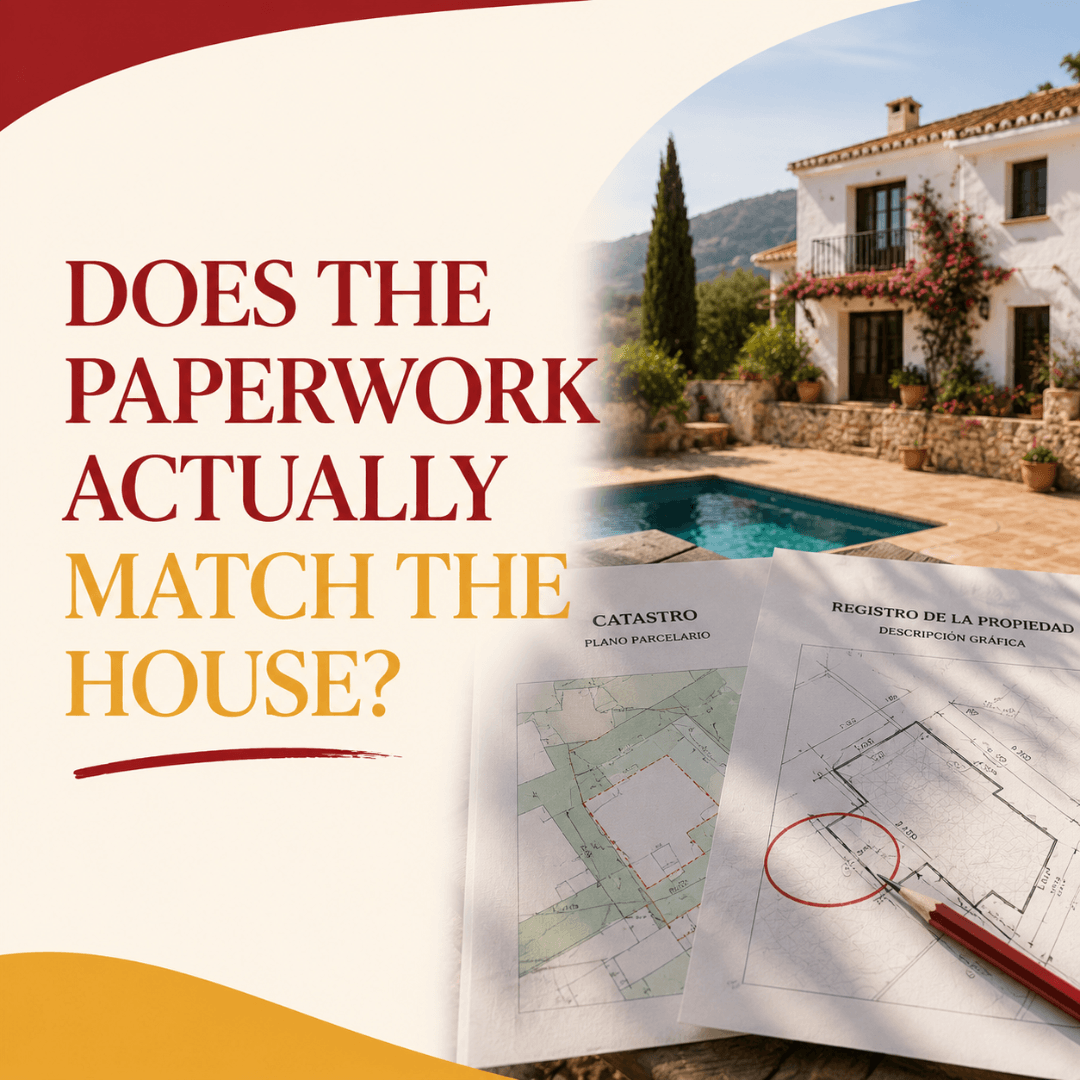
We recently talked about the differences that can sometimes appear between a property, the Catastro and the Registro. One of the questions that naturally follows is why you would bother looking at any of that if you aren’t actually trying to sell.
The answer isn’t that everybody should rush off and start looking for problems.
It’s much more ordinary than that.
Things are generally easier to understand when nobody is waiting for the answer.
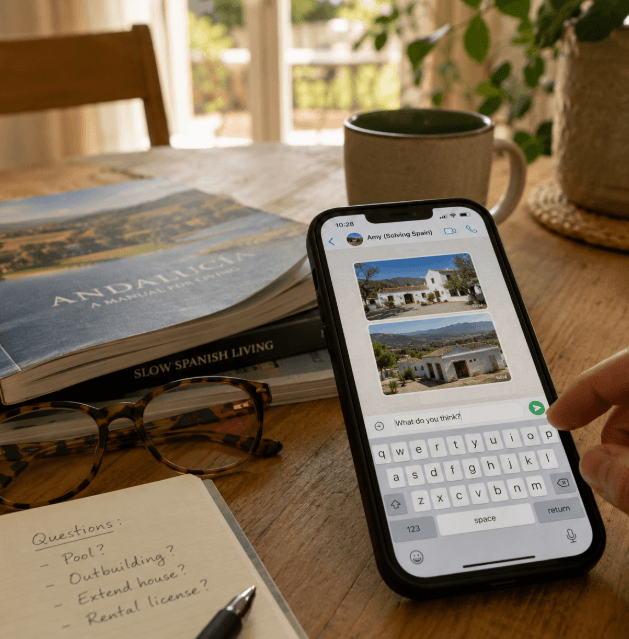
Someone who has owned a house for fifteen years might have an extension that has been there since before they bought it. There may be a pool that appears somewhere but not somewhere else, an old outbuilding nobody has thought about for years, or simply a description in the paperwork that they’ve never quite understood.
None of it has stopped them enjoying the property.
Then one day they decide to sell.
And suddenly the question isn’t “What does this mean?”
It’s “What does this mean, and can we sort it before the buyer pulls out?”
Those are very different conversations.
The deadline is often what makes it stressful
We see this particularly when people are preparing a property for sale.
They’ve found an agent. Photographs are being arranged. Perhaps they already have somebody interested. Then the paperwork starts being gathered properly and a question appears.
At that point, even something relatively straightforward can feel enormous because there is now somebody waiting on the other side of it.
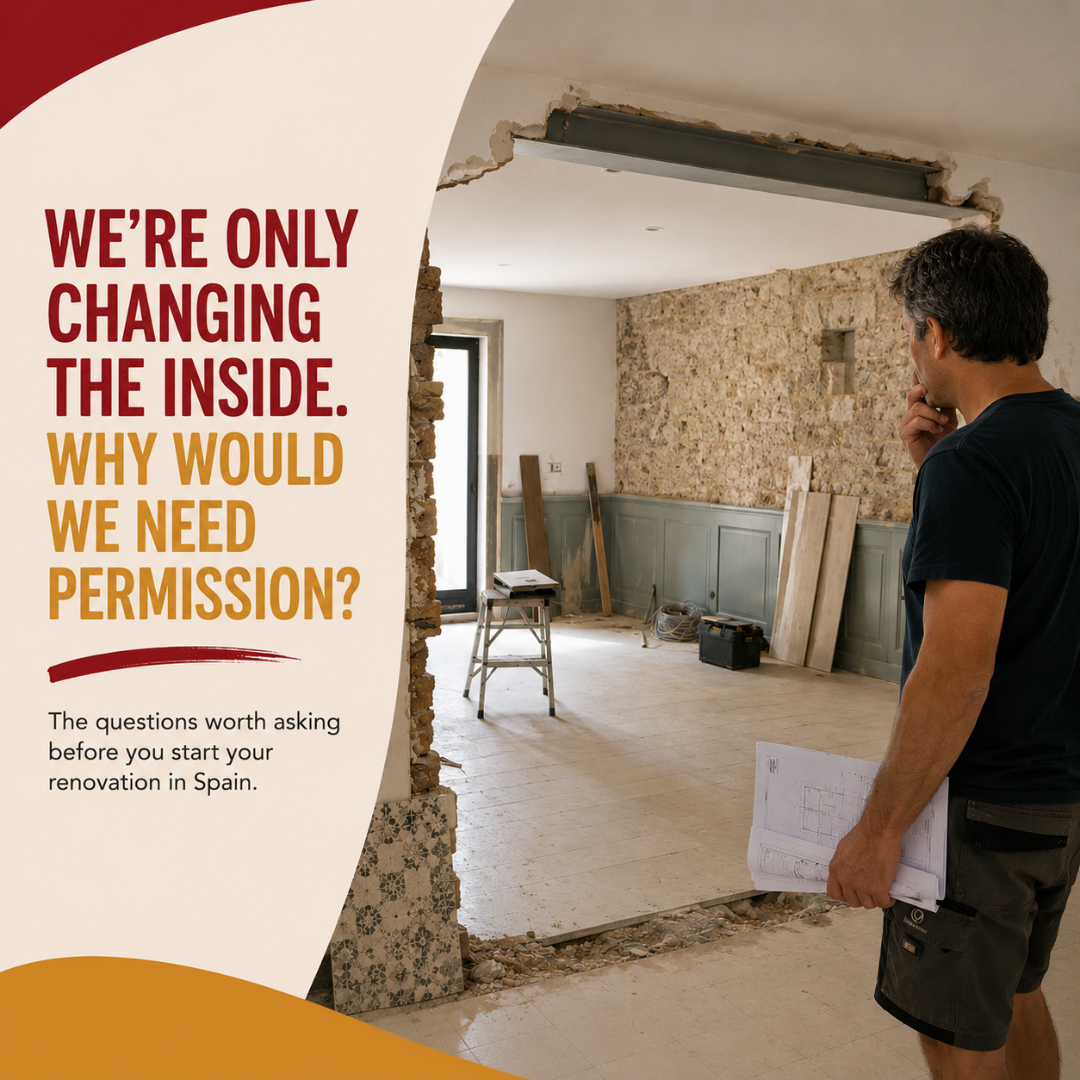
The same thing can happen with renovations. You finally decide to do the work you’ve talked about for years, speak to an architect and discover that something about the existing property needs clarifying before the new project can move forward.
Or perhaps it isn’t selling or renovating at all.
Sometimes families only start looking closely at old property paperwork when somebody dies and the next generation has to make sense of what has been sitting in a folder for twenty years.
The property hasn’t suddenly developed a problem.
Life has simply reached the point where somebody needs a clear answer.
There’s a difference between checking and fixing
This is worth saying because I don’t think every property owner needs to launch into an enormous paperwork exercise simply because they’ve read an article online.
Checking something does not automatically mean changing it.
Sometimes we look at paperwork and the explanation is reassuringly straightforward. Sometimes there is something that should be dealt with. Occasionally the sensible answer is that another professional needs to look at a particular part of it.
The useful thing is knowing which of those situations you’re actually in.
That might mean comparing what appears in the Catastro with the Registro. It might mean understanding how an extension, pool or outbuilding is recorded. With rural properties there can be AFO questions. In other cases it may simply be working out what an old document actually relates to.
The point isn’t to manufacture work.
It’s to understand what you have.
An ordinary Tuesday is quite a good day for it
We used this phrase in the last article because it sums up the difference rather well.
We’d much rather somebody discover something on an ordinary Tuesday than three weeks before they’re supposed to complete a sale.
On the ordinary Tuesday, you can ask questions.
You can find the old paperwork. Speak to the right professional if one is needed. Understand the answer. Decide whether anything actually needs doing.
There isn’t a buyer waiting for their lawyer to give the all-clear. There isn’t a builder whose start date depends on an architect getting an answer. There isn’t a family trying to deal with everything else that comes with an inheritance.
You simply have time.
And time makes Spanish bureaucracy considerably less dramatic.
Start with what you already have
If this has made you look towards the cupboard where the property folder lives, don’t feel you need to pull everything out and somehow understand it yourself.
That isn’t really the point.
Start with what you have and the reason you’re thinking about it.
Perhaps you know there was an extension years ago but aren’t sure how it appears in the records. Maybe you’ve always wondered whether the pool was properly recorded. Perhaps Catastro and Registro appear to show different measurements and nobody has ever explained why.
Or perhaps you’ve simply got a very thick folder and no idea which pieces of it still matter.
Those are all perfectly normal starting points.
A lot of our work at Solving Spain is exactly this: helping existing owners understand the paperwork they already have, identifying what actually needs checking and, where necessary, getting the right technical or legal professional involved.
You don’t need to wait until you’re selling.
In fact, if there’s something you’ve quietly wondered about for years, the period when absolutely nobody needs an urgent answer might be the nicest time to finally ask the question.
If you’d like us to look at what you have, send us a WhatsApp or email and tell us what you’re wondering about. We can start there.
📱 WhatsApp: +34 695 398 679
📧 info@solvingspain.com
🌐 www.solvingspain.com