TL;DR:
If you’re selling property in Spain, you’ll likely need a Certificado de Residencia Fiscal — an official document proving your tax residency. It’s key to determining how much tax you owe, avoiding withholding taxes, and claiming benefits from international tax treaties. Required by notaries and tax authorities, this certificate ensures your property sale is compliant and tax-efficient.
Need help getting yours? We’ll handle the process — stress-free and Spainfully simple!
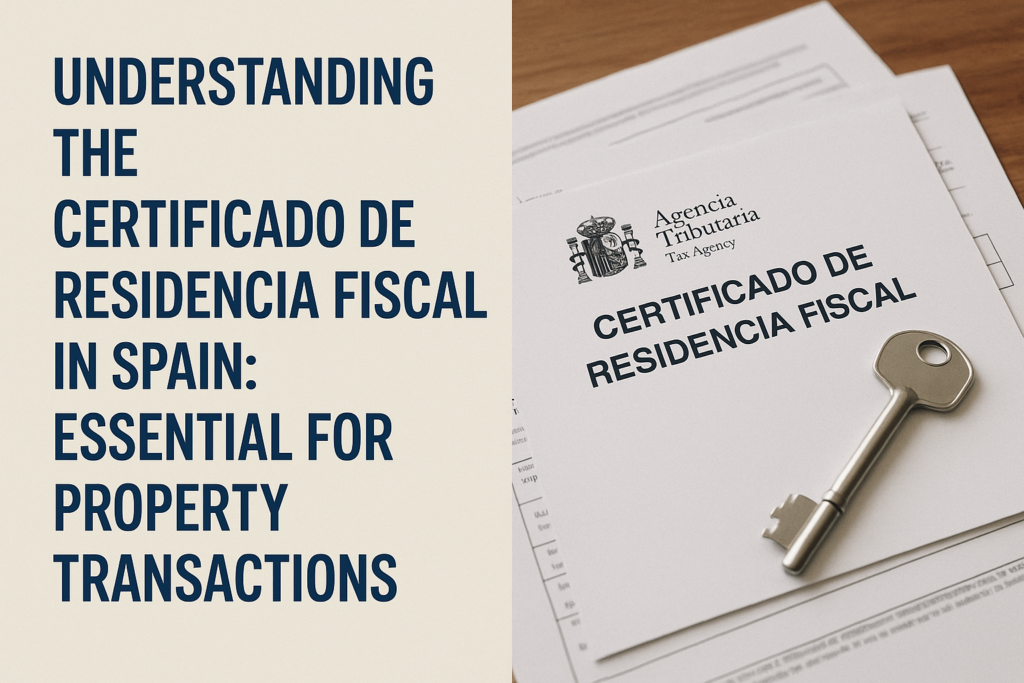
In Spain, the Certificado de Residencia Fiscal (Certificate of Fiscal Residence) is a crucial document required for various financial and legal transactions, including the sale of a property. Let’s delve into what the Certificado de Residencia Fiscal entails and why it’s essential when selling your house in Spain.
What is the Certificado de Residencia Fiscal?
The Certificado de Residencia Fiscal is a certificate issued by the Spanish tax authorities (Agencia Tributaria) that confirms an individual’s fiscal residency status in Spain. Fiscal residency refers to the country where an individual is considered a tax resident for income tax purposes. In Spain, individuals are deemed tax residents if they spend more than 183 days per calendar year in the country, or if their main economic interests are located in Spain.
Why Do You Need It to Sell Your House?
- Tax Obligations:
As a seller of a property in Spain, you are subject to various tax obligations, including capital gains tax (Impuesto sobre Incremento de Patrimonio de la Venta de Bienes Inmuebles) on any profit made from the sale. The Certificado de Residencia Fiscal helps determine your tax residency status and the applicable tax rates.
- Withholding Tax:
If you are a non-resident seller, the buyer is required to withhold a percentage of the sale price (3% for EU residents, 3% to 5% for non-EU residents) and remit it to the tax authorities as a prepayment of any potential capital gains tax liabilities. The Certificado de Residencia Fiscal may entitle you to a reduced withholding tax rate or exemption based on any applicable tax treaties between Spain and your country of residence.
- Tax Treaty Benefits:
Spain has tax treaties in place with various countries to prevent double taxation and provide tax benefits for residents of those countries. The Certificado de Residencia Fiscal may be required to avail yourself of these benefits, such as reduced tax rates or exemptions, when selling your property in Spain.
- Legal Requirement:
In many property transactions, the buyer’s notary or legal representative may request the Certificado de Residencia Fiscal as part of the documentation required for the sale. Providing this certificate helps ensure compliance with legal and tax regulations governing property transactions in Spain.
How to Obtain the Certificado de Residencia Fiscal:
To obtain the Certificado de Residencia Fiscal, you must apply to the Spanish tax authorities (Agencia Tributaria) and provide documentation to support your residency status, such as proof of address, employment, or financial ties to Spain. The application process may vary depending on your individual circumstances and residency status.
The Certificado de Residencia Fiscal is a vital document for individuals selling property in Spain, as it helps determine tax residency status, withholding tax rates, and eligibility for tax treaty benefits. By ensuring compliance with tax regulations and providing the necessary documentation, you can facilitate a smooth and legally compliant property transaction in Spain.
Take the Stress Out of Selling Your Property Secure Your Certificado de Residencia Fiscal Today – It Doesn’t Have to be Spainful!