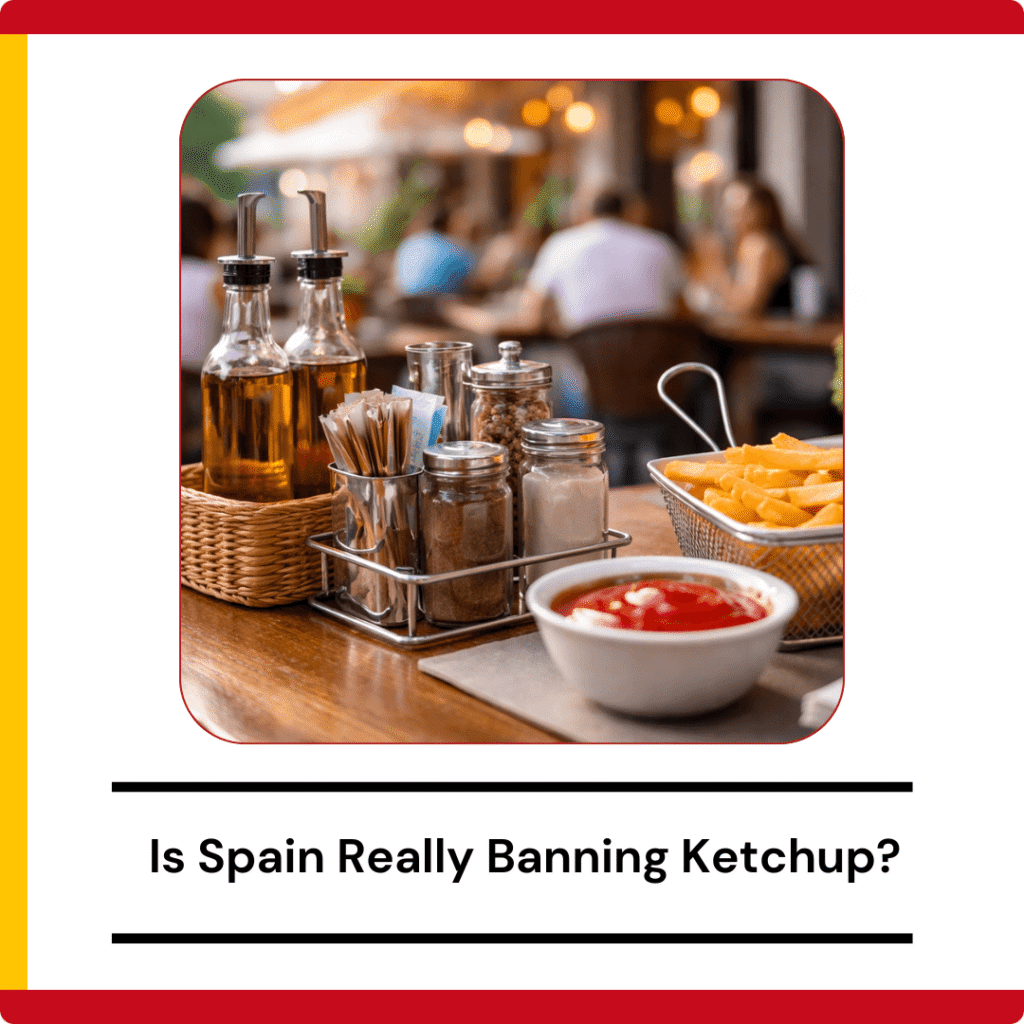
It sounds dramatic, but from August 2026, ketchup — along with sugar, mayonnaise and other condiments — will no longer be served in single-use sachets when you eat out in Spain. The change is not about banning ketchup itself. It is about how these everyday extras are served.
The shift follows new European Union rules designed to cut plastic waste, and it will affect cafés, bars, restaurants and hotels across the country.
What is actually being banned?
Spain is not banning ketchup, sugar or sauces. What is being phased out are the small disposable packets traditionally handed out with meals eaten on the premises.
From 12 August 2026, hospitality businesses will no longer be allowed to provide single-use condiment sachets for customers dining in. This includes:
- ketchup and mayonnaise
- sugar and sweeteners
- salt, oil, vinegar and sauces
The rule applies only to on-site consumption. For takeaway or delivery orders, individual sachets can still be used.
Why is Spain doing this?
The change is part of a wider European effort to reduce packaging waste. Single-use items account for a significant share of everyday rubbish and are often difficult to recycle properly, particularly when they are small or contaminated with food.
By removing products that are designed to be used once and thrown away, the EU aims to reduce waste at source rather than relying solely on recycling.
What will replace sachets?
Instead of disposable packets, bars and restaurants will move to reusable or refillable alternatives. In practice, this is expected to include:
- refillable bottles or cruets on tables
- pump dispensers for sauces
- reusable containers for sugar and sweeteners
For many Spanish establishments, this will feel familiar rather than new. Olive oil and vinegar bottles have long been standard on restaurant tables.
Will this affect diners and tourists?
For most people, the change will be minor. Condiments will still be available, just without individual plastic wrapping.
There may be a short adjustment period, particularly in fast-food settings, but the overall eating-out experience is unlikely to change significantly.
When does it start?
The new rules come into force in August 2026, giving businesses time to adapt their suppliers, hygiene procedures and service routines.
This measure forms part of a broader set of EU packaging reforms that will be introduced gradually, with future changes expected to affect other sectors such as hotels and personal care products.
So, is ketchup really disappearing?
No. Ketchup is not being banned.
What is disappearing are the tiny plastic sachets that come with it. From 2026, eating out in Spain will look slightly different — fewer single-use packets, more reusable containers — and a lighter environmental footprint.