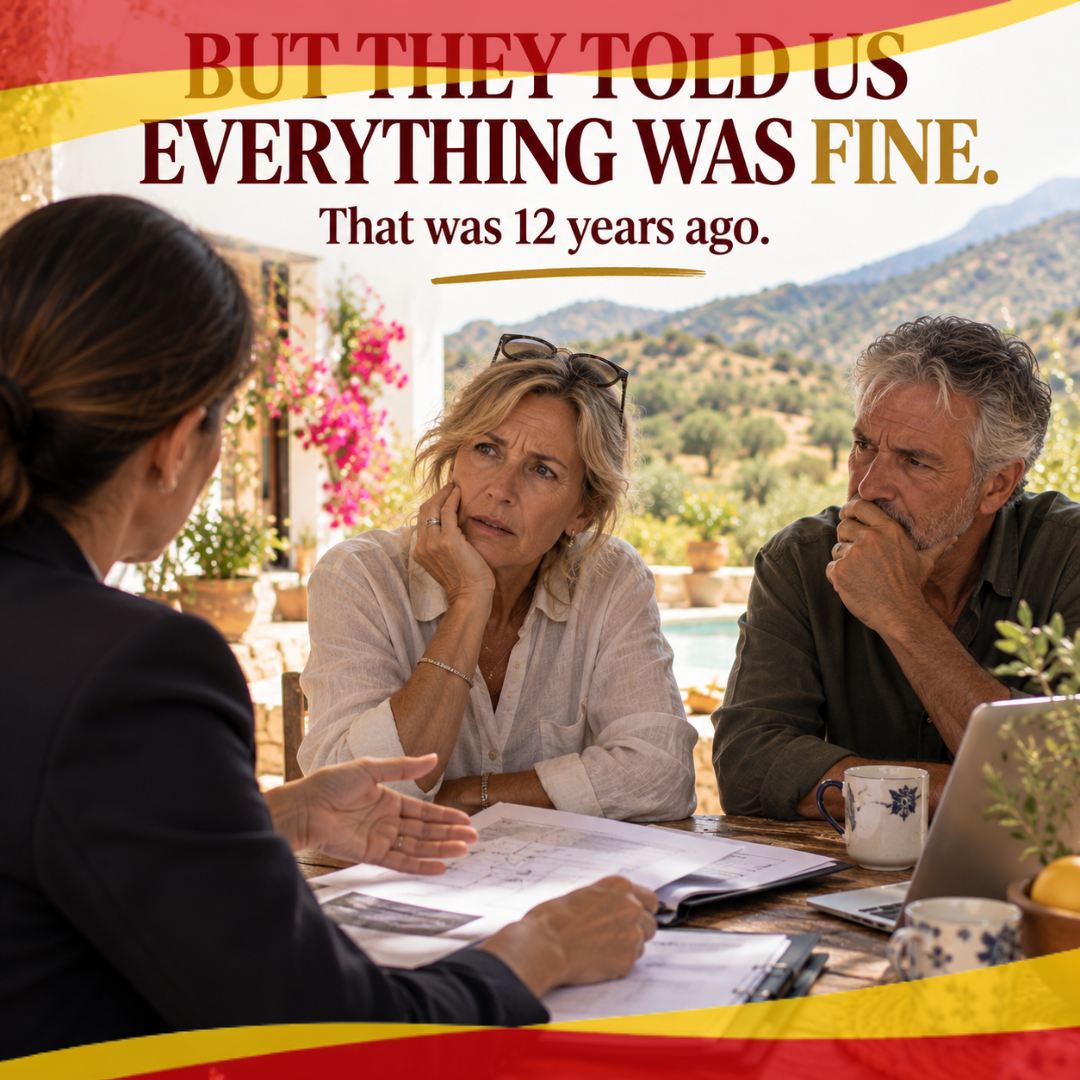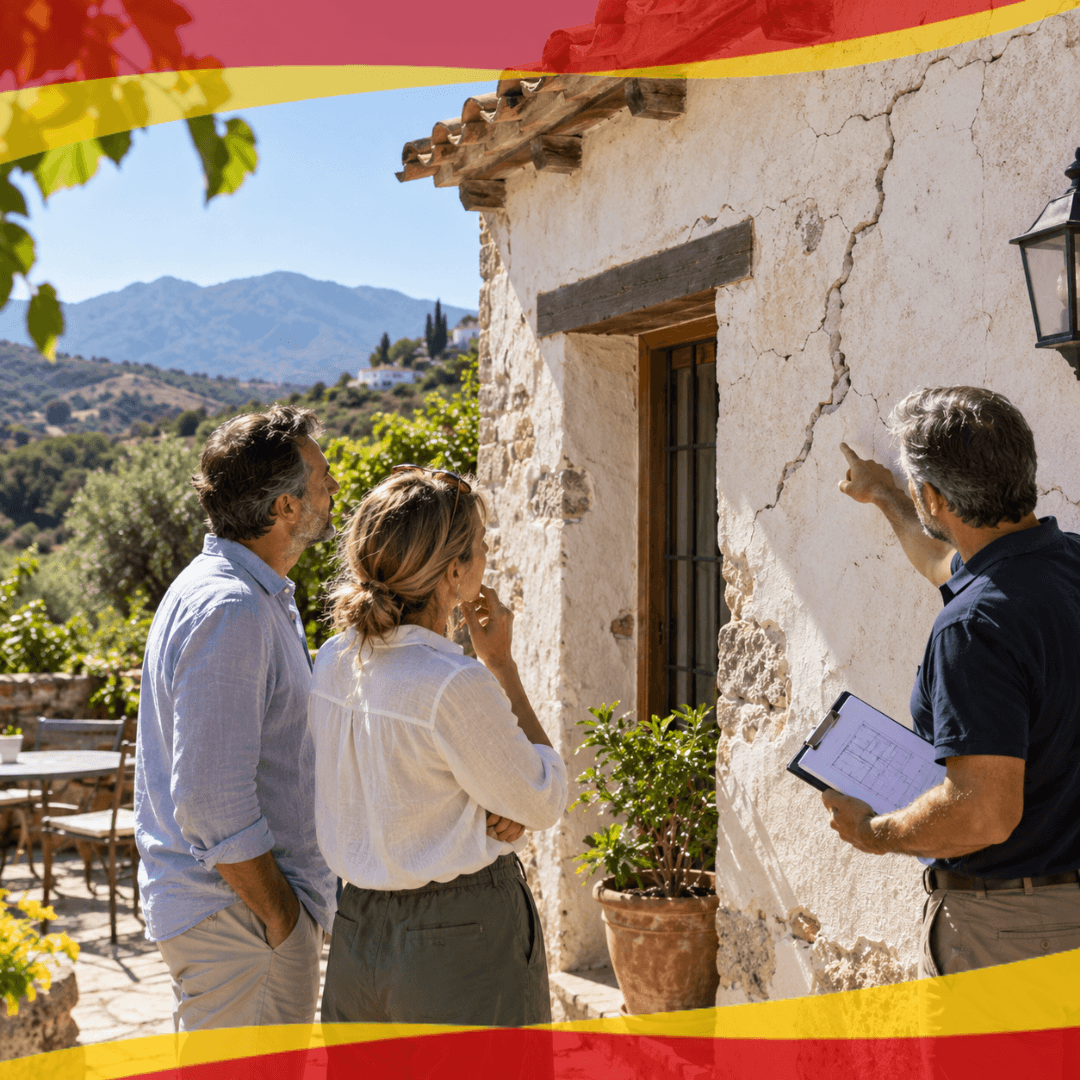
The viewings have gone well. The agent calls to say a couple would like to make an offer, and for the first time you can start imagining what comes next.
You’ve agreed on a price, discussed the furniture and perhaps even started looking at flights. Then the buyer’s representative asks for the deeds, the latest IBI bill and information about the extension.
The deeds are in a folder somewhere. The IBI is paid by direct debit, so you’re not sure where the last bill went. And the extension? That was already there when you bought the house fifteen years ago.
You assumed the paperwork had all been checked at the time.
This is the point when a sale can begin to feel more complicated than expected. Not necessarily because something is seriously wrong, but because questions that could have been considered earlier are now being asked while a buyer is waiting for answers.
The part of selling that nobody photographs
When owners prepare a home for sale, the attention usually goes to the things a buyer will see. The walls are freshened up, the terrace is tidied and the photographs are taken on a bright day.
That preparation matters. A buyer needs to be able to picture themselves in the property.
But there is another version of the house: the one described in the deeds, the property registry, the Catastro and any town hall records. Ideally, someone should look at that version before the first viewing too.
If you’ve owned your property for a long time, it’s easy to assume those documents still tell the whole story. Yet houses change. A covered terrace becomes part of the living room. A store is converted into a bedroom. A pool is added, or a small building gradually becomes the place where visiting family stay.
Some changes may have been properly documented at the time. Others may need further investigation. Until the records are compared with the property as it exists today, it is difficult to know which questions a buyer might ask.
“But we bought it like this”
This is a perfectly reasonable thing to say.
Many owners inherited a set of documents and a property that already looked much as it does today. They bought in good faith, used the house as intended and never had cause to question how every part of it was recorded.
But the next buyer—and the people advising them—may want to understand those details before they commit.
That can feel uncomfortable, particularly if you thought the matter had been settled years ago. It doesn’t mean you need to assume the worst. It means you need to find out what the documents show, what evidence is available and whether anything needs to be corrected or explained.
The sooner you know, the more choices you have.
Start with the house you can see
Before looking for certificates, walk around your property with a notebook.
Make a note of the main house and anything else on the land or attached to the property: extensions, enclosed terraces, pools, garages, stores and separate buildings. If you own an apartment, think about features such as a parking space, storage room or terrace that forms part of the sale.
Then consider what has changed during your ownership. Did you add anything? Did you convert a room? Did you obtain licences or have work signed off by a technician? If the changes happened before you bought, do you have any documents relating to them?
You don’t need to work out the legal position yourself. The list gives whoever is checking the property a useful starting point.
It also helps prevent a common misunderstanding: an owner says, quite honestly, “The house is on the deeds,” while the buyer is asking whether every part of the property they viewed is accounted for.
Those are not always the same question.
Find out what the records say
The deeds, the Registro de la Propiedad and the Catastro each provide useful information, but they do different jobs.
Your deeds record the transaction through which you acquired the property. An up-to-date registry extract, often called a nota simple, can show the registered description, ownership and registered charges. The Catastro provides an administrative description of the property, including its location, recorded area and buildings.
They may not all describe the property in exactly the same way.
Perhaps the Catastro shows a larger built area than the registry. Perhaps the pool appears on a plan but not in the documents you expected. Or perhaps the registry still shows a mortgage you paid off years ago.
A difference does not automatically tell you how serious the situation is. Some matters may be relatively straightforward to address; others need a technician, legal advice or an approach to the town hall. What matters is understanding the difference before promising a buyer that everything is complete.
The Junta de Andalucía’s guidance for sellers recommends locating the deeds, registry information, latest IBI receipt and, where relevant, community and mortgage documents as part of preparing for a sale. Junta de Andalucía
A paid mortgage isn’t always a cleared registry entry
You may remember making the final mortgage payment years ago and putting the matter out of your mind. That is understandable. The loan was paid, and the monthly payments stopped.
However, paying off the loan and removing the registered mortgage charge are separate matters. If the charge still appears in the property registry, it may need to be formally cancelled there.
This does not mean you still owe the bank the original loan. But it is something to identify early, because obtaining the necessary bank documentation and arranging cancellation can take time.
If you still have a mortgage, you will need to understand the outstanding balance and the process and costs involved in paying it off or otherwise dealing with it during the sale. The earlier you ask the bank for the information, the easier it is to include it in your plans. Junta de Andalucía
What if it’s a rural property?
A rural home can have a particularly long and varied history. The main building might be old, while the pool, guest accommodation or storage buildings were added at different times.
You may have heard that the property needs an AFO, or you may have been told that everything is fine because the house appears on the Catastro.
Neither statement should be accepted without looking at the property’s actual circumstances.
Not every rural property needs an AFO, and not every building qualifies for one. If there is already an AFO decision, it is worth checking which buildings or works it covers and whether anything has changed since it was issued.
We explain this in more detail in our article: The cortijo is on the Catastro. So why is everyone still asking about an AFO?
The practical point for a seller is simple: if there is uncertainty about the planning position, get advice before presenting the property as fully regularised or agreeing to a timetable you may struggle to meet.
What if you own an apartment or a house in a community?
Community paperwork can be easy to overlook when you are used to paying the fees and getting on with life.
A buyer may want to understand the regular charges, whether there are outstanding amounts, what the community is responsible for and whether any significant works have been discussed or approved.
The community debt certificate is an important document in a sale where the property forms part of a community of owners. The Junta’s guidance also suggests that buyers request information such as the community statutes and check the position of community fees. juntadeandalucia.es
It is worth gathering the information you already have and finding out who manages the community. If there are planned works, tell your agent and your adviser rather than waiting for the question to arise later.
A buyer might still be happy to proceed. What tends to cause difficulty is discovering an expense or restriction after everyone believed the terms had already been agreed.
And the energy certificate?
For most homes offered for sale, the seller needs an energy performance certificate, subject to the applicable rules and exceptions. A qualified technician assesses the property and produces the certificate.
If you already have one, check that it relates to the property you are selling and is still valid. If you don’t, arrange it early and discuss its registration and use in the marketing with the technician and your agent.
The Junta’s property-sale guidance identifies the energy certificate as part of preparing a home for sale. juntadeandalucia.es
It may feel like another item on the list, but it can also start a useful conversation about how the house performs. Buyers increasingly want to know what a property will be like to live in through both summer and winter.
Knowing your sale price is not the same as knowing what you will receive
There is another conversation worth having before the property goes on the market: what will you actually have left after the sale?
The agreed price may not be the amount that reaches your account. Depending on your circumstances, you may need to allow for an outstanding mortgage, an agent’s fee, professional costs, taxes and any work needed to prepare the property or its documents.
The tax position depends on your circumstances, including whether you are resident or non-resident for Spanish tax purposes. That question should be assessed properly rather than assumed from how often you visit the property or which address appears on a bill.
Ask for an estimate before making decisions that depend on the proceeds. The Junta also recommends that sellers consider mortgage costs, professional fees and taxes when calculating the financial outcome of a sale. Junta de Andalucía
An estimate will not necessarily be exact at the start, particularly if the eventual sale price is unknown. But it is far more useful to work with a realistic range than to discover a substantial deduction when completion is already approaching.
What if you find a problem?
First, establish what the problem actually is.
A missing document, a difference in recorded measurements and an unauthorised building are not automatically the same thing. They need different investigations and may have very different consequences.
The next step is to understand your options. Can a document be obtained? Does a technician need to measure the property? Is there a process for correcting a record? Is the issue something that cannot be resolved in the way you hoped, but can be explained clearly to a buyer?
Not every issue has a quick or inexpensive solution. Some may affect the way you market the property, the buyer’s plans or the price they are prepared to pay. An early assessment gives you the opportunity to decide how to proceed with that information in front of you.
And if something needs to be disclosed or discussed, it is usually a better conversation to have at the beginning than after a buyer has paid for checks and made plans around the purchase.
A better way to begin
You don’t need a perfectly organised archive before you ask for help. Start with what you have.
Find your deeds, a recent IBI bill, the Catastro reference and any licences, plans or town hall correspondence you can locate. Add your mortgage and community information if they apply. Then make that list of the buildings and changes you know about.
From there, someone can help you compare the documents with the property and identify the questions that need answering.
At Solving Spain, we help owners understand their property paperwork and coordinate the next steps with the appropriate professionals. If you’re thinking of selling—even if you haven’t chosen an agent or settled on a date yet—we can help you work out what you have, what is missing and where to start.
Because when the right buyer comes along, you want the conversation to be about moving forward, not finding a folder you haven’t opened in fifteen years.