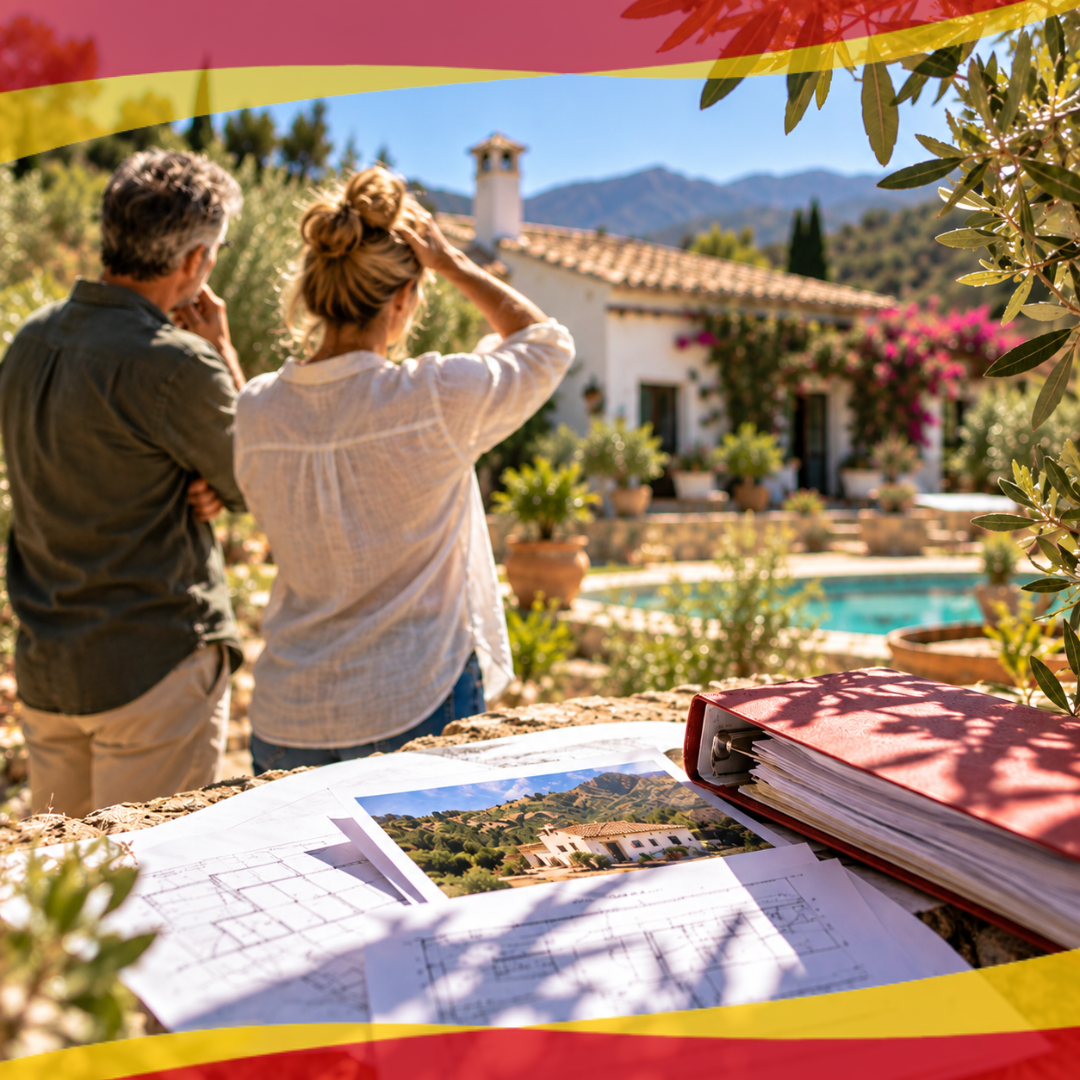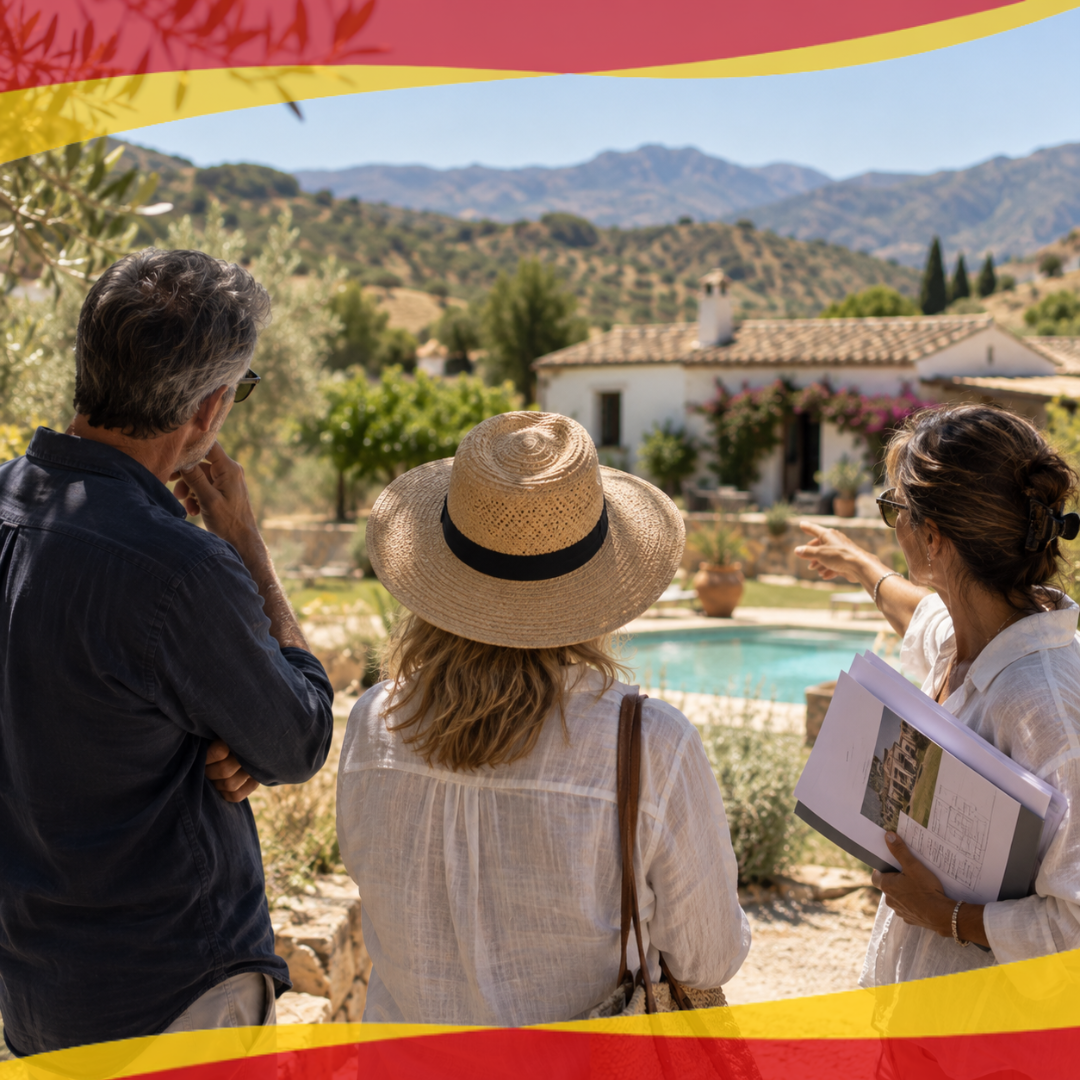
The terrace is exactly what you had imagined. There’s enough room for a table, a few pots of herbs and the long lunches you’ve been talking about for years. Inside, the house feels comfortable. The village has a café, the coast isn’t too far away, and the asking price sits just within your budget.
By the time you get back to the car, you’re already discussing where the furniture would go.
Then somebody asks a less exciting question: “How much money will we need after we’ve paid for the house?”
It’s usually at this point that the calculator comes out.
Buying a property in Spain involves more than agreeing a price with the seller. There are taxes and professional fees to consider, of course, but there can also be repairs, practical improvements and ongoing expenses that don’t appear on the property listing.
None of this should take the pleasure out of finding your home. It simply helps you work out whether the house you love will still feel comfortable once you own it.
Start with the number you can actually spend
It sounds straightforward, but buyers often begin their search with the amount they would like to spend on the property itself, rather than the total amount they can comfortably commit to the purchase.
Those are two different figures.
If your overall budget is €250,000, a house advertised at €250,000 is unlikely to leave room for taxes, legal advice, registration and the things you may need to do after receiving the keys.
And if you spend every available euro getting through the purchase, even a relatively ordinary surprise can feel much bigger than it should.
Before arranging viewings, work backwards from your overall budget. Allow for the purchase costs, put aside money for the first year and think about how much you would like to keep in reserve. The result may be a lower property price than you first had in mind, but it gives you a far more useful figure to search with.
The asking price is only the starting point
Across Spain, house prices have continued to rise, although the rate of growth has slowed. Tinsa’s national index recorded an annual increase of 14.2% in September 2026. That is a national figure, not a valuation of an individual property or village, but it helps explain why many buyers are looking carefully at what their budget will stretch to. Latest Real Estate/Residential Index
When you find a property you like, the question is not simply whether you can agree a price. It is whether the price, purchase costs and likely work together make sense for you.
A house that appears cheaper may need significant attention. Another may cost more initially but be ready to use. The difference is not always visible in the photographs, or even during a first viewing.
That doesn’t mean you should avoid a property that needs work. For some buyers, taking on a project is part of the appeal. The key is to go into it with a realistic idea of what the project involves and enough room in the budget to manage it.
What are the buying costs?
The taxes and fees depend on the property, where it is located and your circumstances. A new-build purchase is treated differently from the purchase of an existing home, and the applicable tax rates can vary between regions.
For an existing property in Andalucía, the general rate of transfer tax, known as ITP, is 7%, although reduced rates may apply when specific conditions are met. The amount used to calculate the tax also needs checking; it should not automatically be assumed to be the price you have agreed with the seller. Junta de Andalucía
To give a simple example, 7% of €200,000 is €14,000. That is an illustration of the general rate applied to that figure, not a complete quote for a purchase.
A new-build home will usually involve a different tax treatment. The Junta de Andalucía explains that a first transfer of a new home generally attracts IVA, with stamp duty also applying to the public deed. Get an individual calculation before deciding what you can afford. Junta de Andalucía
Alongside tax, your budget may need to include:
- Legal advice and checks.
- Notary and property registry fees.
- A property survey.
- Mortgage-related costs, if you are borrowing.
- Translation, power of attorney or other services, depending on your circumstances.
Ask for a breakdown rather than relying on one broad percentage. A useful estimate should make clear what it includes, what it leaves out and which figures are still provisional.
The house may be ready to move into. But is it ready for you?
“Ready to move into” can mean different things to different people.
A couple buying a holiday home may be happy with a small kitchen, a portable heater and a garden they visit a few times a year. Someone planning to live in the same property full-time may find that winter heating, internet reliability, storage and access become much more pressing.
A house may look perfectly comfortable in May and feel rather different in January. Equally, a beautiful sunny terrace can become difficult to use in August without shade.
Think about how you will use the property throughout the year. Will you need to install heating or cooling? Do the windows keep out the winter weather? Is the internet connection suitable if you work remotely? Can you get to the house comfortably in the dark or after heavy rain?
These aren’t reasons to dismiss a property. They are questions that can help you decide what to budget for and what you are prepared to live with.
What might a survey reveal?
It’s easy to walk around a house noticing the things you would like to change: the bathroom tiles, the kitchen cupboards or the colour of the walls.
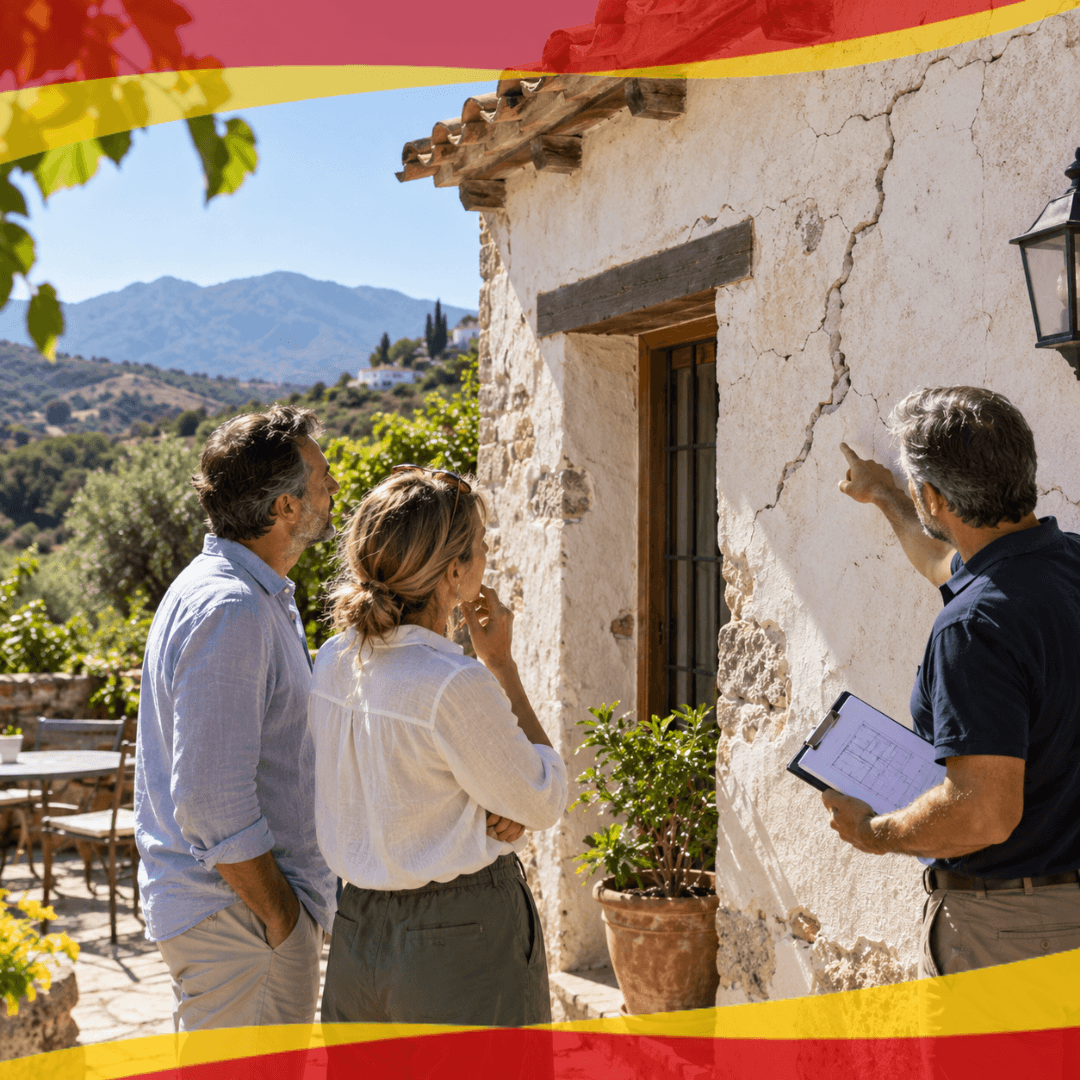
A survey looks at a different set of questions. What is the condition of the roof? Are there signs of damp or movement that need further investigation? How do the windows, electrics and plumbing look? Are there works that may need attention sooner rather than later?
A survey cannot predict every future repair or guarantee that a property will never have a problem. It can help you understand the property’s visible condition and decide whether you need further specialist advice before committing to the purchase.
It may also help you distinguish between work you want to do and work you need to do.
That distinction can make a big difference. A kitchen you dislike might be perfectly usable for a few years. A roof that needs urgent attention is a different conversation.
At Solving Spain, we work with an architect to offer property surveys, with a verbal or written report depending on what you need. If a property is older, rural or has been altered over time, a conversation before you commit can be particularly useful.
Don’t forget the paperwork
A house can look well cared for and still raise questions on paper.
You may find that an extension isn’t described in the same way across the documents, that a pool or outbuilding needs further checking, or that the property you viewed has a different recorded surface area from the one you expected.
A discrepancy doesn’t automatically mean you should walk away. It does mean someone needs to establish what it is, why it exists and whether it affects your plans.
This matters especially if you are buying with an idea in mind: perhaps turning an outbuilding into guest accommodation, adding a pool, carrying out substantial renovations or offering holiday stays. The fact that a building exists does not automatically mean it can be changed or used for any purpose.
Tell the people carrying out your checks what you hope to do with the property. “Is the house acceptable as it stands?” and “Can I turn this store into a guest house?” are different questions.
We looked at one part of this in our recent article: The cortijo is on the Catastro. So why is everyone still asking about an AFO?
Then there are the costs of actually living there
Once the purchase is complete, the property becomes part of your everyday life—and so do its bills.
Depending on the home, you may need to allow for IBI, community fees, insurance, electricity, water, internet, waste charges, garden maintenance and repairs. An apartment with a lift, pool and shared gardens will have a different pattern of costs from a rural cortijo with land and its own water arrangements.
Ask for recent bills and details of regular charges where possible. They won’t tell you exactly what your costs will be, because people use homes differently. But they can give you a better starting point than a guess.
For a rural property, ask practical questions about access and maintenance too. A long track may be charming on viewing day, but who looks after it? How is the garden watered? What happens if a pump fails? Is the land manageable for the amount of time you intend to spend there?
And remember the small jobs. A property does not need a major fault to absorb money. Locks, appliances, curtains, pest control, a leaking tap and a few visits from tradespeople can add up during the first year.
Be careful with the “we’ll sort it out later” list
Most buyers have one.
It might include a terrace that needs attention, a bedroom that gets hot in summer or an outbuilding that could become something useful one day. Individually, each item feels manageable.
The difficulty comes when the list grows faster than the budget.
Before you make an offer, separate your plans into three groups: what needs attention soon, what would make the house work better for you, and what would simply be nice to do. Then put some realistic figures beside them, seeking quotes where you can.
You may decide to postpone the new kitchen and spend the money on insulation. You may discover that the property you thought was at the top of your budget leaves no room for the work that matters most to you. Or you may find that a slightly less polished house gives you the freedom to make changes gradually.
There is no single right answer. There is only the answer that works for your circumstances.
What should you do before paying a deposit?
Once you’ve found a property, it’s natural to want to secure it. But before signing a reservation agreement or paying a deposit, make sure you understand what you are signing and what happens if the checks raise a concern.
Ask us to review the agreement and explain any conditions, deadlines and consequences. If you need a mortgage, a survey or answers about planning and intended use, discuss how those matters should be dealt with before you commit.
This is also a good point to revisit your budget. Not the hopeful version you made when you first saw the photographs, but the version that includes the purchase costs, the questions you still need answered and the work you already know you want to do.
A little time spent checking the detail can make the difference between buying with confidence and trying to resolve a problem after money has changed hands.
The right property is one you can enjoy owning
There is a lot to think about when buying a home in Spain, but the aim isn’t to turn every viewing into a list of worries. It is to understand enough about the property to make a decision that feels right long after the excitement of the first viewing.
The terrace, the view and the village café all matter. So do the roof, the paperwork and the amount you have left in the bank once the keys are yours.
At Solving Spain, we help buyers understand the practical steps involved in purchasing a property, coordinate the right checks and arrange a survey with an architect when needed. If you have found a property and would like to talk through what to do next, get in touch with Solving Spain.