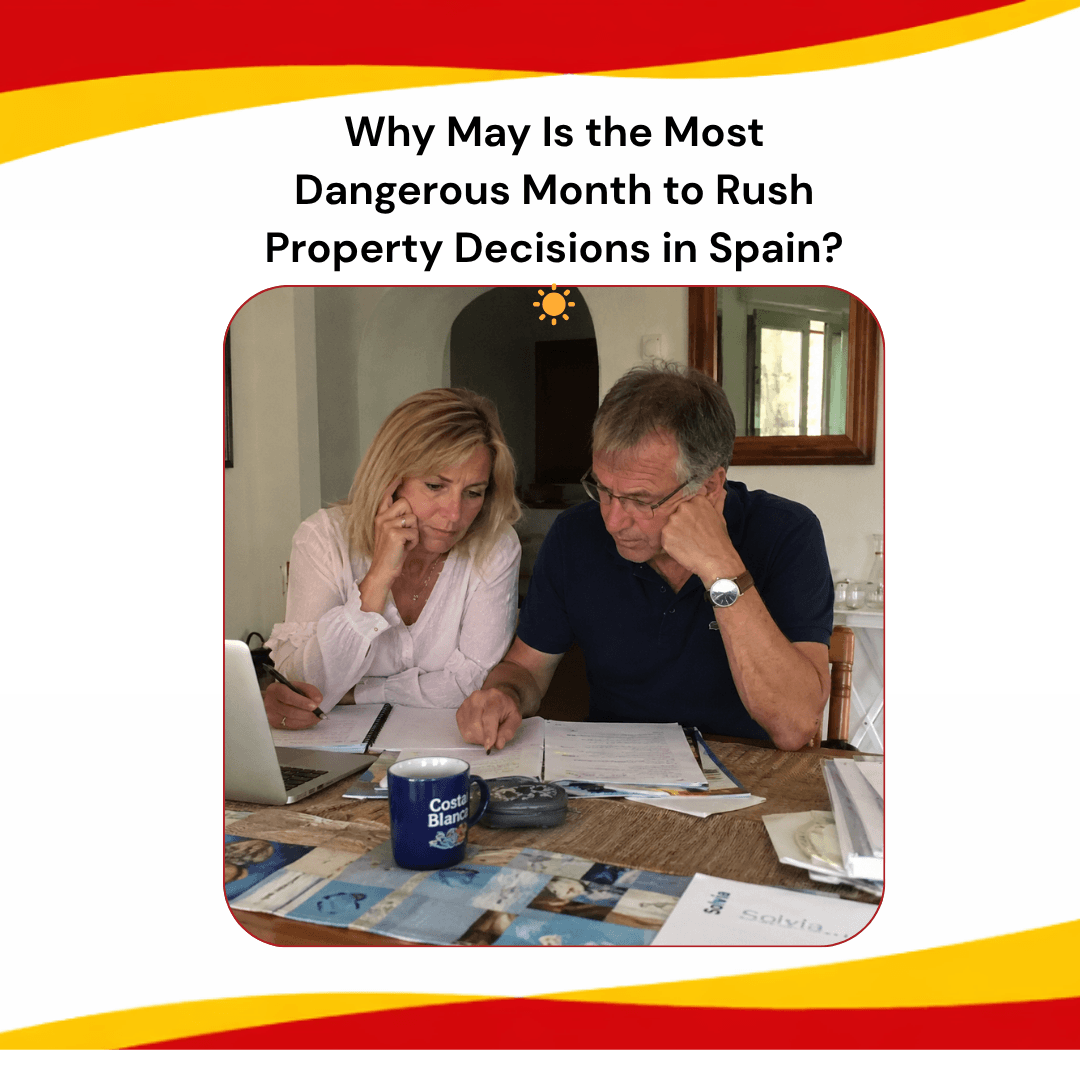
There’s something about May in Spain that makes people speed up.
The weather improves almost overnight. Flights get booked. WhatsApp groups become full of recommendations, estate agent links, and “you need to move quickly” warnings. Suddenly, what started as a dream starts feeling urgent.
And that’s exactly where expensive mistakes begin.
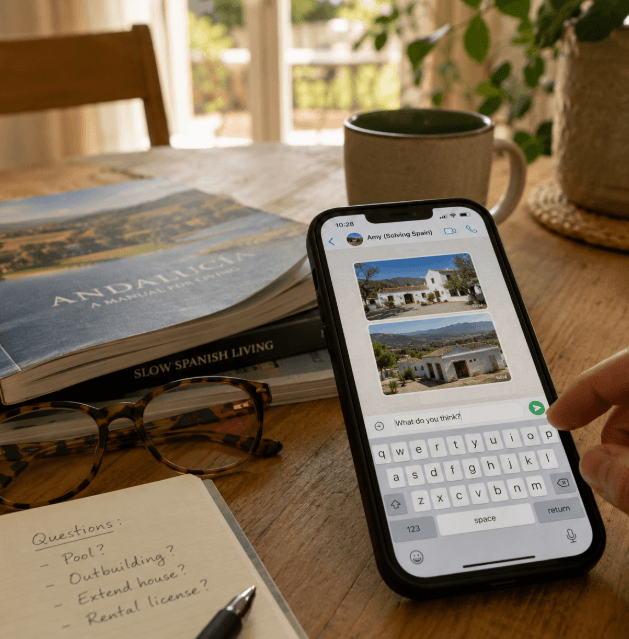
Every year, we see the same pattern. Buyers arrive excited, optimistic, and convinced they’ve found “the one.” Within days, they’re paying deposits, signing reservation contracts, or committing to properties they don’t fully understand — simply because they’re afraid of missing out.
The truth is, May can be one of the riskiest times to make rushed property decisions in Spain.
Not because the market is bad.
But because pressure quietly replaces process.
The Illusion of Urgency
Spring and early summer create a very specific type of momentum in the Spanish property market.
Properties look better in sunshine. Towns feel alive again. Friends and neighbours start talking about prices rising or homes “selling fast.” Estate agents become more active. Sellers become more confident.
And buyers? Buyers start making emotional decisions.
It’s understandable. When you’ve spent months imagining a life in Spain, finding a beautiful property can feel emotional. You picture the terrace dinners, the slower mornings, the family visits, the better quality of life.
But emotions are not paperwork.
And Spain runs on paperwork.
The Problems Most Buyers Never See Coming
The biggest issues are rarely the obvious ones.
Most people know to look at the property itself. They check the kitchen, the roof, the views, the location.
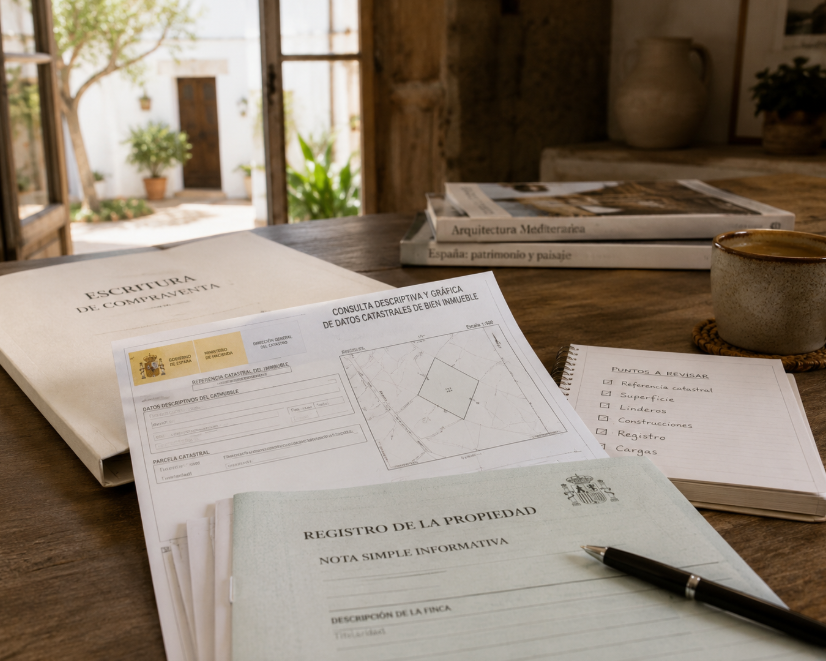
What they don’t realise is that some of the biggest risks sit quietly behind the scenes.
Things like:
- Incorrect registrations
- Unresolved inheritance issues
- Illegal extensions
- Missing licences
- Outdated land classifications
- Debts attached to the property
- Problems with utilities or access rights
On the surface, everything can look perfect.
Until it isn’t.
And once money changes hands, fixing these problems becomes significantly more stressful — and expensive.
“But Everyone Else Is Buying…”
This is probably one of the most dangerous phrases we hear.
Spain has always attracted lifestyle buyers. People move here because they fall in love with a feeling, not just a building. That emotional connection is powerful, but it also creates herd behaviour.
When buyers hear:
- “There’s another offer”
- “You need to move fast”
- “This won’t stay on the market”
- “Someone is flying in tomorrow to see it”
…they stop asking careful questions.
Fear of missing out takes over.
The irony is that rushing often creates the exact outcome people were trying to avoid: stress, delays, unexpected costs, and legal complications that follow them for years.
The Calm Buyers Usually Win
The people who navigate property purchases best in Spain are rarely the fastest.
They’re the calmest.
They pause before transferring deposits.
They ask uncomfortable questions.
They verify information independently.
They understand that excitement and due diligence can exist together.
Most importantly, they understand that buying property in another country is not just a transaction — it’s a system.
And systems need structure.
Spain Rewards Preparation, Not Panic
One of the biggest misunderstandings about Spain is assuming things will simply “work themselves out later.”
Sometimes they do.
Sometimes they absolutely do not.
A missing document can delay a process for months. A small legal oversight can affect future sales, inheritance, residency applications, or renovations. Problems ignored at purchase stage rarely become easier later.
That doesn’t mean buyers should become fearful.
It simply means they should become informed.
The goal is not to scare people away from buying in Spain. Quite the opposite. Spain can offer an incredible quality of life and amazing opportunities when things are handled properly.
But confidence should come from clarity — not urgency.
Before You Commit, Slow Down
If you’re considering buying property in Spain this spring or summer, the best thing you can do is slow the process down just enough to think clearly.
Not emotionally.
Not reactively.
Not because everyone else seems to be rushing.
Just clearly.
The right property will still feel right after proper checks are completed.
And if it doesn’t?
That information may have just saved you far more than the property itself ever could.
Thinking about buying property in Spain but unsure what checks you should really be making? Solving Spain helps clients navigate the process clearly, calmly, and properly — before expensive mistakes happen.