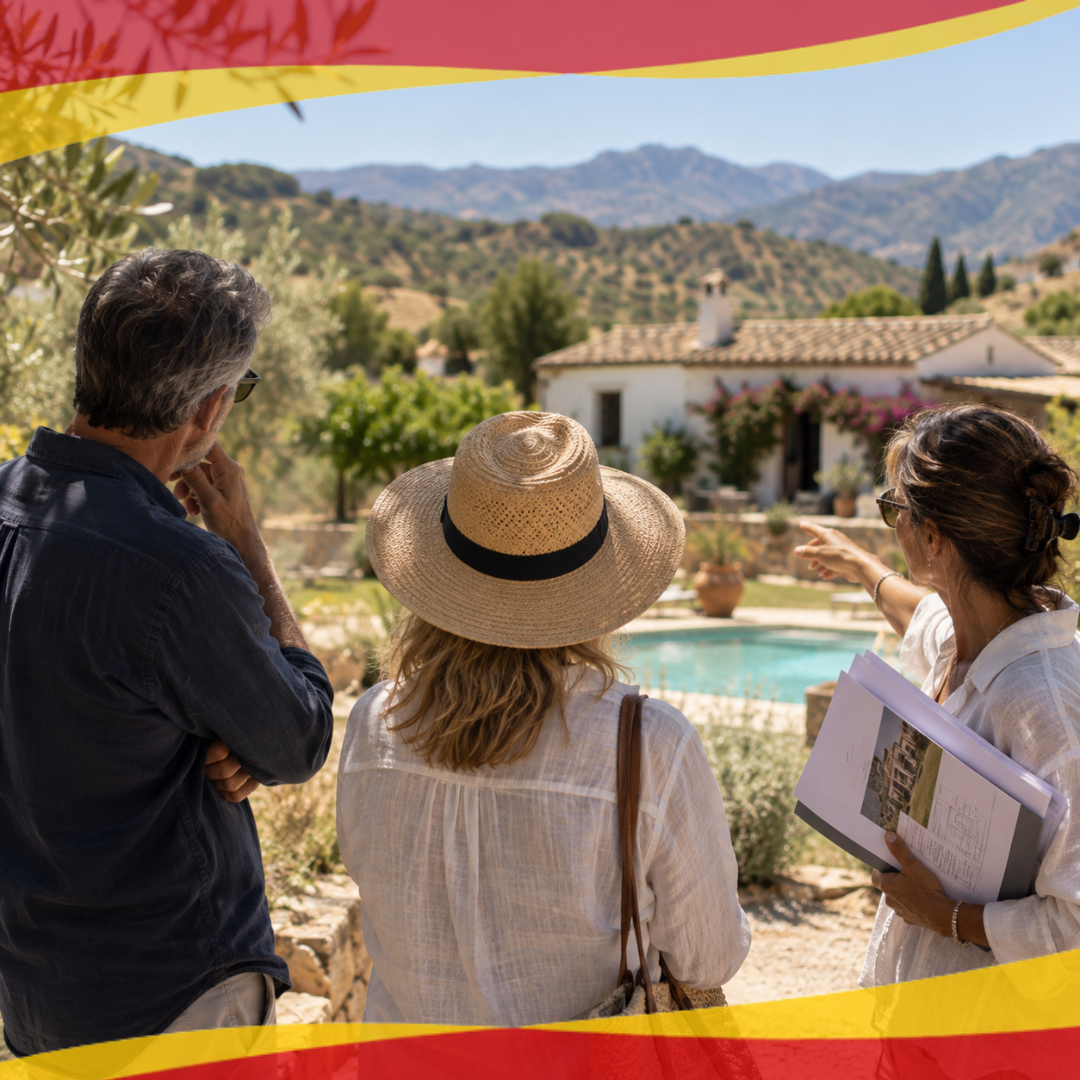
The question was about a small building at the bottom of the garden.
It had been there for years and was currently being used as a store, although at some point in its life somebody had clearly spent rather more money on it than you would normally spend on somewhere to keep garden tools. The buyers had noticed it during the viewing, the agent knew about it and the sellers certainly knew it was there.
Then, during the purchase, somebody asked whether it appeared in the property documentation.
Nothing about the question seemed particularly alarming. The buyers assumed their lawyer was checking it, the sellers thought the information they had was already with the agent, and the agent understood that a technical question had been raised. The lawyer, meanwhile, needed a little more information about the building before deciding whether anything further was required.
A few days went by and not much happened.
This is one of the less obvious ways a Spanish property transaction can become stuck. Buyers tend to prepare themselves for the big things: a legal problem, a worrying survey or a missing document that threatens the whole purchase. Quite often, though, the thing causing the delay is much less dramatic. There are several perfectly competent people involved and everybody thinks the next step belongs to somebody else.
Nobody has necessarily done anything wrong. The question has simply landed in the space between their different roles.
There can be a lot of people around one house
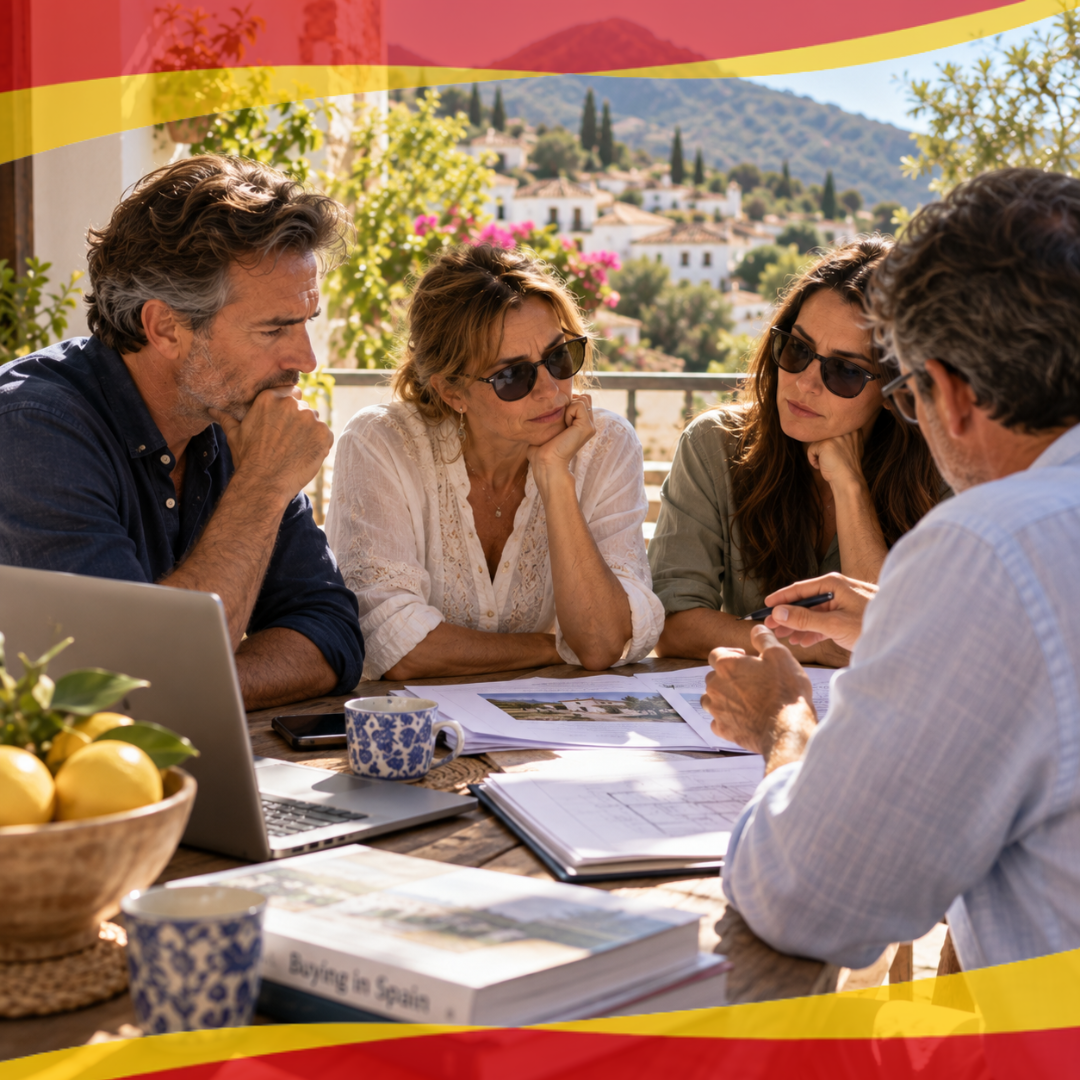
A property purchase can collect quite a cast of characters. There is the buyer and seller, usually with an estate agent between them, and there may also be lawyers on both sides, a surveyor, architect, mortgage adviser, bank, gestor and notary. Depending on the property, somebody at the Town Hall or another administration may become involved too.
That isn’t a sign that something has gone wrong. Different parts of a property transaction require different professional skills, and it is entirely right that the lawyer deals with legal matters while an architect deals with questions that require technical expertise.
The difficulty comes when a question sits somewhere between the two.
We see this particularly with international buyers because it is quite reasonable to assume that the process is more joined-up than it sometimes is. If a surveyor notices an alteration, the buyer may assume that observation automatically reaches whoever needs to investigate the paperwork behind it. If the lawyer asks for technical clarification, they may assume somebody has already instructed the appropriate professional. The agent may have sent everything they have without realising that one particular piece of information is still needed.
From inside the transaction, everybody can appear to be very busy while one important question quietly sits still.
Sellers can find themselves in much the same position. A buyer asks for a document, so the seller starts searching through the folder they received when they bought the house years ago. Something isn’t there, which means contacting an old lawyer or trying to establish where it might be found. The current agent is waiting for an answer, the buyer’s lawyer is waiting for an answer and somewhere along the way somebody suggests that perhaps an architect should look at it.
A week can disappear remarkably easily like this, without anybody being able to point to one particular problem that caused the delay.
That is why one of the most useful questions in a transaction that seems to have gone quiet is also one of the simplest: what exactly are we waiting for, who is the right person to answer it, and what do they need in order to do so?
Sometimes the answer reveals a genuine property issue that will take time to investigate. There is no point pretending otherwise. But sometimes it reveals something much more ordinary: a document hasn’t reached somebody, two professionals need to speak directly, or everybody has been waiting for information that nobody realised they were responsible for obtaining.
You don’t need to know every answer yourself
International buyers often arrive in Spain having done an impressive amount of homework. They know about NIE numbers, they have read about the Property Registry and Catastro, and there may be several carefully saved checklists on their phones explaining what should happen before they reach the notary.
Then an actual house produces a question that wasn’t on any of them.
Properties are rather inconvenient like that.
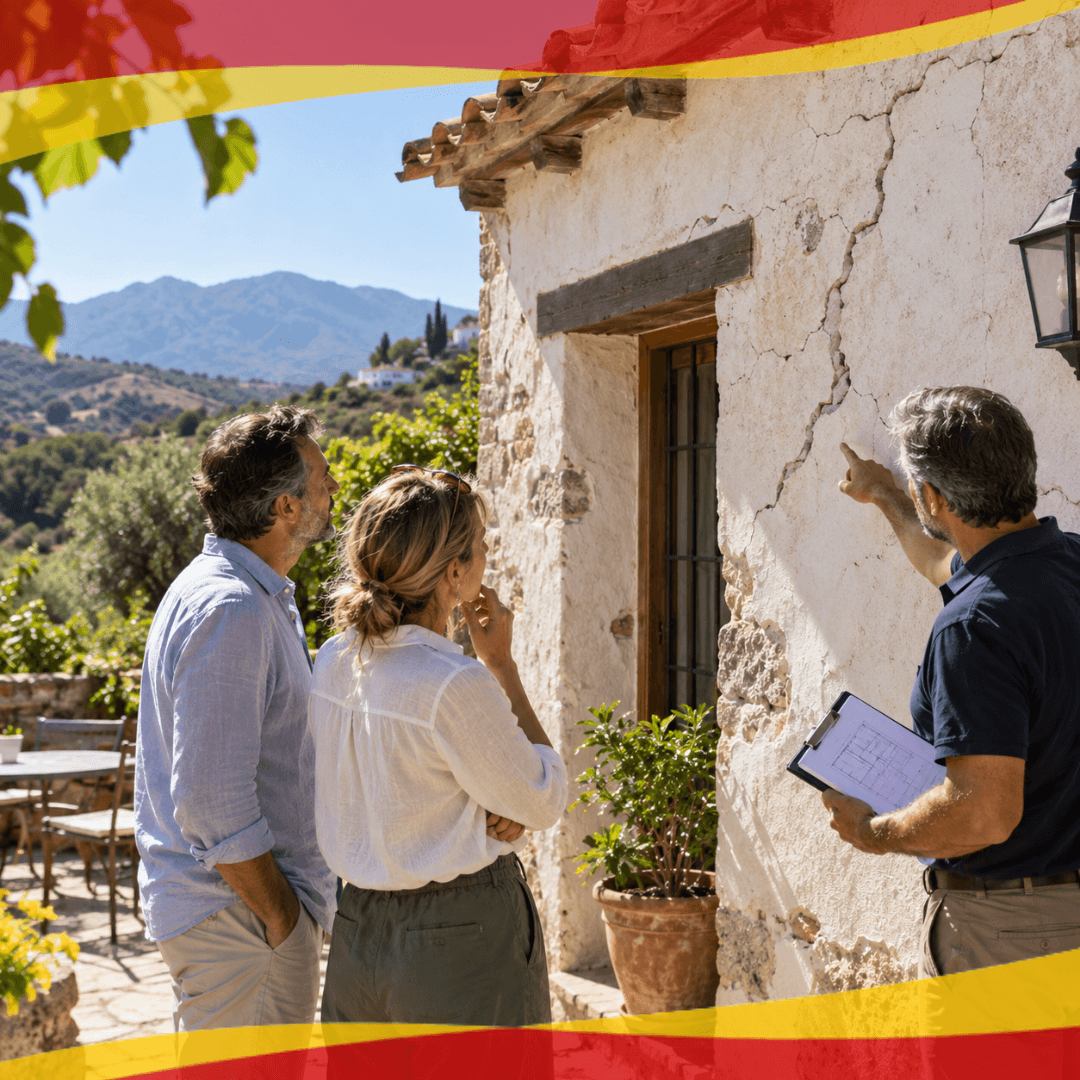
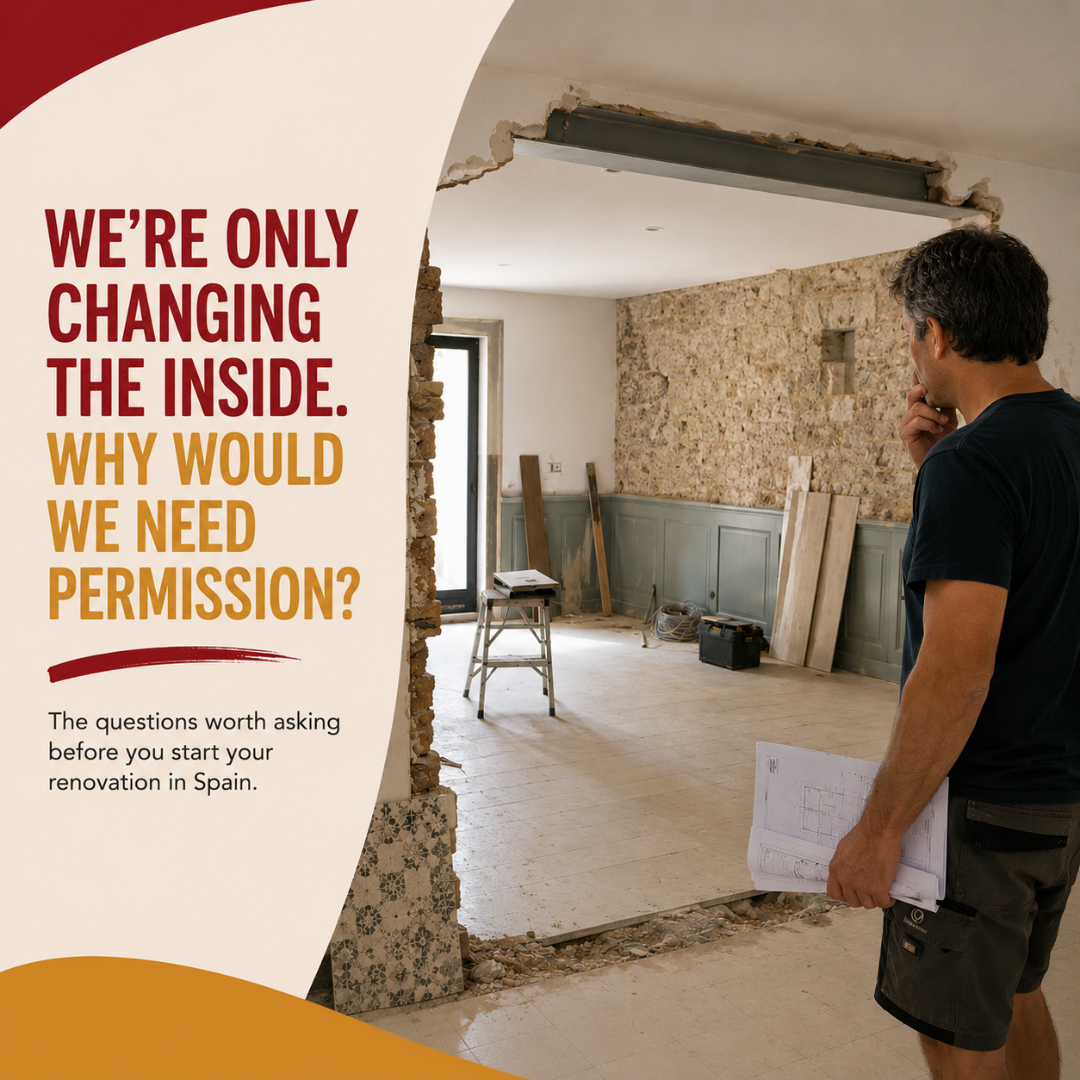
An old house may have been altered over the years. A rural finca may contain several buildings with different histories. Something found during a survey may need following through in the documentation. Information held in one place may not immediately answer the question somebody is asking in another.
At that point, knowing every answer yourself is far less useful than knowing what sort of question you are dealing with and who should answer it.
We have seen transactions start moving again simply because an architect and a lawyer were put in direct contact and asked to discuss the same issue. Before that happened, information had been travelling through the buyer, the agent and a series of emails, becoming slightly less clear at every stage.
Buyers can easily become accidental messengers in this process. A technical explanation arrives from one professional and they try to explain it to another. The response comes back, perhaps in Spanish, and is forwarded again. Somebody asks a follow-up question and the whole journey begins once more.
For somebody buying from another country, this can become surprisingly demanding. They may already be dealing with a bank, organising travel, transferring money, working during the day and trying to understand a property system that is unfamiliar to them. Spending an evening reconstructing an email chain to discover whether the architect ever answered the lawyer isn’t really where their attention should need to go.
The same is true for sellers. Once a buyer appears, requests can begin arriving from several directions at once: access for a survey, documents for lawyers, technical questions about the property and decisions about dates. Something that seemed like a straightforward sale can suddenly require quite a lot of coordination.
This is where independent support can make a real difference, without trying to replace any of the professionals already involved.
The lawyer should do the legal work. The surveyor should inspect the property within the scope of the survey. An architect should answer the technical questions that require an architect, and the estate agent has an important role in managing the sale.
What somebody still needs to notice is what happens between them.
Keeping hold of the whole transaction
When we support a buyer or seller, quite a lot of what we do isn’t particularly dramatic.
It can be noticing that the question raised in a survey still hasn’t been followed through. Checking whether the document requested last Tuesday ever arrived. Establishing whether an answer from an architect now needs to go back to the lawyer, or discovering that two people are talking about different parts of the same property.
None of those things makes for an exciting story about Spanish property.
They can make a considerable difference to the person trying to buy or sell one.
The small building at the bottom of the garden eventually got its answer. The appropriate information was gathered, the right people looked at it and the buyers were able to understand the position well enough to continue with the purchase.
What had started to feel like a growing property problem had, to a large extent, been a coordination problem.
We see enough transactions like this to be wary when somebody says, “We’re still waiting,” without being quite sure what they are waiting for. Sometimes there is a perfectly good reason and patience is exactly what is required. Other times, somebody needs to pick up the thread and follow it until it reaches the person who can answer the question.
That is an important part of the independent support Solving Spain provides to buyers and sellers. We don’t replace the lawyer, architect, surveyor or other professionals involved. We help keep sight of the whole transaction, make sure questions reach the appropriate person and follow through the gaps that can otherwise appear between different people’s roles.
Because a property transaction doesn’t always become difficult because something terrible has been discovered.
Sometimes everybody is simply waiting for somebody else.
WhatsApp: +34 695 398 679
Email: info@solvingspain.com
Website: www.solvingspain.com