TL;DR: Paying part of a property price “in black” (off the books) in Spain may seem like a way to save on taxes, but it’s illegal and risky. You could face hefty fines, lose mortgage options, pay more capital gains tax later, and have no legal proof of the full payment. It also complicates resale, inheritance, and benefits. Always declare the full amount—transparency protects you legally and financially. Need help with a safe, legal property purchase? Contact us—It Doesn’t Have to Be Spainful!
When buying property in Spain, you may occasionally encounter sellers who suggest paying part of the purchase price “in black,” meaning in cash and off the books. While this practice might seem like a quick way to reduce taxes or get a “better deal,” it comes with serious legal and financial risks that can turn your dream home purchase into a nightmare. In this blog post, we’ll delve into the disadvantages of paying money under the table for a house in Spain and why it’s a choice you should steer clear of.
What Does “Paying in Black” Mean?
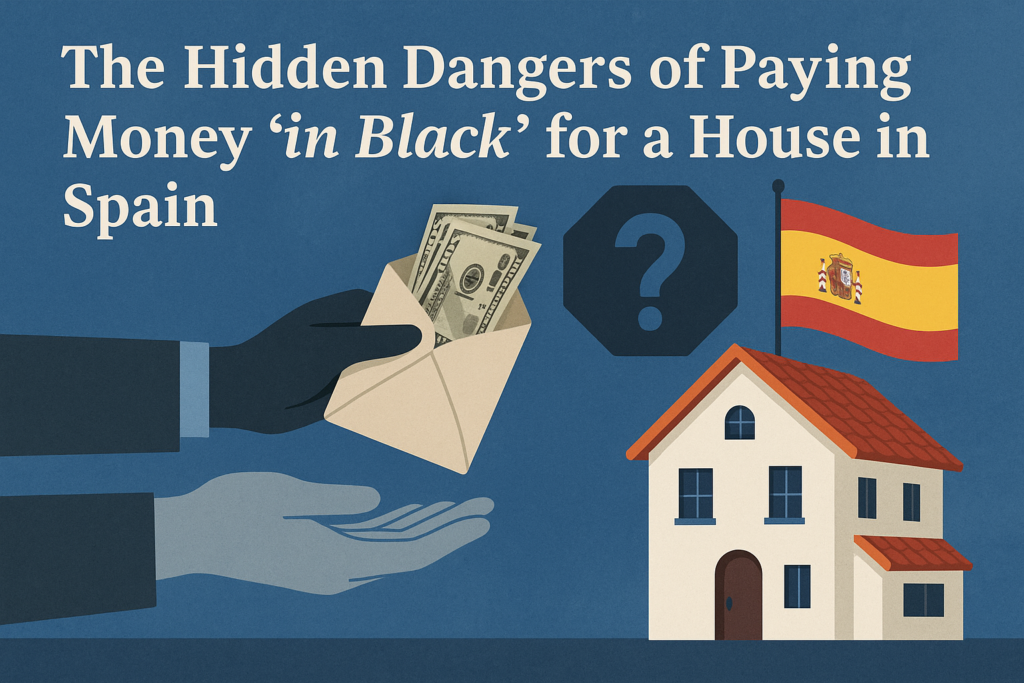
In the context of real estate transactions, “paying in black” (pagar en negro) refers to paying part of the property’s price in cash without declaring it to the authorities. This means that the amount recorded in the deed (escritura) is lower than the actual amount paid. The buyer and seller might agree to this arrangement to save on taxes, reduce notary fees, or speed up the process. However, while it may seem advantageous in the short term, it’s a high-risk move with potentially severe consequences.
The Disadvantages of Paying Money “in Black”
- Legal Consequences and Fines Paying under the table is considered tax fraud in Spain and is strictly illegal. If the authorities discover that part of the purchase price wasn’t declared, both the buyer and the seller can face hefty fines, legal action, and even potential criminal charges. The tax agency (Hacienda) has the right to investigate property transactions and question discrepancies between declared and market values for up to four years after the sale, making it a risk that lingers long after you’ve moved in. Additionally, if you ever find yourself in a legal dispute with the seller over the property, having made undeclared payments severely limits your ability to seek legal recourse, as you have no proof of the full amount paid.
- Impact on Future Capital Gains Tax When you decide to sell the property in the future, the amount you paid will be compared to the amount you sell for to determine your capital gains tax liability. If you declared a lower purchase price, you’ll face a higher capital gains tax when selling the property. This means you could end up paying significantly more tax than if you had declared the full amount from the beginning. For example, if you paid €300,000 for a property but only declared €250,000, and then sell it for €350,000 later, your taxable profit would be €100,000 instead of €50,000. This can result in thousands of euros lost to extra taxes.
- Reduced Mortgage Options Financial institutions in Spain typically only lend up to a percentage (usually 70-80%) of the property’s declared value. If the amount declared is significantly lower than the actual sale price, it can drastically reduce the amount you’re eligible to borrow. This means you may need to pay a much larger down payment, putting added financial pressure on you as the buyer. Additionally, banks are now more vigilant about property valuations, and any perceived irregularities could result in a denied mortgage application or a delayed transaction.
- Increased Risk of Property Seizure If the property seller has any unpaid taxes, debts, or legal issues, and you’ve paid a significant portion of the price off the books, that amount is not legally protected. In the event of a seizure or claim against the seller’s assets, you could lose the portion you paid in cash without any legal means to recover it. This scenario is particularly risky if the seller’s financial situation is unstable or if there are unresolved legal disputes tied to the property.
- Problems During Property Registration After purchasing a property, you must register it with the Land Registry (Registro de la Propiedad) using the declared purchase price. If the registered value is lower than the market value, it can raise red flags and trigger an inspection by Hacienda. They may re-evaluate the property’s market value, leading to an unexpected tax bill for the buyer. The buyer might be required to pay a complementaria (complementary tax) to make up for the undeclared amount, along with possible penalties and interest.
- Limited Resale Value A lower declared value can make your property less attractive to future buyers who may prefer transparency in transactions. Some buyers, especially foreigners unfamiliar with the practice, will avoid properties with suspiciously low declared values. This could decrease the number of potential buyers and limit your chances of selling the property quickly and at a good price in the future.
- Difficulty Proving Ownership for the Full Value If a dispute arises about the ownership or value of the property, it will be difficult to prove that you paid more than the declared amount. For example, in cases of divorce, inheritance, or disputes with heirs, only the legally documented amount will be considered. This can result in significant financial losses, as the extra cash paid in black is not legally recognized or protected.
- Reduced Ability to Claim Benefits or Deductions The Spanish tax system allows some deductions or benefits related to property purchases, especially for first-time home buyers or residents. However, if you don’t declare the full purchase price, you won’t be able to claim the true value of these deductions. This can result in missed opportunities to reduce your tax burden in the future.
Why Transparency is the Best Policy
While paying part of the purchase price under the table might seem tempting at first, the risks and long-term consequences far outweigh any immediate financial benefits. Transparency and legality should always be your priorities when making such a significant investment. By declaring the full amount, you protect yourself from legal troubles, unexpected costs, and future complications that could arise with your property.
If you’re concerned about the tax implications of a property purchase or need advice on how to proceed, it’s best to consult with a qualified lawyer or tax advisor who can guide you through the process legally and transparently.
Real estate transactions in Spain, like anywhere else, should be handled with caution and due diligence. While the idea of paying less tax might be appealing, paying “in black” can end up costing you far more in the long run. Always ensure that every aspect of your property purchase is conducted above board, so you can enjoy your new home with peace of mind and avoid any unwanted surprises down the road.
If you have any questions or need guidance on buying a property legally in Spain, contact us today!
It Doesn’t Have to Be Spainful!