TL;DR: If you’re planning to live, work, or invest in Spain, getting a NIE (Número de Identificación de Extranjero) is essential. You can apply either in Spain (often faster and more flexible but requires Spanish) or via a Spanish consulate abroad (more comfortable language-wise but slower). Choose the method that fits your needs—or let us handle it for you. We’ll take care of the paperwork so you can focus on your move.
Need a NIE without the stress? Contact us—It Doesn’t Have to Be Spainful!
If you’re planning to move to Spain or spend an extended period in the country, obtaining a NIE (Número de Identificación de Extranjero) is a crucial step. Your NIE serves as your official identification number in Spain for legal and tax purposes, and it’s necessary for a variety of activities, from opening a bank account to purchasing property.
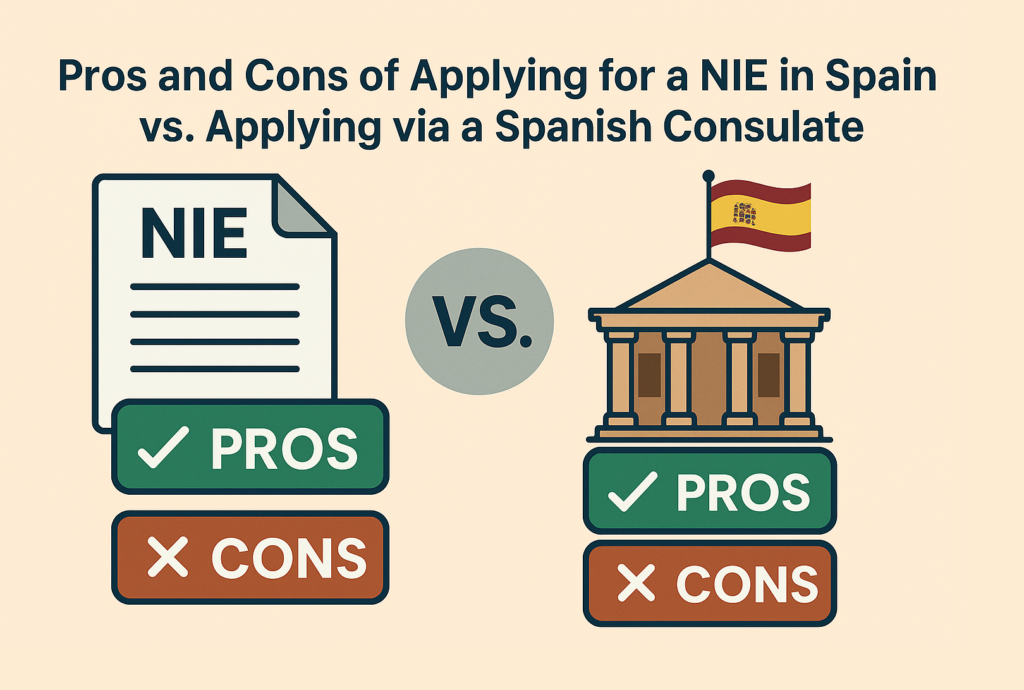
When it comes to getting your NIE, you have two main options: applying in Spain or applying via a Spanish consulate abroad. Each method has its own set of advantages and disadvantages, and choosing the right option depends on your specific circumstances. Here’s a detailed comparison to help you decide which route to take.
Applying for a NIE in Spain
Pros:
- Faster Processing:
Applying for a NIE directly in Spain is often quicker than going through a consulate. You can sometimes receive your NIE the same day or within a few days depending on the local office. - Immediate Issue Resolution:
If there are any issues or additional documents required, you can address them on the spot or quickly schedule a follow-up appointment, reducing the overall wait time. - Accessibility:
For those already in Spain, it’s more convenient to handle the application process locally rather than coordinating with a consulate abroad. - Localized Support:
Local offices may provide advice and support tailored to your specific situation in Spain, helping you understand the local requirements and nuances.
Cons:
- Language Barrier:
The application process is typically conducted in Spanish, which can be challenging if you’re not fluent. You might need a translator or a representative to assist you. - Appointment Availability:
Securing an appointment at the immigration office can sometimes be difficult, especially in larger cities where demand is high. It’s common to experience delays due to limited appointment slots. - Bureaucratic Delays:
While generally faster, there can still be bureaucratic delays and inconsistencies depending on the local office and their workload.
Applying for a NIE via a Spanish Consulate
Pros:
- Language Support:
Consulates often provide assistance in multiple languages, making the process easier if you’re not proficient in Spanish. This can alleviate communication issues and reduce misunderstandings during the application process. - Preparation Time:
Applying from your home country gives you ample time to prepare all necessary documents without the pressure of being in a foreign country. This allows you to ensure everything is in order before submission. - Convenience for Future Travel:
Having your NIE before arriving in Spain simplifies settling in, as you’ll be able to handle essential tasks like opening a bank account, signing rental agreements, and registering for utilities immediately. - Reduced Stress:
It can be less stressful to complete the application in a familiar environment with potentially more predictable consulate procedures.
Cons:
- Longer Processing Time:
The consulate process can be slower, taking several weeks to even months, depending on the consulate’s workload and processing efficiency. This can be problematic if you need your NIE urgently. - Distance and Travel:
If you don’t live near a Spanish consulate, you may need to travel to submit your application and potentially return for follow-up appointments. - Limited Appointments:
Similar to Spain, consulates might have limited appointment availability, leading to longer wait times and scheduling difficulties. - Less Immediate Support:
Resolving issues or providing additional documents can be slower, as it involves international communication and possible delays.
Conclusion: Which Option Should You Choose?
Both methods of applying for a NIE—whether in Spain or via a Spanish consulate—have their own benefits and drawbacks. Here’s a quick summary to help you decide:
- Apply in Spain if you are already in the country, need the NIE quickly, and are comfortable navigating the process in Spanish.
- Apply via a Spanish Consulate if you prefer handling paperwork in your home country, need language support, and can afford a potentially longer processing time.
- Or let us take the hassle away and apply for a NIE number on your behalf.
Let Us Handle Your NIE Application Today!
No matter how you choose to apply, our team of experts can assist you every step of the way. We’ll guide you through the process, ensure all documents are in order, and represent you if needed. Contact us today to get started, and remember:
It Doesn’t Have to Be Spainful!