1) The Short, Friendly Summary
If you’re eyeing a rustic hideaway in Andalucia, you’ll quickly meet the alphabet soup of AFO/DAFO/SAFO. These are not new tapas dishes — they’re the bureaucratic process for regularising rural homes that weren’t built with the proper permissions. An AFO doesn’t make a property fully “legal”, but it does make it usable, insurable(ish), and more easily renovated. Costs, rules and timeframes vary wildly by town hall, so a good architect and early checks are essential. We are here to help you .
2) Why This Matters for Expats
Many foreign buyers fall in love with a countryside finca only to discover that the house is… let’s say more “enthusiastically built” than legally documented.
Without an AFO/DAFO, you may struggle to renovate, sell, insure or even connect services. With it, you can regularise the property’s status and avoid nasty surprises — like discovering your dream home technically sits too close to a river, road or electricity line.
In short: an AFO is not a shiny stamp of perfection, but it is the route to making many rural homes properly usable.
3) Key Points (Clear & Practical)
What AFO/DAFO actually is
- A process for regularising buildings constructed or modified without the correct licences.
- Gives the property official recognition, but not “100% legal” status.
- Often required before you can renovate, extend, or update utilities.
You can buy a home without it — but think carefully
- Spain allows the sale of anything, even properties with demolition orders.
- Value, insurability and usability may be affected without an AFO.
- Lawyers and architects strongly recommend knowing the legal status before purchasing. We can check that properly for you as well.
How houses fall out of regulation
- Missing building licences.
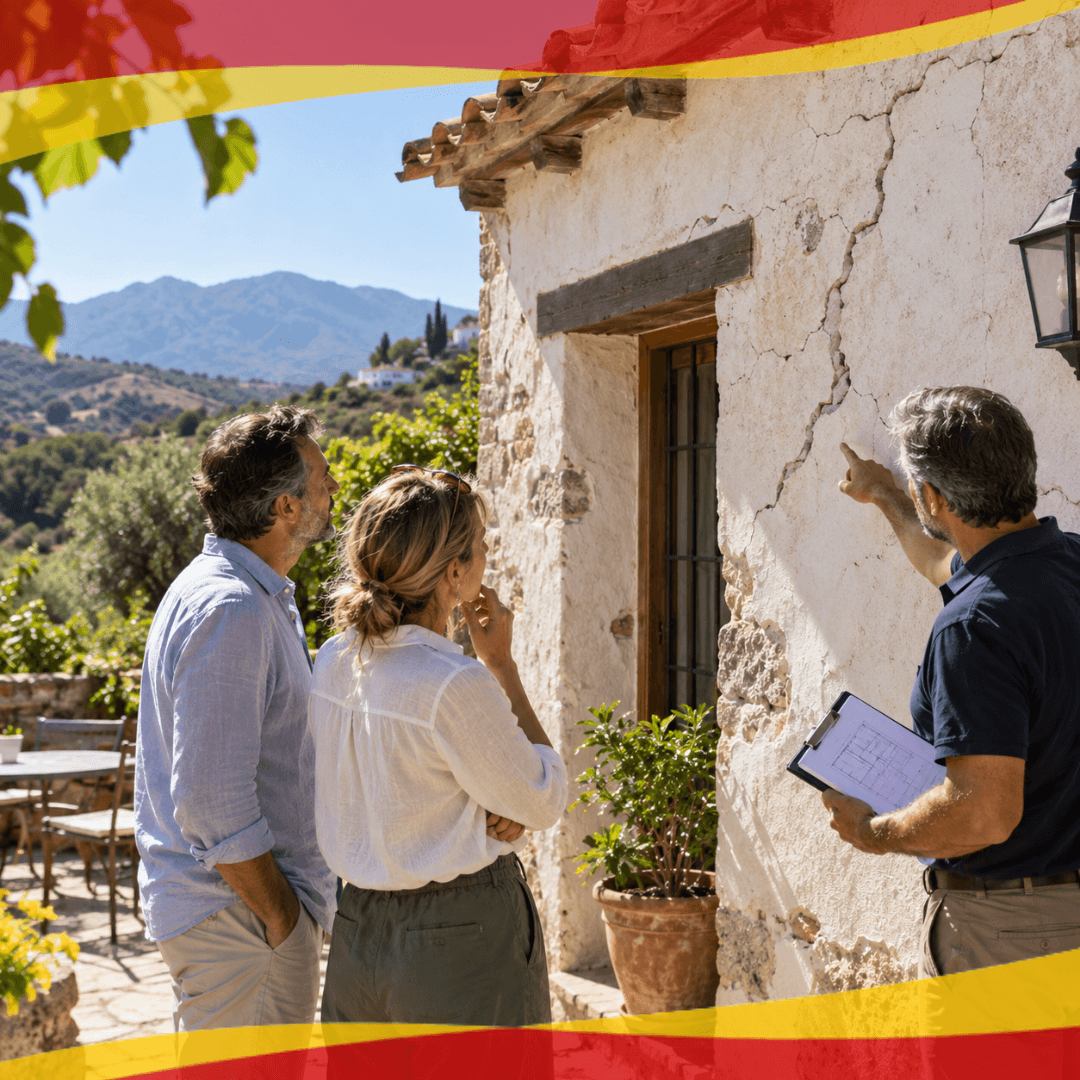
- Extensions added over the years without permission.
- No licence of first occupation (or an outdated one).
- BUilt before the latest regulation came in.
- Were registered in an older way that doesn’t comply with todays regulations!
What the architect’s assessment covers
- Age and classification of the property.
- Protections (rivers, roads, flood zones, electricity lines).
- Checking what was permitted vs what actually exists.
- Works required, estimated costs, and feasibility.
- Essential because some homes cannot be regularised.
Why town halls differ
- Andalucia has a regional framework, but municipalities apply criteria differently.
- Some issue AFOs in under a year; others take years or barely issue them at all.
- Local knowledge = essential.
- Each town hall will interpret the rules differently and may have specific criteria that others do not!
Typical costs
- Town hall taxes (usually the biggest chunk).
- Architectural reports and topographical surveys.
- Required upgrades: ecological septic tanks, water/electricity improvements, habitability fixes.
- Costs depend on size, age, works needed and municipal rates.
- No need to worry, we can offer you a fixed price to avoid any unpleasant price shocks
No guaranteed approval
- Meeting almost everything is not enough — the town hall must confirm every requirement.
- It may also have to pass several other places such as Medi Ambiente, Hydologico etc
- A good initial assessment can save thousands. Speak to us first
When you’ll need an AFO
- If there’s no licence of first occupation.
- If the licence doesn’t match reality (e.g., the house has sprouted extra rooms over the years).
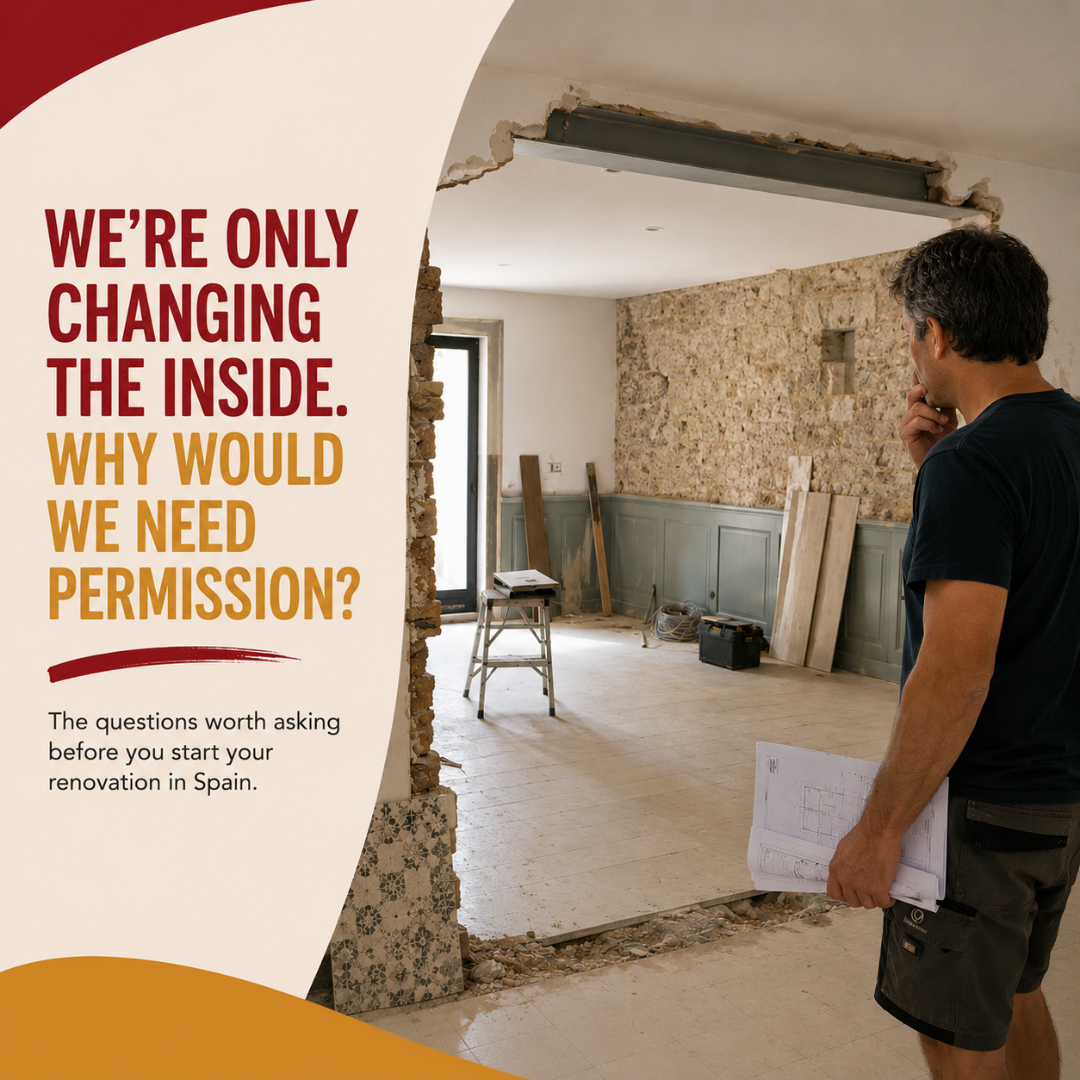
- If you want renovate or extend — the town hall won’t approve works without it.
- Your property was registered using an older way of doing it that is no longer compliant
- The description in your escritura (deed) doesn’t match reality
- Always ask us to check first!
4) Checklist for Sellers
Before you commit to a rural purchase in Andalucia:
- ☐ check if you have or need a first occupation licence (LFO).
- ☐ Compare the LFO with the actual building — room by room.
- ☐ Have one of our specialists assess feasibility for AFO/DAFO.
- ☐ Confirm any risks: flood zones, protected land, proximity to utilities or roads.
- ☐ Request written estimates of costs and required upgrades.
- ☐ Get clarity on how your specific town hall handles AFOs.
- ☐ Confirm whether you’ll be able to renovate, update utilities, or extend later.
- ☐ Factor septic tank upgrades and municipal taxes into your budget.
Solving Spain Note
Spain does rural charm brilliantly — bureaucracy, less so. But with the right support and a clear view of the paperwork, even a slightly “creative” Andalucian finca can become a regularised, comfortable home. Let us know if you’d like help understanding your property’s AFO situation.
Just contact us and we will be happy to help.